
Pollo a la Mostaza (Dijon mustard chicken thighs)
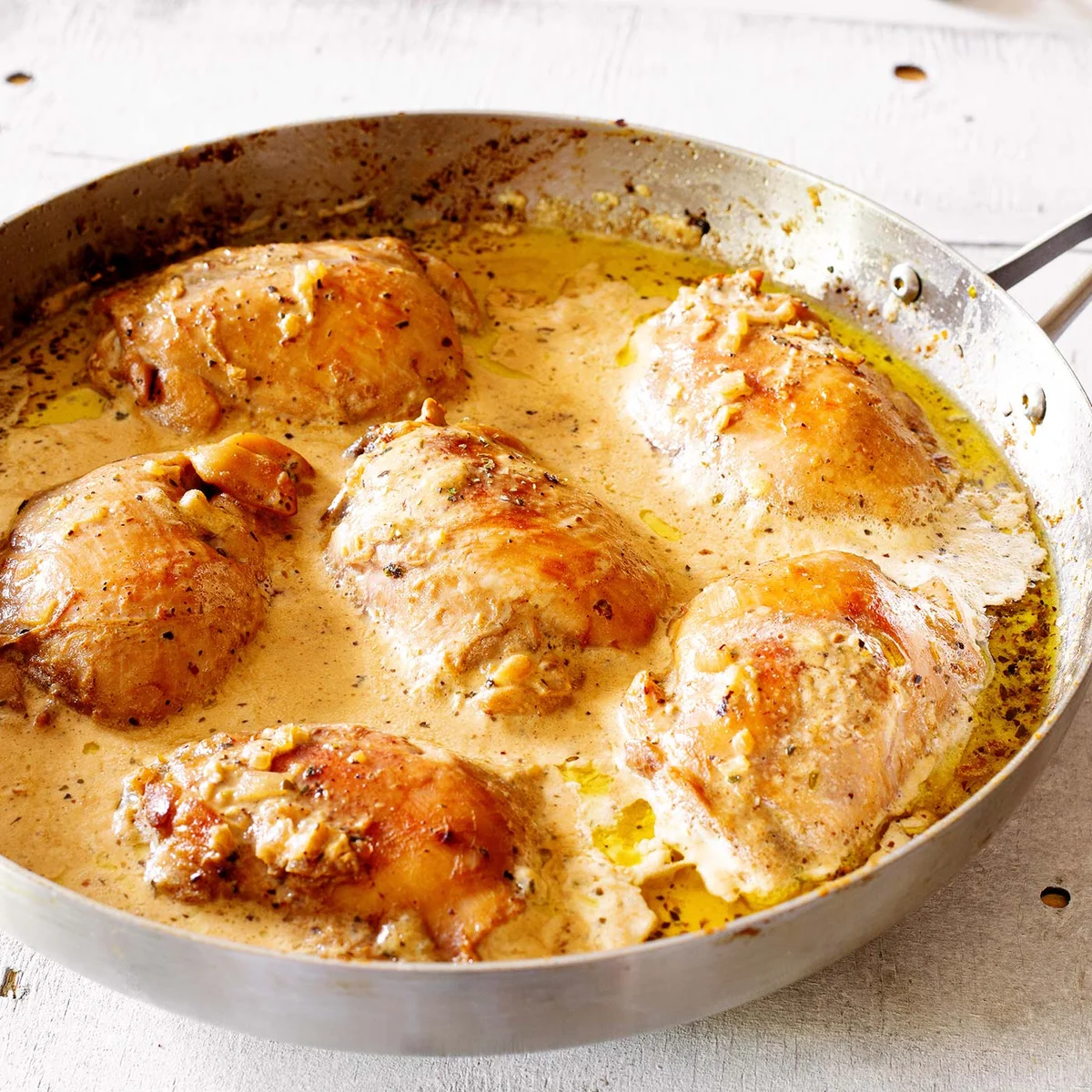
Pollo a la mostaza is a one-pan chicken dinner with Dijon mustard, cream and a savoury pan sauce. Browning the thighs first builds flavour, while the creamy sauce makes it an easy meal to serve with rice, noodles or mashed potatoes.
Ingredients
- 6skinless, bone-in chicken thighs
- 30 ml (2 tablespoons)Dijon mustard
- 45 ml (3 tablespoons), dividedolive oil
- 10 ml (2 teaspoons)onion powder
- 5 ml (1 teaspoon)garlic powder
- to tastesalt and pepper
- 240 ml (1 cup)low-sodium chicken stock
- 240 ml (1 cup)Mexican cream or heavy cream
- 2 clovesgarlic, minced
- 40 g (1/4 cup)onion, chopped
- 5 ml (2 teaspoons) flour mixed with 30 ml (2 tablespoons) waterflour and water
- 7.5 ml (1 1/2 teaspoons)oregano
- 28 g (2 tablespoons)butter
- to tastesalt
Instructions
- 1
Season the chicken
Put the chicken thighs in a bowl with 30 ml (2 tablespoons) of Dijon mustard, 15 ml (1 tablespoon) of the olive oil, the garlic powder and onion powder.
- 2
Coat the thighs
Season with salt and pepper, then turn the chicken until coated all over. Cover and set aside.
- 3
Heat the oil
Warm the remaining 30 ml (2 tablespoons) of oil in a large pan or cast-iron skillet over medium heat.
- 4
Brown the chicken
Arrange the thighs in one layer and cook until crisp and golden, about 8–10 minutes per side, depending on their thickness.
- 5
Set chicken aside
Transfer the thighs to a plate, cover with foil and set aside.
- 6
Soften the onion
Add the butter to the pan and sauté the chopped onion until softened.
- 7
Cook the garlic
Add the minced garlic and cook until fragrant.
- 8
Add stock and oregano
Pour in the chicken stock, then add the oregano and the remaining Dijon mustard.
- 9
Scrape the pan
Use a wooden spoon to scrape up the browned bits from the pan and stir them into the sauce.
- 10
Simmer the chicken
Return the thighs to the pan. Lower the heat to medium-low, cover and cook for 20 minutes, turning the chicken once during cooking.
- 11
Stir in the cream
Mix in the cream and the flour-and-water mixture.
- 12
Thicken the sauce
Simmer for 3–4 minutes, or until the sauce reaches the consistency you like.
- 13
Season and serve
Adjust the salt to taste and serve with rice, noodles or mashed potatoes.
What is pollo a la mostaza?
Pollo a la mostaza means mustard chicken in Spanish, and this version pairs chicken thighs with a creamy Dijon sauce. It fits the comforting, skillet-friendly style of Mexican-American home cooking, combining familiar pantry ingredients in a simple dinner.
Browning the chicken before making the sauce gives the pan a savoury base, while mustard and oregano bring a sharp, herbal note to the cream.
Nutrition and macros by portion
The nutrition label shows one serving as written: 373 calories, 22g protein, 5g carbs, 30g fat.
| Portion | Adjustment | kcal | Protein | Carbs | Fat |
|---|---|---|---|---|---|
| Lighter | Use less cream | 261 kcal | 15g | 4g | 21g |
| This serving | As written | 373 kcal | 22g | 5g | 30g |
| Hungry | Add extra rice | 560 kcal | 33g | 8g | 45g |
The chicken provides most of the protein, while the cream, olive oil and butter account for much of the fat. The flour and any rice, noodles or potatoes served alongside contribute most of the carbohydrates. Pair a thigh and sauce with a modest serving of starch and plenty of vegetables for a balanced plate.
Why use bone-in thighs?
Bone-in thighs stay substantial through the two-stage cooking process: first they brown in the pan, then finish covered in the sauce. Removing the skin keeps the recipe aligned with its stated ingredients while still allowing the meat to develop colour.
Size affects cooking time, so choose thighs of similar thickness where possible. Keep them in a single layer for the initial browning.
Build flavour in the pan
Browned bits: after the chicken is set aside, the onion, garlic and stock loosen the golden residue left in the pan. Scraping it up helps carry that cooked flavour into the sauce.
Mustard: the recipe uses Dijon both to coat the chicken and to season the stock-based sauce. Add the remaining mustard with the oregano, as directed.
Get the sauce texture right
Flour mixture: stir the flour and water together before adding them, so the thickener is ready to blend into the sauce. Stir it in with the cream after the chicken has simmered.
Final simmer: allow 3–4 minutes for the sauce to thicken. If you prefer it looser, stop as soon as it coats the chicken; for a thicker finish, simmer briefly longer while keeping an eye on the pan.
Check the chicken as it cooks
The first stage takes about 8–10 minutes per side, but the exact time depends on the thighs' thickness and how strongly the pan is heating. Look for a golden, crisp surface before turning them.
The covered simmer is another 20 minutes, with one turn partway through. Check that the chicken is fully cooked before serving, especially around the bone.
What to serve with it
Rice, noodles and mashed potatoes are all suggested accompaniments, and each gives the creamy sauce something to cling to. Spoon some sauce over the starch when serving.
For a more balanced plate, add a green vegetable or a crisp salad alongside the chicken. Keep the side simply seasoned so it does not compete with the mustard sauce.
Recipe notes & tips
- Pat the chicken dry before seasoning if its surface is damp, so it browns more readily.
- Let the pan heat before adding the thighs to encourage an even golden crust.
- Avoid moving the chicken around while it browns; turn it when the first side has developed colour.
- Scrape the browned pan residue into the stock before returning the chicken.
- Stir the flour and water until smooth before adding the mixture to the cream sauce.
- Taste the sauce before serving and add salt only as needed.
Variations
- Add mushrooms: sauté sliced mushrooms with the onion until softened.
- Use fresh herbs: finish with chopped parsley for a fresh herbal note.
- Add a little heat: stir a pinch of chilli flakes into the sauce with the oregano.
- Try boneless thighs: use them in place of bone-in thighs and check them earlier during cooking.
- Include vegetables: serve with steamed green beans or broccoli alongside the chicken.
Common mistakes to avoid
- Crowding the pan: the thighs may steam rather than brown; cook in batches if they do not fit in one layer.
- Turning too soon: the chicken can stick before a crust forms; give it time to brown before turning.
- Skipping the pan scrape: browned bits add flavour to the sauce; loosen them with the stock and a wooden spoon.
- Adding the thickener lumpy: mix the flour thoroughly with the water before stirring it into the pan.
- Boiling the cream sauce hard: keep it at a gentle simmer so it thickens without reducing too quickly.
- Guessing doneness by time alone: check that the chicken is cooked through, as thigh size varies.
How to store
Refrigerate leftovers in a covered container for up to 3 days. Reheat gently in a covered pan over low heat, adding a splash of stock or water if the sauce has thickened; stir occasionally and heat until piping hot.
Frequently asked questions
Can I make this with boneless chicken thighs?
Yes. Boneless thighs can be used, but they may cook faster than bone-in thighs, so check them earlier during the covered simmer.
Can I use Mexican cream instead of heavy cream?
Yes. The ingredient list allows either Mexican cream or heavy cream; add it at the same point in the method.
How can I tell when the sauce is thick enough?
After simmering for 3–4 minutes, it should coat the chicken and spoon lightly. Simmer a little longer if you prefer a thicker sauce.
What can I serve with mustard chicken?
Rice, noodles and mashed potatoes are all suggested. A green vegetable or salad also works well alongside the creamy sauce.
Can I prepare the chicken ahead?
You can coat the chicken with the mustard and seasonings ahead of cooking and keep it covered in the refrigerator. Cook it thoroughly before serving.
Can I freeze the leftovers?
The cooked chicken and sauce can be frozen in an airtight container, though cream sauces may separate slightly when thawed. Defrost in the refrigerator and reheat gently, stirring the sauce as it warms.
Cook it from the original
This recipe comes from maricruzavalos.com. Their page has the author’s own photos, notes and tips — the best place to cook it from.
Open the recipe on maricruzavalos.com