
Caldo de Res
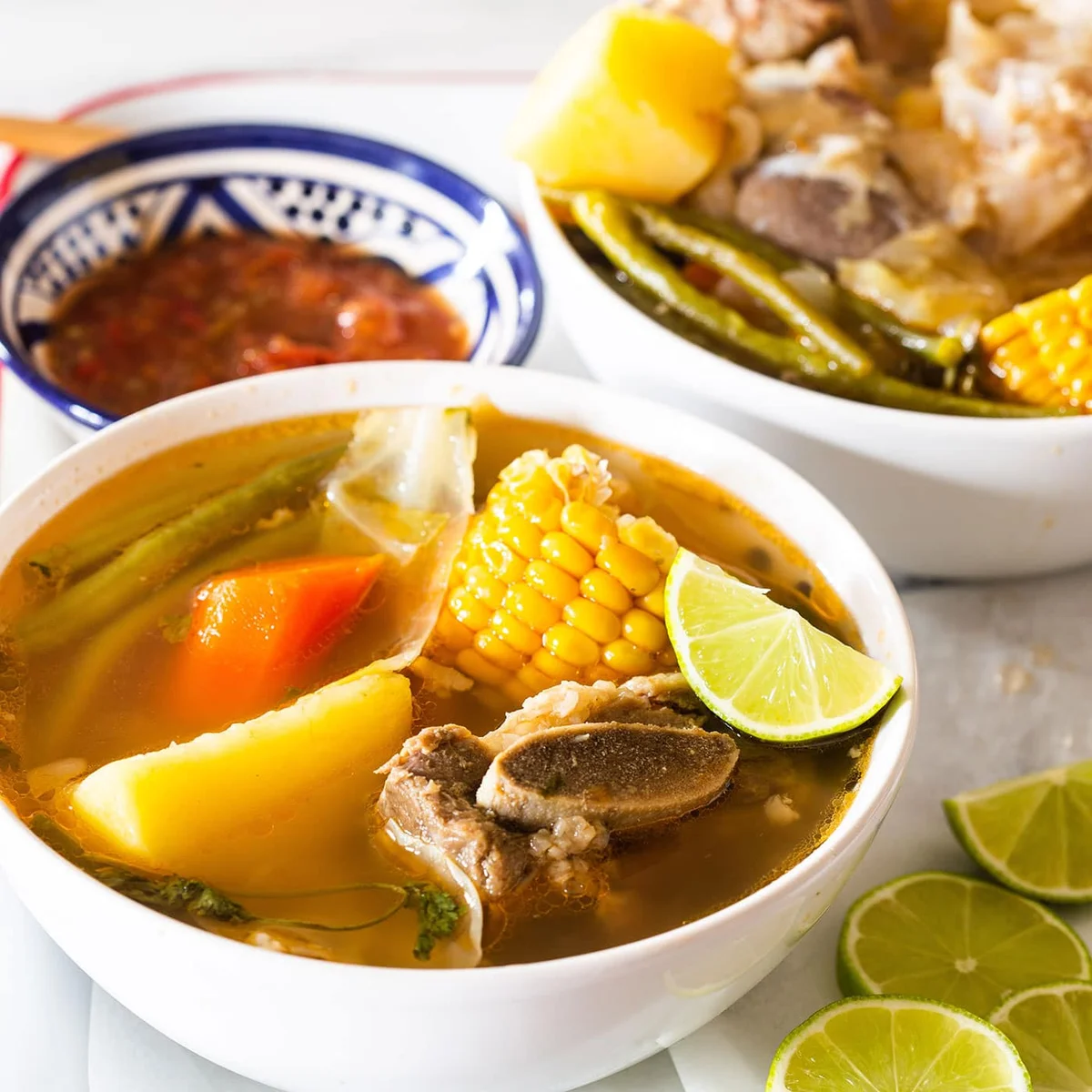
Caldo de res is a hearty Mexican beef and vegetable soup simmered until the meat is tender and the broth is deeply savoury. It makes a generous meal with tortillas, salsa and rice on the side.
Ingredients
- 1 kg (2.2 lb)beef shank
- 680 g (1.5 lb)marrow bones
- 2fresh corn ears, each cut into 3 pieces
- 2 largepotatoes, peeled and cut into chunks
- 3 mediumcarrots, peeled and cut into chunks
- 1/2 smallcabbage, cut into quarters
- 4 mediumcourgettes, cut into chunks
- 1 tablespoontomato paste (optional)
- 200 g (7 oz)green beans, trimmed
- 1 mediumonion, halved
- 2 clovesgarlic, skin on
- 1 small bunchfresh coriander
- To tastesalt
Instructions
- 1
Soak the meat
Rinse the beef and bones under cold water, put them in a large bowl and cover with water. Leave to soak for 30 minutes.
- 2
Fill the pot
Pour away the soaking water. Put the meat and bones in a large stockpot and cover with water to a depth of 5 cm (2 inches).
- 3
Add aromatics
Add a spoonful of salt, the garlic and the halved onion.
- 4
Boil and skim
Bring the pot to the boil and cook for 30 minutes, skimming off the foam that rises to the surface.
- 5
Simmer the beef
Reduce the heat to medium and cover the pot. Cook for about 1 hour and 30 minutes, keeping the ingredients covered with liquid; add more water if needed.
- 6
Add vegetables
When the meat is cooked and tender, add all the vegetables and push them down with a spoon so they are immersed in the broth.
- 7
Cook until tender
Cook for 20–25 minutes, or until all the vegetables are tender.
- 8
Season and serve
Adjust the salt to taste, turn off the heat and serve with tortillas, salsa and rice.
What is caldo de res?
Caldo de res is a Mexican beef soup, usually made by simmering beef and bones with vegetables in a clear, savoury broth. It is a substantial, comforting meal served in a bowl, with the meat and vegetables alongside the broth.
This version builds flavour from beef shank and marrow bones, then adds a range of vegetables near the end. That order gives the meat time to tenderise without leaving the vegetables to cook for the full simmer.
Nutrition and macros by portion
The nutrition label shows one serving as written: 480 calories, 30g protein, 42g carbs, 22g fat.
| Portion | Adjustment | kcal | Protein | Carbs | Fat |
|---|---|---|---|---|---|
| Lighter | More vegetables, less beef | 336 kcal | 21g | 29g | 15g |
| This serving | As written | 480 kcal | 30g | 42g | 22g |
| Hungry | Add rice or tortillas | 720 kcal | 45g | 63g | 33g |
The beef and marrow bones contribute most of the protein and fat, while the potatoes, corn and other vegetables provide much of the carbohydrate. Serve with a generous share of vegetables and broth, and choose either rice or tortillas alongside if you want to keep the meal balanced.
Why use shank and marrow bones?
Beef shank: this cut has connective tissue that softens over a long, gentle cook, making the meat tender and giving the broth body.
Marrow bones: they add richness as they simmer. Keeping the pot at a steady simmer after the initial boil helps the broth develop while making it easier to skim away the foam.
The long simmer
Initial boil: skim the surface during the first 30 minutes to remove the foam that forms as the pot heats.
Covered cooking: keep the beef and bones under the liquid during the 1 hour and 30 minute simmer. Top up with water if needed, as the method calls for the ingredients to remain covered.
When to add the vegetables
Add them after the meat is tender rather than at the start, so they do not spend the whole cooking time in the pot. Press them gently into the broth so they cook evenly.
The recipe gives the vegetables 20–25 minutes. Check that they are tender before serving; their size and the heat of the simmer can affect how quickly they cook.
Choosing and cutting the vegetables
Firm vegetables: potatoes, carrots and corn bring substance to the soup and can go into the pot with the other vegetables.
Delicate vegetables: courgettes, green beans and cabbage soften more quickly, so cut them into substantial pieces and check for tenderness within the stated cooking time.
Serving the broth
Serve the caldo hot, with pieces of beef and vegetables in each bowl and plenty of broth. Tortillas, salsa and rice are the suggested accompaniments.
For easier serving, use a ladle for the broth and a large spoon or tongs to divide the meat and vegetables among the bowls.
Recipe notes & tips
- Skim the surface regularly during the first 30 minutes for a cleaner-tasting broth.
- Keep the meat and bones covered with liquid as they simmer, adding water if necessary.
- Cut the vegetables into similarly sized pieces so they cook at a similar pace.
- Push the vegetables below the broth after adding them so they soften evenly.
- Taste the broth for salt after the vegetables have cooked, then adjust before serving.
Variations
- Tomato paste: stir in the optional tablespoon with the aromatics for a deeper tomato note.
- Extra greens: add more cabbage or green beans if you would like a higher proportion of vegetables.
- More corn: include additional corn pieces for extra sweetness and substance.
- Spicier bowls: serve with a hotter salsa at the table.
- Citrus finish: offer lime wedges alongside the bowls for diners to squeeze in to taste.
Common mistakes to avoid
- Skipping the skimming: foam can cloud the broth, so remove it as it rises during the first boil.
- Letting the pot run dry: check the liquid during the long simmer and add water to keep the ingredients covered.
- Adding vegetables too early: they can become overcooked; wait until the meat is tender.
- Cutting vegetables too small: small pieces may soften too quickly, so use substantial chunks.
- Seasoning only at the start: taste and adjust the salt again just before serving.
How to store
Cool leftovers promptly and refrigerate the broth, meat and vegetables in a covered container for up to 3 days. Reheat gently in a saucepan until steaming hot throughout, adding a little water if the broth has reduced.
Frequently asked questions
Can I make caldo de res ahead of time?
Yes. Cook it ahead and refrigerate it in a covered container, then reheat gently on the hob until steaming hot throughout. The broth may thicken as it cools, so add a little water if needed.
How do I know when the beef is tender?
The beef should be easy to pierce and come away from the bone without much effort. If it is still firm after the stated simmer, continue cooking until tender, keeping it covered with liquid.
Can I leave out the marrow bones?
You can, though the broth will be less rich. Keep the beef shank and follow the same cooking method.
Can I use frozen vegetables?
Fresh vegetables are specified here. If using frozen vegetables, add them near the end and cook until tender, checking them as they may soften faster.
What should I serve with caldo de res?
Serve it with tortillas, salsa and rice, as suggested in the recipe. Lime can also be offered at the table for a fresh finish.
Cook it from the original
This recipe comes from maricruzavalos.com. Their page has the author’s own photos, notes and tips — the best place to cook it from.
Open the recipe on maricruzavalos.com