
Mediterranean Tuna Salad
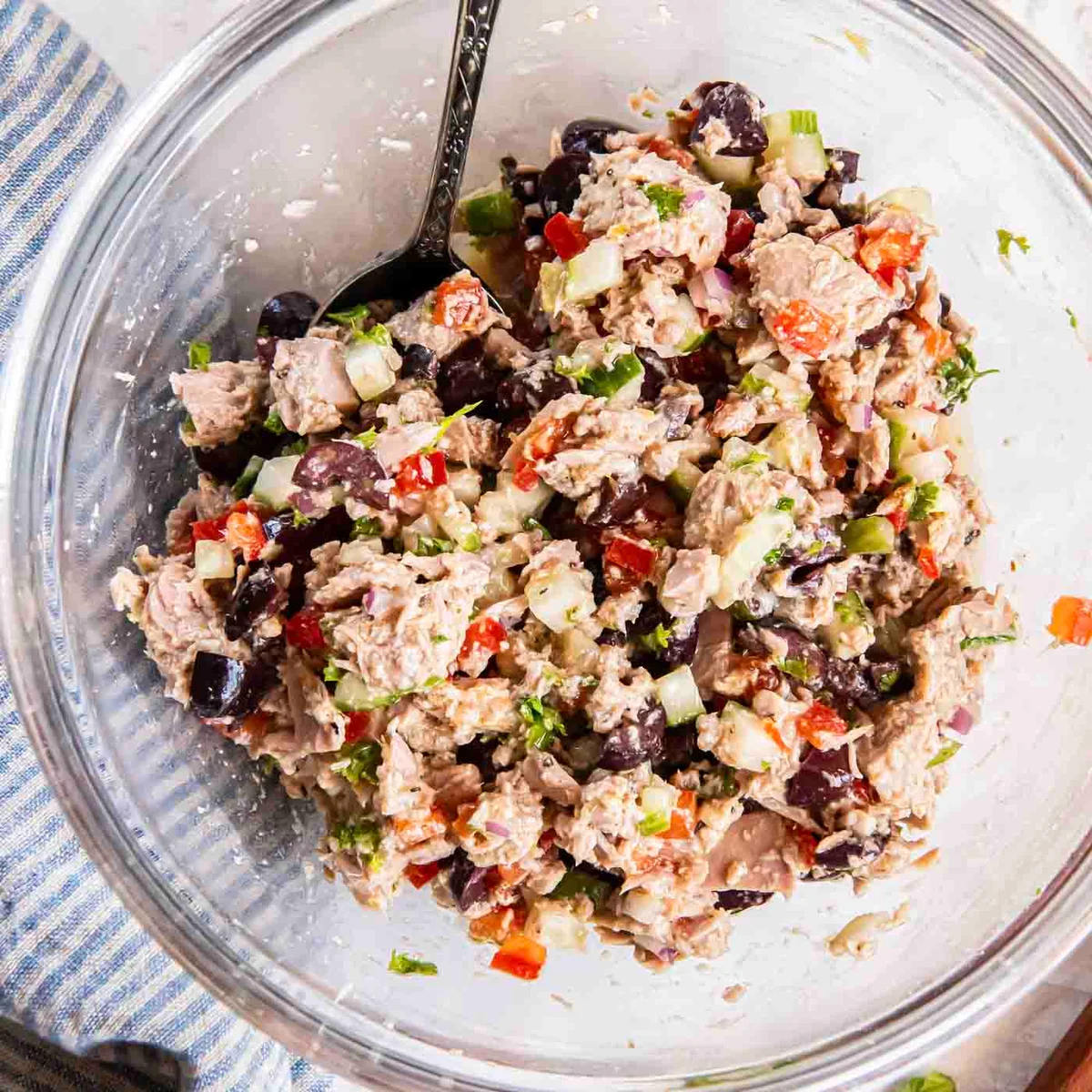
A bright, Mediterranean-style tuna salad with crunchy vegetables, Kalamata olives and a lemon-Dijon dressing. It comes together quickly for lunch, and works just as well in a sandwich as over a bed of greens.
Ingredients
- 45 ml (3 tablespoons)extra virgin olive oil
- zest of 1 mediumlemon
- 60 ml (4 tablespoons; from 1 medium lemon)lemon juice
- 15 ml (1 tablespoon)Dijon mustard
- 2 cans (142 g each; 5 ounces each), drainedtuna in water
- 75 g (½ cup), finely choppedred bell pepper
- 75 g (½ cup), dicedEnglish cucumber
- 75 g (½ cup), pitted and choppedKalamata olives
- 30 g (3 tablespoons), finely choppedred onion
- 8 g (2 tablespoons), finely choppedfresh parsley
- to tastesalt and pepper
Instructions
- 1
Mix the dressing
In a medium mixing bowl, whisk together the olive oil, Dijon mustard, lemon zest and lemon juice.
- 2
Combine the salad
Add the drained tuna, red bell pepper, cucumber, Kalamata olives, red onion and parsley to the dressing. Stir to combine, then season with salt and pepper to taste.
- 3
Choose how to serve
Serve in a sandwich, wrapped in pita bread, in halved avocados or lettuce wraps, with crackers, or over a bed of greens.
What is Mediterranean tuna salad?
This is a quick tuna salad built around ingredients often associated with Mediterranean cooking: olive oil, lemon, olives and fresh herbs. Rather than relying on a creamy dressing, this version uses a sharp, savoury lemon-Dijon mixture.
Crisp pepper and cucumber add freshness, while Kalamata olives bring a briny contrast to the mild tuna. The result is easy to serve in several ways, from a sandwich to a simple green salad.
Nutrition and macros by portion
The nutrition label shows one serving as written: 168 calories, 14g protein, 3g carbs, 11g fat.
| Portion | Adjustment | kcal | Protein | Carbs | Fat |
|---|---|---|---|---|---|
| Lighter | Serve over leafy greens | 118 kcal | 10g | 2g | 8g |
| This serving | As written | 168 kcal | 14g | 3g | 11g |
| Hungry | Add wholemeal bread | 252 kcal | 21g | 5g | 17g |
The tuna provides most of the protein, while the olive oil and olives contribute much of the fat; the small amount of carbohydrate comes mainly from the vegetables and lemon. For a more balanced meal, serve a portion with wholemeal bread or alongside extra leafy greens and other vegetables.
The lemon-Dijon dressing
Whisk the olive oil, lemon juice, zest and mustard until they are well combined. The mustard helps the oil and juice come together, and the zest adds a fragrant citrus note.
Taste before adding salt: the olives can already contribute plenty of savouriness. Pepper gives the dressing a gentle bite.
Drain the tuna well
Drained tuna keeps the salad from becoming watery and helps the dressing cling to the fish. Press it gently against the tin or use a fine sieve, without squeezing it into a paste.
Break up any large pieces as you stir, but leave some texture for a more substantial salad.
Keep the vegetables crisp
Chop the red pepper and cucumber into small, even pieces so they are easy to scoop with the tuna. Finely chopped red onion spreads its sharp flavour through the mixture without dominating each bite.
If your cucumber is particularly watery, remove the seedy centre before dicing. Add the parsley finely chopped so its fresh flavour is distributed evenly.
Balance the seasoning
Stir the ingredients together gently so the tuna stays in pieces and the vegetables remain distinct. Give the salad a taste once everything is coated, then adjust the salt and pepper.
The lemon should taste bright, not overpowering; if it feels too sharp, let the salad stand briefly so the flavours settle before serving.
Ways to serve it
For a more filling lunch, spoon the tuna salad into wholemeal bread or pita. Halved avocados, lettuce leaves and crackers are useful options when you want a different base.
For a lighter-feeling plate, serve it over greens. The salad also pairs well with sliced avocado and peppery rocket, as suggested in the serving description.
Recipe notes & tips
- Drain the tuna thoroughly before adding it to the dressing.
- Chop the vegetables to a similar size for an even mix.
- Taste before salting, as Kalamata olives are already savoury.
- Use freshly squeezed lemon juice for a bright dressing.
- Fold the tuna in gently to keep some larger flakes intact.
Variations
- Add avocado: Serve with sliced avocado for a creamy contrast.
- Use capers: Add a small spoonful for extra briny sharpness.
- Swap the herbs: Use finely chopped dill instead of parsley.
- Add leafy greens: Spoon the salad over rocket or mixed leaves.
- Make it spicy: Stir in a pinch of chilli flakes with the dressing.
Common mistakes to avoid
- Wet tuna: Drain it well first, or excess liquid can thin the dressing.
- Too much salt: Taste after mixing, since the olives add savouriness.
- Overmixing: Stir gently so the tuna keeps some texture.
- Large vegetable chunks: Chop them finely enough to mix and scoop easily.
- Adding all the seasoning at once: Start lightly and adjust after combining.
How to store
Keep leftovers in an airtight container in the fridge and use within 2 days. Stir before serving; this salad is best eaten cold and does not need reheating.
Frequently asked questions
Can I make this tuna salad ahead?
Yes. Mix it ahead and keep it covered in the fridge, then stir before serving. For the crispest texture, you can also prepare the dressing and chopped vegetables separately and combine them closer to serving.
What can I use instead of Kalamata olives?
Use another pitted black olive if you prefer. The flavour will vary, so season the finished salad to taste.
How should I serve it without bread?
Try lettuce wraps, halved avocados, crackers or a bed of greens. These options keep the tuna salad itself unchanged.
Can I use tuna in oil?
Yes, but drain it well; the salad will have a richer taste. You may want to use a little less olive oil in the dressing and adjust after mixing.
Why is my tuna salad watery?
The tuna may not have been drained thoroughly, or the cucumber may have released liquid. Drain the tuna well and remove the cucumber's seedy centre if it is especially watery.
Cook it from the original
This recipe comes from kristineskitchenblog.com. Their page has the author’s own photos, notes and tips — the best place to cook it from.
Open the recipe on kristineskitchenblog.com