
Curd Rice
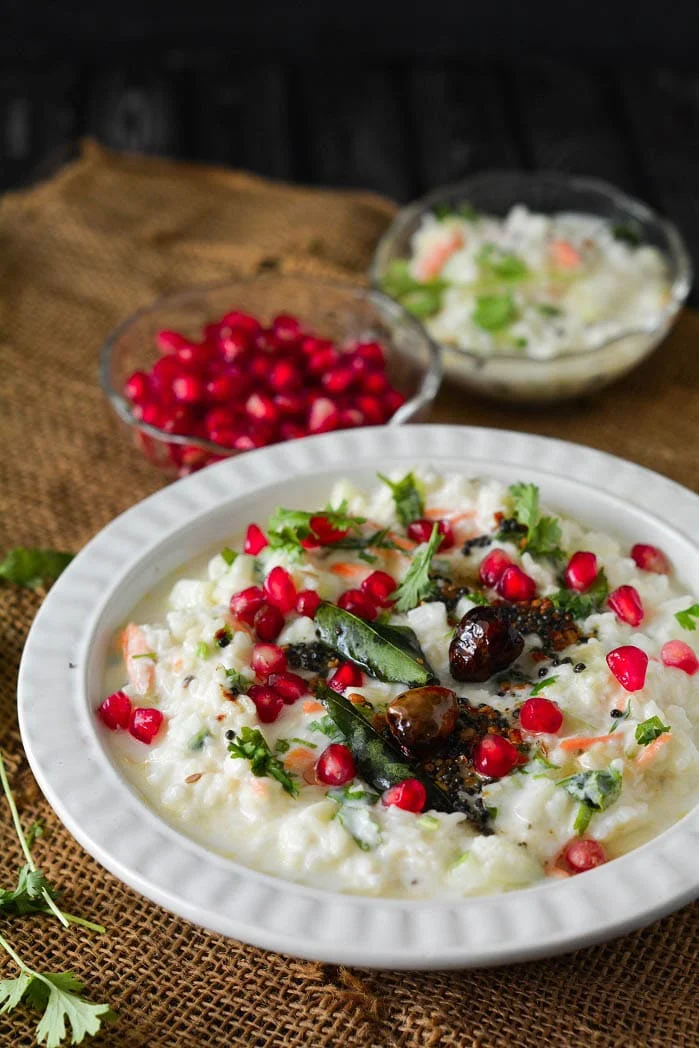
Curd rice is a cooling South Indian dish of soft rice stirred into seasoned yoghurt, with cucumber, herbs and a crisp, fragrant tempering. It makes a quick lunch or a gentle side, especially when you have cooked rice ready to use.
Ingredients
- 720 ml (3 cups)cooked rice
- 360 ml (1½ cups)yoghurt
- 180 ml (¾ cup)milk or water
- 240 ml (1 cup)cucumber, chopped
- 80 ml (⅓ cup)carrot, grated (optional)
- 3green chillies
- 22.5 ml (1½ tbsp)ginger, finely chopped
- 60 ml (¼ cup)fresh coriander
- 75 ml (5 tbsp)pomegranate seeds
- to tastesalt
- 12.5 ml (2½ tsp)cooking oil
- 5 ml (1 tsp)mustard seeds
- 2.5 ml (½ tsp)white lentils (urad dal)
- 2dried red chillies
- 30 ml (2 tbsp)cashew pieces
- 10curry leaves
- a pinchasafoetida (optional)
Instructions
- 1
Cook the rice
Cook the rice in enough water until soft, then let it cool completely.
- 2
Whisk the yoghurt
Whisk the yoghurt in a bowl until smooth. Add cold milk or water to loosen it; the method suggests about 120 ml (½ cup), adjusting as needed.
- 3
Add the vegetables
Mix in the salt, cucumber, carrot, some of the pomegranate seeds, fresh coriander, green chillies and ginger.
- 4
Stir in rice
Add the cooled rice to the yoghurt mixture and stir well.
- 5
Toast the cashews
Warm a little of the oil in a small pan and roast the cashew pieces until light golden. Remove them from the pan and stir them into the curd rice.
- 6
Make the tempering
Add the tempering ingredients to the same pan and cook until they start to crackle.
- 7
Mix in tempering
Pour the tempering over the curd rice and mix it through.
- 8
Chill the rice
Refrigerate the curd rice before serving.
- 9
Garnish to serve
Finish with some pomegranate seeds and fresh coriander.
- 10
Add fresh tempering
If you like, make a fresh tempering and pour it over the curd rice as a garnish.
- 11
Serve with sides
Serve with fried papad, curd chillies and pickle.
What is curd rice?
Curd rice, also known as thayir sadam in Tamil, is a familiar South Indian preparation of cooked rice mixed with yoghurt. It is often served as a meal or as the soothing final course of a larger spread.
This version combines cooling cucumber and yoghurt with ginger, chillies and a crackling tempering. Pomegranate adds bursts of sweetness, while cashews bring a little crunch.
Nutrition and macros by portion
The nutrition label shows one serving as written: 264 calories, 8g protein, 40g carbs, 8g fat.
| Portion | Adjustment | kcal | Protein | Carbs | Fat |
|---|---|---|---|---|---|
| Lighter | Use less oil and cashews | 185 kcal | 6g | 28g | 6g |
| This serving | As written | 264 kcal | 8g | 40g | 8g |
| Hungry | Serve a larger bowl | 396 kcal | 12g | 60g | 12g |
The rice supplies most of the carbohydrates, while yoghurt contributes protein and some fat; the oil and cashews add further fat. Serve it with vegetables or a vegetable-based side for a more balanced plate.
Start with soft, cool rice
Rice texture: cook the grains until soft so they blend easily with the yoghurt rather than staying separate and firm. Let the rice cool fully before mixing it in.
Leftover rice: previously cooked rice works well, provided it is soft and has been stored safely. Break up any compacted clumps before adding it to the bowl.
Build the yoghurt mixture
Yoghurt: whisk it smooth first, then add milk or water gradually to make a loose, creamy mixture. The rice will absorb some of the liquid, so aim for a consistency that is not stiff.
Vegetables: cucumber brings freshness and grated carrot is optional. Add the chillies and ginger to taste, and keep some pomegranate and coriander aside for the finish.
Get the tempering right
Cashews: roast them in the pan until lightly golden, then take them out before making the tempering. This keeps them pleasantly crisp and helps prevent them from over-browning.
Crackling spices: use the same pan for the tempering ingredients and cook until they begin to crackle, as the method directs. Pour the hot mixture over the rice and stir it through.
Chill before serving
Resting time: refrigerate the finished rice before serving so it is properly chilled. If it thickens in the fridge, stir in a little milk or water to loosen it.
Garnish: scatter over the reserved pomegranate seeds and fresh coriander just before serving. The recipe also suggests adding a fresh tempering as an extra finishing touch.
What to serve alongside
Classic sides: fried papad, curd chillies and pickle provide crispness, heat and a tangy contrast to the creamy rice. Serve them on the side so each person can add them as they eat.
A fuller plate: pair the curd rice with vegetable dishes or other South Indian sides if serving it as part of a larger meal.
Recipe notes & tips
- Cool the rice completely before combining it with the yoghurt.
- Add the milk or water gradually so you can stop when the mixture is as loose as you like.
- Set aside some pomegranate seeds and coriander for the garnish.
- Keep the cashews in the pan only until they are lightly golden.
- Taste the mixture for salt after stirring in the rice.
- Loosen chilled leftovers with a splash of milk or water before serving.
Variations
- Skip the carrot: leave it out for a simpler cucumber version.
- Adjust the heat: use fewer green chillies for a milder bowl.
- Add fresh tempering: pour a newly made tempering over the rice just before serving.
- Change the garnish: use extra coriander or pomegranate seeds on top.
- Make it nut-free: omit the cashews and follow the remaining method.
Common mistakes to avoid
- Adding hot rice: it can warm the yoghurt mixture; let the rice cool completely first.
- Pouring in all the liquid at once: the mixture may turn too thin; add milk or water gradually.
- Over-roasting cashews: they can darken quickly; remove them as soon as they are light golden.
- Skipping the chill: the dish is intended to be chilled; refrigerate it before serving.
- Forgetting to reserve garnish: the bowl can look less fresh; set aside pomegranate and coriander before mixing.
How to store
Keep leftovers covered in the refrigerator and eat within 2 days. Stir before serving and add a little milk or water if the rice has thickened; serve chilled rather than reheating.
Frequently asked questions
Can I use leftover rice?
Yes. Use soft cooked rice that has been stored safely, and let it cool before mixing it with the yoghurt.
Can I use water instead of milk?
Yes. The recipe allows either milk or water to adjust the yoghurt mixture.
How much liquid should I add?
The method suggests about 120 ml (½ cup), added gradually. The ingredient list allows up to 180 ml (¾ cup), so use enough to reach the consistency you want.
Is the carrot essential?
No, it is optional. You can leave it out without changing the rest of the method.
What can I serve with curd rice?
The recipe recommends fried papad, curd chillies and pickle. Vegetable sides also fit well alongside it.
Can I make it ahead?
Yes, prepare it and chill it before serving. Keep the garnish aside if you want it to look fresh, and loosen the rice with a little milk or water if it thickens.
Cook it from the original
This recipe comes from maayeka.com. Their page has the author’s own photos, notes and tips — the best place to cook it from.
Open the recipe on maayeka.com