
Kanda Batata Poha
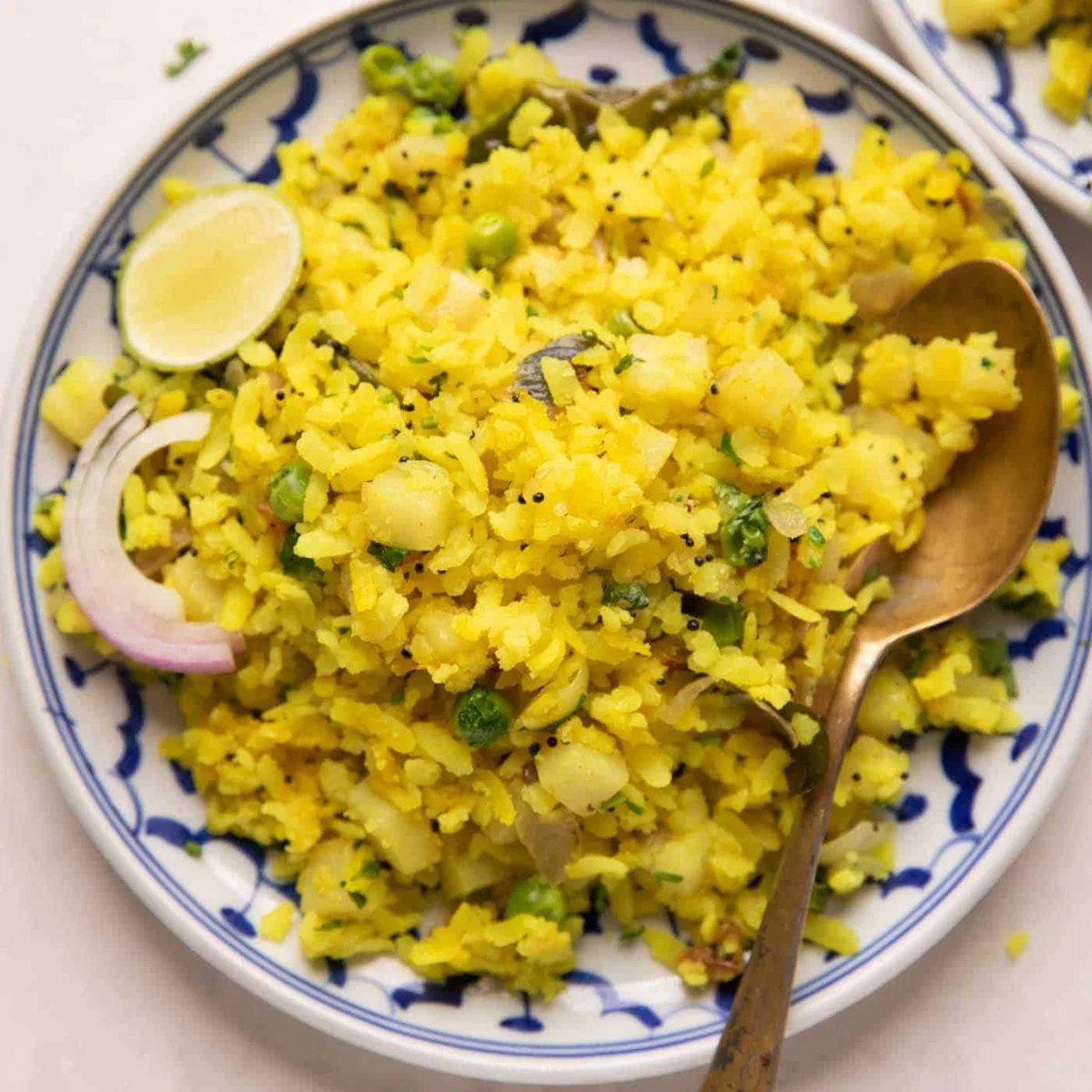
Kanda batata poha is a quick Indian breakfast of softened flattened rice cooked with onion, potato, peas and a fragrant mustard-seed tempering. It makes a satisfying one-pan meal with a bright finish of lime and coriander.
Ingredients
- 150 g (1.5 cups)poha or flattened rice, soaked
- 30 ml (2 tablespoons)oil
- 5 ml (1 teaspoon)mustard seeds
- 2–3green chillies, slit lengthways
- 2 sprigscurry leaves
- 1 medium (about 150 g)onion, cut into 1.25 cm cubes
- 1 medium (about 150 g)potato, cut into 1.25 cm cubes
- 50 g (⅓ cup)green peas, fresh or frozen; thaw frozen peas
- 1.25 ml (¼ teaspoon)turmeric powder
- 15 ml (1 tablespoon)water
- 7.5 ml (1½ teaspoons), dividedsalt
- 6 g (1½ teaspoons)sugar
- Juice of 1lime
- 8 g (2 tablespoons)chopped coriander
Instructions
- 1
Wash the poha
Rinse the poha in a sieve under running water, then leave it in the sieve to soak while you prepare and begin cooking, about 15 minutes. Rinsing it a few times and letting it drain for 10–15 minutes is enough to soften it.
- 2
Make the tempering
Heat the oil in a kadhai. Add the mustard seeds and wait for them to splutter, then add the onion, green chillies and curry leaves. Sauté for 1–2 minutes.
- 3
Cook the potatoes
Add the potatoes and sauté for another minute. Sprinkle over half a teaspoon of the salt, cover and cook for 5–6 minutes, or until the potatoes are tender.
- 4
Add poha and peas
Stir in the peas and sauté for a minute. Add the soaked poha, turmeric, remaining salt and sugar, and mix gently so the poha does not become mushy.
- 5
Steam and finish
Add a tablespoon of water and cover the pan. Cook for 4–5 minutes, or until the poha is cooked and fluffy. Remove the lid, add the lime juice and top with coriander leaves. Serve hot.
What is kanda batata poha?
Poha is a West Indian dish, especially associated with Maharashtra, made from rice that has been flattened into flakes. Kanda means onion and batata means potato, two familiar additions to this breakfast version.
This recipe combines softened poha with peas and a quick tempering of mustard seeds, curry leaves and chillies. The potatoes make it more substantial, while lime and coriander keep the flavours lively.
Nutrition and macros by portion
The nutrition label shows one serving as written: 285 calories, 8g protein, 41g carbs, 17g fat.
| Portion | Adjustment | kcal | Protein | Carbs | Fat |
|---|---|---|---|---|---|
| Lighter | Use less oil | 200 kcal | 6g | 29g | 12g |
| This serving | As written | 285 kcal | 8g | 41g | 17g |
| Hungry | Serve a larger portion | 428 kcal | 12g | 62g | 26g |
The poha and potato provide most of the carbohydrates, while the oil contributes much of the fat; peas add some protein alongside the rice flakes. Pair a serving with fruit or plain yoghurt if you would like to add freshness or more protein to the plate.
Get the poha texture right
Rinsing: Wash the flakes in a sieve and let them sit for 10–15 minutes. They should soften while remaining separate, rather than turning to paste.
Mixing: Fold the poha through the pan gently once it is added. Rough stirring can break the flakes and leave the finished dish heavy.
Build the tempering
Mustard seeds: Heat them in the oil until they begin to splutter before adding the other aromatics. This is the cue that they are ready to flavour the dish.
Curry leaves and chillies: Add these with the onion and sauté briefly. Slitting the chillies lets their flavour infuse the oil; use fewer if you prefer a milder result.
Cook the potatoes evenly
Small cubes: Cut the potato into roughly 1.25 cm pieces so they cook through during the covered stage. Keeping the pieces similar in size helps them become tender at about the same time.
Doneness: After 5–6 minutes, check a piece with a fork before adding the poha. If it is still firm, continue cooking until tender.
Finish with lime and coriander
Lime: Add the juice after steaming, as directed, for a fresh, sharp finish. Stir it through carefully so the softened flakes stay intact.
Coriander: Scatter it over the top just before serving. The fresh herbs complement the warm spices and tender vegetables.
Serve it hot
Poha is best served as soon as it is cooked, while the flakes are fluffy and the potatoes are warm. It can be served on its own for breakfast or alongside a simple cup of tea.
For a more rounded plate, add fresh fruit or a portion of plain yoghurt on the side. Keep any extra toppings separate until serving.
Recipe notes & tips
- Use a sieve so the poha can be rinsed and drained without losing flakes.
- Let the rinsed poha sit for 10–15 minutes before adding it to the pan.
- Cut the potato into evenly sized cubes for more consistent cooking.
- Wait for the mustard seeds to splutter before adding the onion and aromatics.
- Fold the poha gently to help it stay fluffy.
- Add the lime juice and coriander after steaming for a fresh finish.
Variations
- Adjust the heat: Use fewer green chillies for a milder pan of poha.
- Use frozen peas: Thaw them before adding so they heat through evenly.
- Add peanuts: Stir in roasted peanuts when serving for extra crunch.
- Try lemon: Use lemon juice in place of the lime for a similar bright finish.
- Make it more colourful: Add a little extra coriander just before serving.
Common mistakes to avoid
- Over-soaking the poha: Leave it in the sieve for 10–15 minutes so the flakes soften without becoming mushy.
- Cutting large potato cubes: Keep them around 1.25 cm so they have time to become tender.
- Adding poha too soon: Cook the potatoes until tender before stirring in the softened flakes.
- Stirring too vigorously: Fold gently to avoid breaking the poha into a paste.
- Skipping the lid: Cover the pan for the final 4–5 minutes so the poha can steam.
- Adding lime too early: Stir it in after cooking to keep its fresh flavour.
How to store
Refrigerate leftovers in an airtight container and eat within 2 days. Reheat in a covered pan with a small splash of water until hot, stirring gently; the poha is best freshly made.
Frequently asked questions
How long should I soak poha?
Rinse it in a sieve and let it sit for 10–15 minutes. It should be softened but still hold its shape.
How can I tell when the potatoes are cooked?
They should be tender when pierced with a fork after 5–6 minutes covered. If needed, cook them a little longer before adding the poha.
Can I use frozen peas?
Yes. Thaw them first, then add them as directed and sauté for a minute.
Why did my poha turn mushy?
It may have been soaked too long or mixed too roughly. Drain it after 10–15 minutes and fold it gently into the pan.
Can I make poha ahead?
It is at its fluffiest when served straight after cooking. You can prepare the vegetables ahead, but soak the poha close to cooking time.
Cook it from the original
This recipe comes from myfoodstory.com. Their page has the author’s own photos, notes and tips — the best place to cook it from.
Open the recipe on myfoodstory.com