
Chicken Tangsuyuk
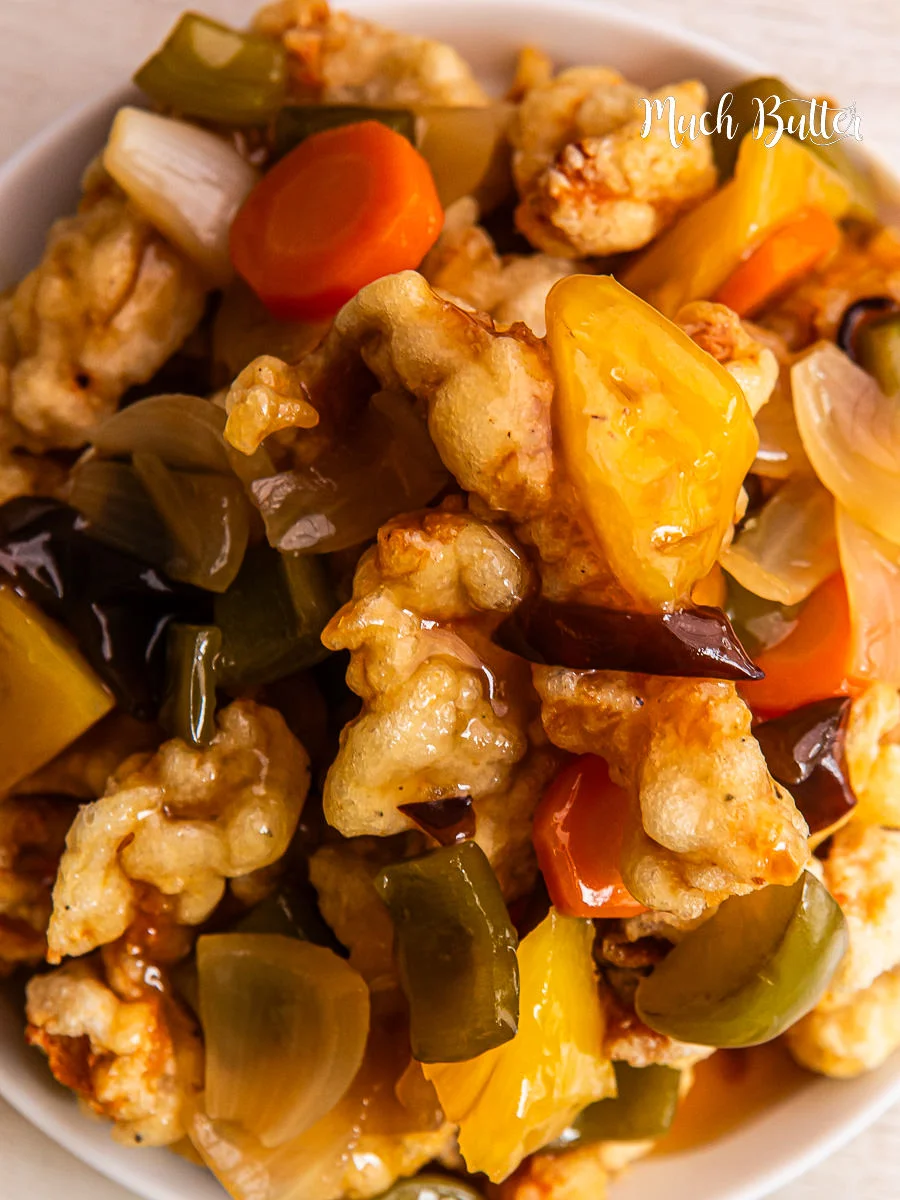
Chicken tangsuyuk is Korean-style crispy battered chicken served with a sweet-and-sour sauce. A double fry helps the chicken stay crisp beneath the tangy sauce, while pineapple and vegetables bring colour and contrast.
Ingredients
- 500 gchicken breast fillet, sliced
- ½ tspgrated ginger
- 1 tspsalt
- ½ tspground black pepper
- 1½ cups (about 240 g)potato starch
- 1 cup (240 ml)water
- 1egg white
- tbspoil
- ½onion, sliced
- 1 mediumcarrot
- 1green pepper
- 3wood ear mushrooms
- ½fresh pineapple
- ⅓ cup (about 67 g)sugar
- 2 cups (480 ml)water
- 2 tbsp (30 ml)apple cider vinegar or white vinegar
- 2 tbsp (30 ml)soy sauce
- 2 tbsp (about 16 g)cornflour
- 2 tbsp (30 ml)water
Instructions
- 1
Settle the starch
Mix the potato starch with 1 cup (240 ml) of water in a bowl and leave it until the starch settles out from the water.
- 2
Season the chicken
In a separate bowl, season the sliced chicken with the salt and black pepper, then leave it to marinate for 15 minutes.
- 3
Prepare the batter
Once the starch has separated from the water, pour away the water. Combine the settled starch with the egg white and oil.
- 4
Coat the chicken
Add the starch mixture to the marinated chicken and stir until the pieces are well coated.
- 5
Fry the chicken
Heat oil in a frying pan over medium heat. Add the chicken pieces one at a time and deep-fry for 3–5 minutes, then remove them from the pan.
- 6
Fry it twice
Turn up the heat and fry the chicken again for a further 5 minutes.
- 7
Cook the vegetables
Heat oil in another pan and stir-fry the onion, carrot and green pepper for 1 minute.
- 8
Make the sauce
Add the wood ear mushrooms, pineapple, 2 cups (480 ml) water, sugar, vinegar, soy sauce and salt. Thicken the sauce with a slurry made from the cornflour and 2 tbsp (30 ml) water.
- 9
Serve the dish
Arrange the chicken and tangsuyuk sauce in a separate bowl or on a plate, then serve.
What is chicken tangsuyuk?
Tangsuyuk is a Korean-Chinese dish of crisp-fried meat served with a sweet-and-sour sauce. Its name is associated with the dish’s sweet-and-sour flavour, and it is commonly enjoyed as a shared meal.
This version uses chicken breast instead of the pork often found in tangsuyuk. Potato starch makes a crisp coating, while pineapple, vinegar and soy sauce give the sauce its sweet, tart and savoury character.
Nutrition and macros by portion
The nutrition label shows one serving as written: 510 calories, 30g protein, 74g carbs, 9g fat.
| Portion | Adjustment | kcal | Protein | Carbs | Fat |
|---|---|---|---|---|---|
| Lighter | Use less sauce | 357 kcal | 21g | 52g | 6g |
| This serving | As written | 510 kcal | 30g | 74g | 9g |
| Hungry | Add a rice portion | 765 kcal | 45g | 111g | 14g |
Chicken and egg white provide most of the protein, while the potato starch, sugar and pineapple contribute carbohydrates. The frying oil and oil in the coating contribute fat, and soy sauce is a notable source of sodium. Serve with rice in a measured portion and add extra vegetables on the side to balance the plate.
Why potato starch matters
Settling the potato starch in water lets the starch collect at the bottom before the excess water is poured off. The resulting thick starch is combined with egg white and oil to coat the chicken.
Allow enough time for the layers to separate before draining. If the starch is still suspended in the water, the coating may not have the consistency intended by the method.
Keep the chicken pieces separate
Add the coated pieces one at a time so they do not stick together in the pan. The method calls for frying over medium heat for 3–5 minutes before taking the chicken out.
The recipe does not specify the oil quantity or a precise frying temperature, so use enough oil for the stated deep-frying method and work in batches if needed.
The double fry and crispness
After the first fry, the chicken gets a second 5-minute fry at higher heat. This two-stage approach is intended to make the coating crisp; keep an eye on the pieces as they cook.
For the best contrast, serve the fried chicken soon after cooking. The sauce can soften the coating, so you can keep the two separate until serving if you prefer it crisp.
Balancing the sweet-and-sour sauce
The sauce combines sugar with vinegar, soy sauce and pineapple, then is thickened with a cornflour slurry. Stir the cornflour with the final 2 tbsp of water before adding it, so it is evenly mixed.
The vegetables are stir-fried for only 1 minute before the liquid and fruit go in. This brief start gives them a little time in the pan without adding an extra cooking stage to the recipe.
Serving chicken tangsuyuk
Serve the chicken and sauce in a separate bowl or on a plate, as the method suggests. This makes it easy to spoon sauce over each portion, or to dip pieces as you eat.
Steamed rice is a straightforward accompaniment for the sweet-and-sour sauce. You could also add a simple vegetable side if you want a more substantial spread.
Recipe notes & tips
- Give the starch mixture time to settle before pouring off the water.
- Cut the chicken into similar-sized slices so the pieces cook at a similar rate.
- Add chicken to the hot oil one piece at a time to reduce sticking.
- Mix the cornflour with the final 2 tbsp of water immediately before using it.
- Keep the sauce separate from the chicken until serving if you want to preserve more crunch.
Variations
- Use pork: Replace the chicken with sliced pork and follow the same coating and frying method.
- Choose white vinegar: Use white vinegar instead of apple cider vinegar for the sauce.
- Add more vegetables: Increase the onion, carrot or green pepper for a vegetable-rich sauce.
- Adjust the fruit: Use less pineapple if you prefer a less fruity sauce.
- Serve with rice: Add steamed rice to make the dish a fuller meal.
Common mistakes to avoid
- Skipping the settling time: Leave the starch and water until clearly separated before draining.
- Pouring away the starch: Discard only the separated water and keep the settled starch for the coating.
- Crowding the pan: Fry the chicken in batches if needed so the pieces can be added individually.
- Using an unmixed slurry: Stir the cornflour into the 2 tbsp water until smooth before adding it to the sauce.
- Saucing too early: Keep the sauce apart until serving if a crisp coating is important to you.
How to store
Refrigerate leftover chicken and sauce in separate airtight containers and use within 2–3 days. Reheat the chicken in an oven or air fryer until hot, and warm the sauce separately; the coating may soften after storage.
Frequently asked questions
Can I make the sauce ahead?
Yes. Prepare the sauce ahead and refrigerate it separately, then reheat it gently before serving. Stir it as it warms.
Can I use cornflour instead of potato starch?
The recipe uses potato starch for the chicken coating and cornflour for thickening the sauce. They have different roles here, so keep each in its stated part of the recipe.
Why does the starch need to settle?
The recipe relies on the starch collecting at the bottom so you can pour away the water and use the thick starch for the coating.
Can I serve the sauce on the side?
Yes. The method calls for serving the chicken and sauce in a separate bowl or on a plate, so you can keep them apart until serving.
How do I know when the chicken is cooked?
Follow the stated 3–5-minute first fry and 5-minute second fry, watching the pieces as they cook. Check that the thickest pieces are cooked through before serving.
Cook it from the original
This recipe comes from muchbutter.com. Their page has the author’s own photos, notes and tips — the best place to cook it from.
Open the recipe on muchbutter.com