
Pollo alla Cacciatora
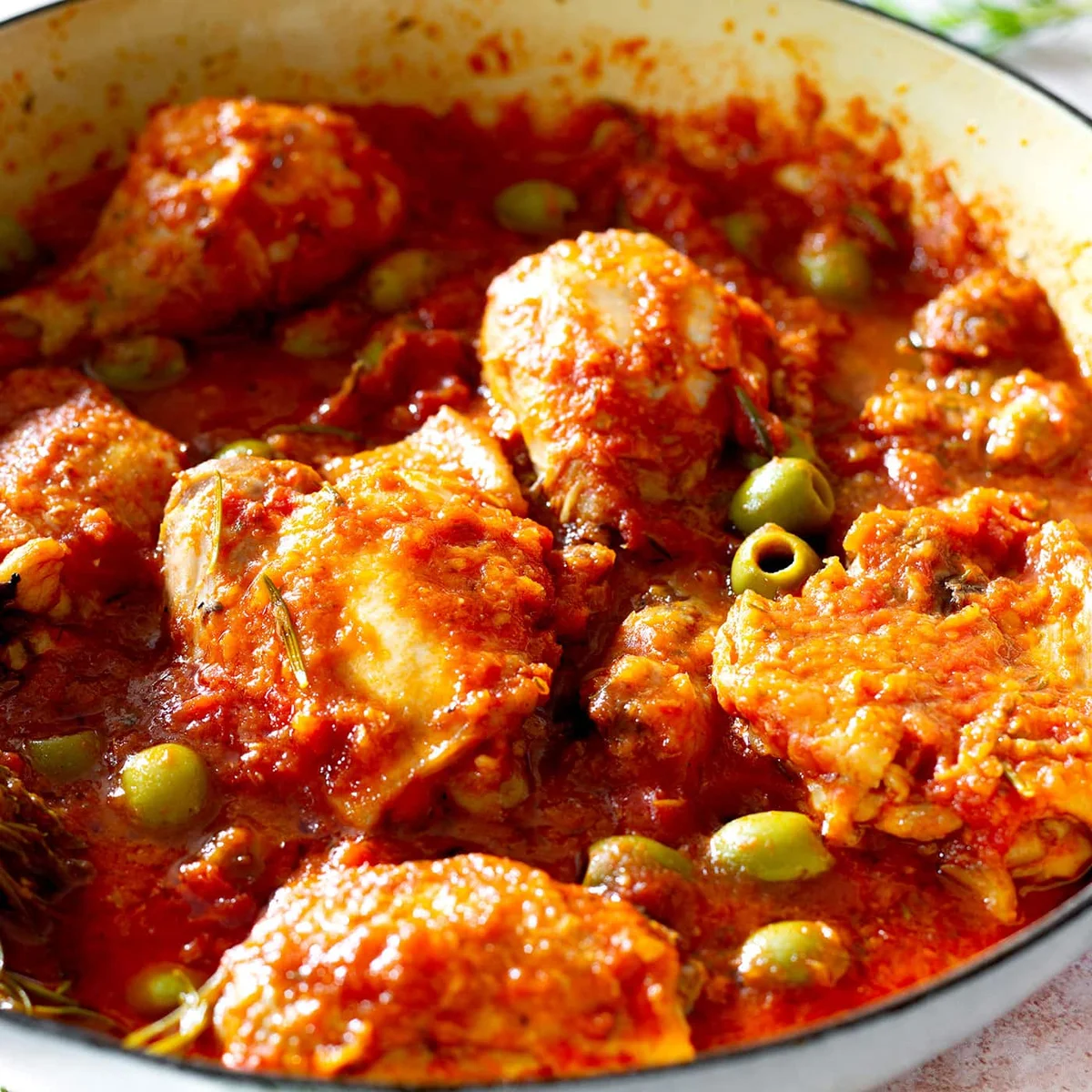
Pollo alla cacciatora is an Italian chicken stew simmered with tomato, wine, olives and aromatic herbs. It is a good choice for a relaxed meal: browning the chicken first builds flavour, while the long simmer makes a hearty, rustic sauce.
Ingredients
- 1 kg (2.2 lb)chicken thighs and drumsticks
- 411 g (14.5 oz)tomato sauce
- 120 ml (½ cup)white wine, or red wine if preferred
- 150 g (1 cup)pitted olives
- 1 smallonion, finely chopped
- 2celery sticks, finely chopped
- 1 largecarrot, finely chopped
- 1 clovegarlic, minced
- 1 bunchfresh herbs: rosemary, bay leaves, sage and thyme
- 45 ml (3 tablespoons)extra-virgin olive oil
- To tastesalt and pepper
Instructions
- 1
Heat the oil
Warm the olive oil in a large cooking pan over medium-high heat.
- 2
Season the chicken
Add the chicken to the pan and season it with salt and pepper.
- 3
Brown the chicken
Sear the chicken for 10 minutes, turning it until nicely browned on all sides.
- 4
Set chicken aside
Lift the chicken out of the pan and place it on a plate covered with foil.
- 5
Reduce the oil
Pour away the excess oil, leaving just a little in the pan.
- 6
Add vegetables
Add the onion, celery, carrot and garlic, along with the bunch of herbs.
- 7
Soften the vegetables
Sauté for 3–4 minutes, until the chopped vegetables have softened.
- 8
Simmer the wine
Pour in the wine and let it simmer for 1 minute.
- 9
Add the tomato
Stir in the tomato sauce, season with salt and cook for 1 minute.
- 10
Return the chicken
Put the chicken back in the pan and add enough water to come slightly over all the pieces.
- 11
Cover and simmer
Bring the mixture to a simmer, cover the pan and cook for 30 minutes.
- 12
Turn the chicken
Uncover the pan and turn the chicken over. Cover again and cook for another 15–20 minutes.
- 13
Add the olives
Stir in the olives and check whether the meat is tender. Adjust the seasoning to taste and cook for another 10 minutes.
- 14
Rest before serving
Turn off the heat and leave the stew to stand for about 10 minutes before serving.
What is pollo alla cacciatora?
Pollo alla cacciatora, or hunter-style chicken, is a traditional Italian stew with regional variations. This version brings chicken together with tomato, wine, olives and a bundle of herbs.
The method gives the dish its rustic character: the chicken is browned first, then gently simmered in the sauce until tender.
Nutrition and macros by portion
The nutrition label shows one serving as written: 469 calories, 25g protein, 12g carbs, 34g fat.
| Portion | Adjustment | kcal | Protein | Carbs | Fat |
|---|---|---|---|---|---|
| Lighter | Less oil, more greens | 328 kcal | 18g | 8g | 24g |
| This serving | As written | 469 kcal | 25g | 12g | 34g |
| Hungry | Larger chicken portion | 704 kcal | 38g | 18g | 51g |
The chicken supplies much of the protein, while the tomato sauce and vegetables contribute carbohydrates. The olive oil and olives account for much of the fat; serving with greens and a moderate portion of bread or polenta can round out the plate.
The chicken and the browning
Bone-in pieces: thighs and drumsticks suit the long simmer and add depth to the sauce. Dry the chicken before it goes into the pan if it is wet, so it has a better chance of browning.
Searing: brown the pieces on all sides, working in batches if the pan is crowded. The aim is a deep golden surface, not to cook the chicken through at this stage.
Building the sauce
Soffritto: finely chopped onion, celery, carrot and garlic form the savoury base. Give them 3–4 minutes to soften before adding the wine.
Wine and tomato: let the wine simmer for 1 minute, then stir in the tomato sauce. This brief cooking brings the ingredients together before the chicken returns to the pan.
Herbs and olives
Herb bundle: rosemary, bay, sage and thyme infuse the stew as it cooks. Keeping them together makes it easier to lift out any larger stems before serving.
Olives: adding them near the end preserves their distinct, savoury flavour. Taste the sauce after they go in, as their saltiness can affect how much extra seasoning it needs.
How to judge doneness
Simmering: keep the stew at a gentle simmer rather than a rapid boil, with the pan covered for the first 30 minutes. Add enough water to slightly cover the chicken, as directed.
Tenderness: after the final 10 minutes with the olives, check that the meat is tender. If it needs longer, continue cooking gently and check again.
Timing and resting
The cooking stages add up to about 56–61 minutes, followed by a 10-minute rest; allow extra time for preparation and bringing the pan to a simmer. The chicken’s browning and the steady simmer are more useful cues than rushing the stages.
Resting: leave the heat off for about 10 minutes before serving. This gives the sauce time to settle around the chicken.
What to serve with it
Bread: crusty bread is handy for scooping up the tomato sauce and olives. Polenta is another fitting option if you want something soft to serve alongside.
Vegetables: serve with a green salad or simply cooked greens for a fresh contrast. Spoon plenty of sauce over the chicken at the table.
Recipe notes & tips
- Pat the chicken dry before searing to help it brown.
- Avoid crowding the pan; brown the chicken in batches if needed.
- Keep the herb bundle together so it is easy to remove before serving.
- Use a gentle simmer once the chicken is back in the pan.
- Taste the stew after adding the olives before adjusting the salt.
Variations
- Use red wine: swap it for the white wine if you prefer a deeper flavour.
- Choose another olive: use your preferred pitted variety, keeping in mind that saltiness varies.
- Add chilli: include a little chilli with the vegetables for gentle heat.
- Serve with polenta: spoon the stew over soft polenta to catch the sauce.
- Use fresh tomatoes: replace the sauce with chopped tomatoes and simmer until they break down.
Common mistakes to avoid
- Crowding the pan: the chicken may steam instead of brown; sear it in batches.
- Boiling hard: the sauce can reduce too quickly; lower the heat to maintain a gentle simmer.
- Skipping the browning: the stew loses a layer of savoury flavour; take time to colour the chicken on all sides.
- Adding too much salt early: olives can be salty; taste the stew again after adding them.
- Serving straight away: the sauce has no time to settle; rest the stew for about 10 minutes off the heat.
How to store
Cool leftovers promptly and refrigerate them in a covered container for up to 3 days. Reheat gently in a saucepan until piping hot throughout, adding a splash of water if the sauce has thickened.
Frequently asked questions
Can I use red wine instead of white?
Yes. The recipe allows either, so use red wine if you prefer its deeper flavour.
Can I use chicken breasts?
You can, but they may become dry during the long simmer. Bone-in thighs and drumsticks are better suited to this method.
How do I know the chicken is tender?
Check after the olives have cooked for 10 minutes. The meat should feel tender; if it does not, simmer it a little longer and check again.
Do I need to remove the herbs before serving?
Remove any large herb stems or bay leaves you can find. Keeping the herbs in a bundle makes this easier.
Can I make the stew ahead?
Yes. Cool it and refrigerate it, then reheat gently until piping hot throughout. Add a splash of water if the sauce has thickened in the fridge.
Cook it from the original
This recipe comes from maricruzavalos.com. Their page has the author’s own photos, notes and tips — the best place to cook it from.
Open the recipe on maricruzavalos.com