
Homemade Yogurt
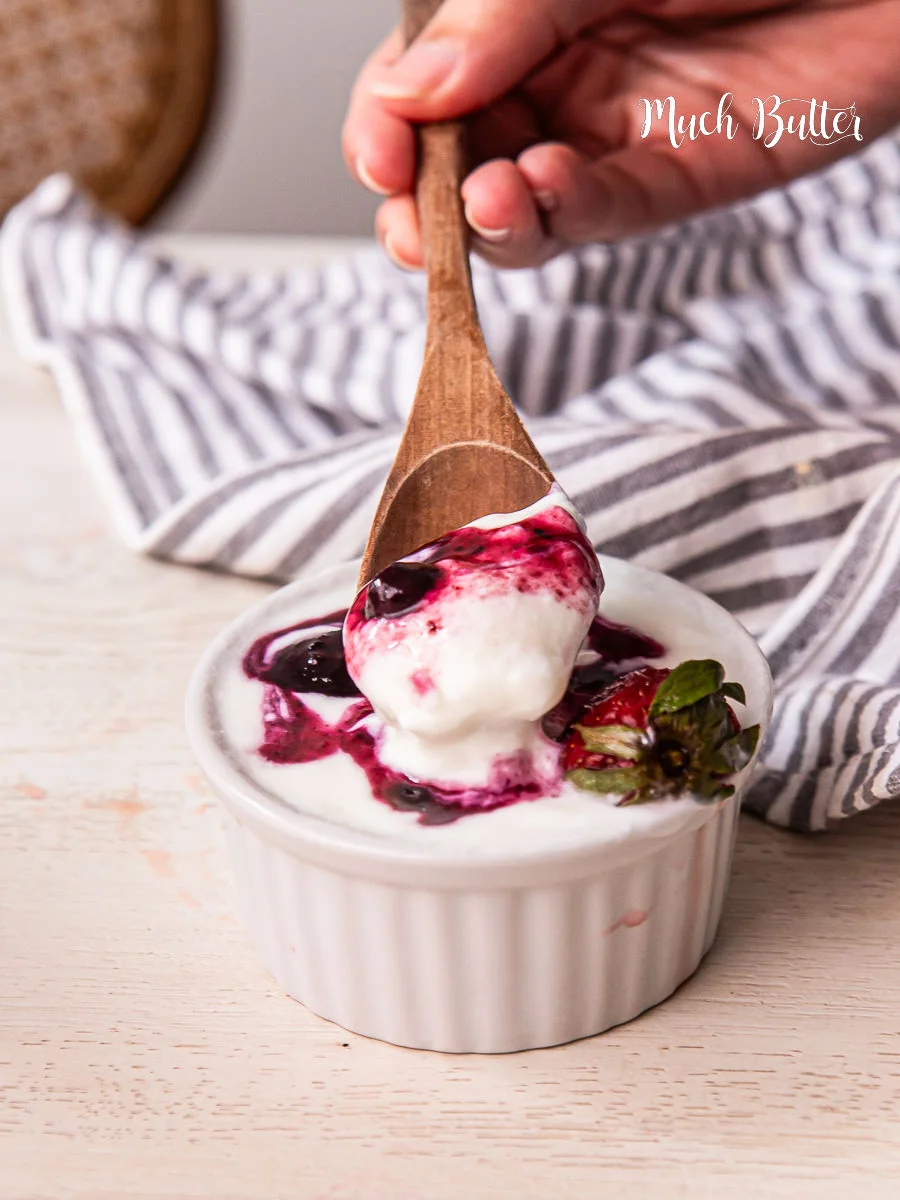
Homemade yogurt is made by combining warm milk with a little plain Greek yogurt and leaving it to culture. This simple method gives you a mild, tangy yogurt that you can strain for a thicker texture.
Ingredients
- 1 lfresh milk
- 60 ml (¼ cup)plain Greek yogurt, unsweetened
Instructions
- 1
Heat the milk
Warm the fresh milk over a low heat until it reaches 80°C (180°F). Take it off the heat and let it cool to 40°C (104°F).
- 2
Mix a little milk
Put 60 ml (¼ cup) of the warm milk in a small bowl and mix it thoroughly with the Greek yogurt.
- 3
Combine the mixture
Pour the yogurt mixture into the remaining warm milk and stir until evenly combined.
- 4
Leave to culture
Transfer the mixture to an airtight jar, cover it with a towel and leave it at room temperature for 8–12 hours.
- 5
Serve or strain
After 12 hours, serve the yogurt or strain it through cheesecloth for a thicker consistency, then store it in the fridge.
What is homemade yogurt?
Yogurt is milk cultured with live yogurt cultures, giving it its characteristic gentle tang. It is made in many food traditions, including Greece, where thick, strained yogurt is a familiar staple.
This version uses plain Greek yogurt to start the culture. You can enjoy the result as it is or strain it to make it thicker.
Nutrition and macros by portion
The nutrition label shows one serving as written: 129 calories, 7g protein, 10g carbs, 7g fat.
| Portion | Adjustment | kcal | Protein | Carbs | Fat |
|---|---|---|---|---|---|
| Lighter | Use lower-fat milk | 90 kcal | 5g | 7g | 5g |
| This serving | As written | 129 kcal | 7g | 10g | 7g |
| Hungry | Serve a larger bowl | 194 kcal | 10g | 15g | 10g |
Milk provides most of the carbohydrates, protein and fat, while the starter yogurt contributes a smaller amount. Serve a moderate portion alongside fruit or another fibre-rich food for a more balanced plate.
Choosing the milk and starter
Milk: Fresh milk is the base, and its fat content affects how rich the finished yogurt tastes. Use the same kind of milk throughout for consistent results.
Starter: Choose plain, unsweetened Greek yogurt. A small amount supplies the cultures and adds a little tang.
Why the temperature matters
Heating: Bring the milk to 80°C to prepare it for culturing, then let it cool to 40°C before adding the starter. A kitchen thermometer makes these temperatures easier to judge.
Mixing: Blend the starter with a small amount of warm milk first. This helps it disperse through the larger quantity without clumps.
The culturing stage
Resting: Keep the covered jar at room temperature for 8–12 hours, as directed. Try to leave it undisturbed while the yogurt sets.
Texture: The yogurt should look set after culturing, though it may be softer than strained Greek yogurt. Straining removes some whey and produces a thicker result.
Serving ideas
Sweet: Serve it with fruit, honey or a little jam for breakfast or a simple dessert.
Savoury: Pair it with grilled vegetables, roasted potatoes or a savoury meal as a cool accompaniment. Strained yogurt also works well as a dip base.
Timing and planning
The hands-on work is brief, but culturing takes 8–12 hours, so plan to leave the jar overnight or during the day. The recipe lists 40 minutes as the total time, but the method includes this longer resting period.
For a thicker finish, allow extra time for straining after the yogurt has cultured. The recipe does not specify how long to strain it, so check its consistency as it drains.
Recipe notes & tips
- Use a clean jar and clean utensils to keep the mixture free from unwanted flavours.
- Check the milk temperature with a thermometer before adding the starter.
- Let the milk cool to 40°C before mixing in the Greek yogurt.
- Stir the starter into the small portion of milk until smooth before adding it to the jar.
- Keep the jar covered and undisturbed during the culturing period.
- Strain the yogurt through clean cheesecloth if you prefer it thicker.
Variations
- Use whole milk: It gives the finished yogurt a richer taste.
- Strain it longer: Drain more whey for a thicker consistency.
- Add honey: Stir it into individual portions just before serving.
- Serve with fruit: Add fresh or stewed fruit for a simple breakfast.
- Make it savoury: Serve with herbs and a pinch of salt as a dip.
Common mistakes to avoid
- Adding the starter too soon: Let the milk cool to 40°C first.
- Skipping the temperature check: Use a thermometer to reach the specified temperatures.
- Mixing the starter straight into the full amount: Blend it with 60 ml of warm milk first.
- Moving the jar repeatedly: Leave it undisturbed while it cultures.
- Expecting thick yogurt before straining: Use cheesecloth after culturing if you want a denser texture.
How to store
Once cultured, store the yogurt in an airtight container in the fridge and use it within about 5–7 days. Keep it chilled between servings; it is usually served cold, so reheating is not needed.
Frequently asked questions
How long does homemade yogurt need to culture?
The method gives a resting time of 8–12 hours at room temperature. It also says the yogurt can be served after 12 hours.
Does the milk need to cool before I add the yogurt?
Yes. Heat it to 80°C, then let it cool to 40°C before mixing in the starter.
How can I make the yogurt thicker?
Strain it through cheesecloth after culturing. The longer it drains, the thicker it becomes.
Can I use flavoured Greek yogurt as the starter?
The recipe calls for plain, unsweetened Greek yogurt. Use that rather than a flavoured or sweetened variety.
Why is the recipe's total time shorter than the resting time?
Although the listed total time is 40 minutes, the method includes 8–12 hours of culturing. Plan for that resting time as well as the hands-on steps.
Cook it from the original
This recipe comes from muchbutter.com. Their page has the author’s own photos, notes and tips — the best place to cook it from.
Open the recipe on muchbutter.com