
Chicken Chashu
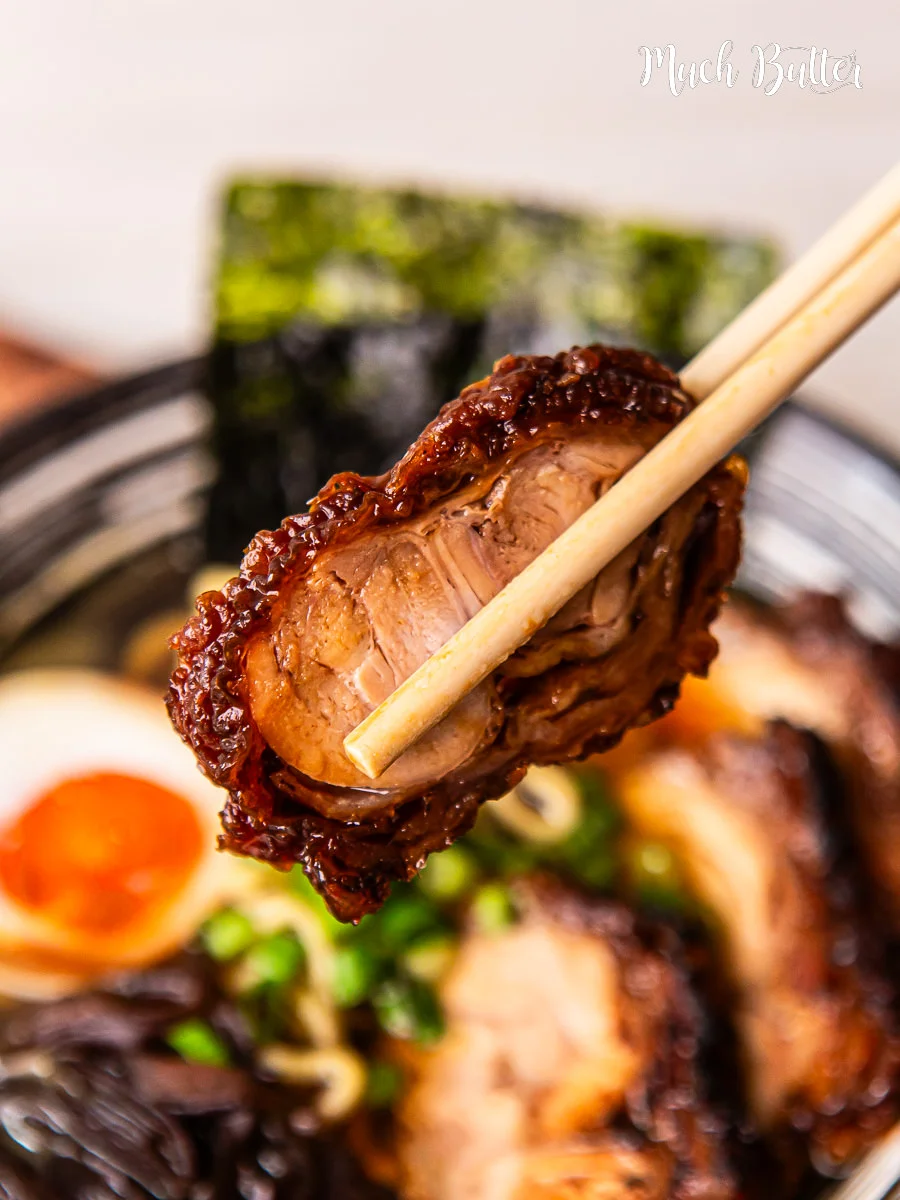
Chicken chashu is chicken thighs rolled with chicken skin, browned, then gently simmered in a savoury-sweet Japanese-style sauce. Chilling the roll in its cooking liquid makes it easier to slice and gives it time to take on the sauce’s flavour.
Ingredients
- 4boneless chicken thighs
- 14chicken skin
- 1onion, chopped
- 3 cmginger, sliced
- 4 clovesgarlic
- 1spring onion, chopped
- To tastecooking oil
- 720 ml (3 cups)water
- 240 ml (1 cup)Japanese sweet sauce
- 120 ml (½ cup)Japanese soy sauce
- 1 tspchicken stock powder
Instructions
- 1
Arrange the chicken
Lay three lengths of kitchen twine horizontally and two vertically. Spread seven pieces of chicken skin over the twine, then roll up two chicken thighs and place them on the skin.
- 2
Tie the roll
Fold the bottom of the skin over the chicken, fold in both sides, then roll it up and tie it securely with the twine.
- 3
Brown the chicken
Heat cooking oil in a pan. When hot, add the chicken thighs, onion, ginger, garlic and spring onion; cook until the chicken is golden brown and crisp. Remove everything from the pan and set aside.
- 4
Simmer in sauce
Pour the water, Japanese sweet sauce, soy sauce and chicken stock powder into a pot. Bring to the boil over a medium heat, add the browned chicken and simmer for one hour.
- 5
Chill the chashu
After one hour, transfer the chicken chashu and the cooking liquid to a shallow container. Cover and refrigerate for at least four hours.
- 6
Slice to serve
Cut away the twine and slice the chicken.
What is chicken chashu?
Chashu is a Japanese preparation associated with the rolled, braised pork served with ramen. This version uses chicken thighs wrapped in chicken skin, then browned and simmered in a sweet-savoury liquid.
The combination of browning and a long, gentle simmer gives the outside colour while the sauce seasons the meat. Chilling it in the liquid also helps the roll hold together for slicing.
Nutrition and macros by portion
The nutrition label shows one serving as written: 610 calories, 48g protein, 25g carbs, 34g fat.
| Portion | Adjustment | kcal | Protein | Carbs | Fat |
|---|---|---|---|---|---|
| Lighter | Smaller chicken portion | 427 kcal | 34g | 18g | 24g |
| This serving | As written | 610 kcal | 48g | 25g | 34g |
| Hungry | Extra rice and chicken | 915 kcal | 72g | 38g | 51g |
The chicken provides most of the protein and fat, while the sweet sauce contributes much of the carbohydrate and sugar; soy sauce and stock powder are the main sodium sources. Serve a moderate amount of the chicken with rice and plenty of vegetables to balance the plate.
The ingredients that shape the flavour
Chicken thighs: Their higher fat content compared with breast meat helps them stay succulent through the simmer.
Chicken skin: Wrapped around the thighs, it adds richness and helps form the roll. The ingredient list gives 14 pieces, while the method specifies spreading seven pieces over the twine.
Sauce and aromatics: Japanese sweet sauce and soy sauce make the braising liquid savoury and sweet, while onion, ginger, garlic and spring onion add fragrance.
Rolling and tying the chicken
The method describes laying out twine before arranging the skin and chicken, so the roll can be tied without losing its shape. Fold the skin over the meat and tuck in the sides as you roll.
Tie the roll snugly enough to hold its shape, but avoid crushing it. The supplied method refers to two thighs in the roll, although the ingredient list calls for four.
Browning before simmering
A hot pan gives the chicken colour and starts rendering the skin. Brown it on the surfaces you can reach, turning carefully so the roll stays intact.
The onion, ginger, garlic and spring onion are cooked alongside the chicken before everything is removed from the pan. Keep the heat controlled so the aromatics brown without burning.
Simmering and checking doneness
Bring the water, sweet sauce, soy sauce and stock powder to the boil before adding the browned chicken. Then simmer for one hour, rather than keeping it at a rolling boil.
The recipe gives time rather than a visual doneness cue. Check that the chicken is cooked through before chilling; a food thermometer inserted into the centre should read 74°C.
Why the chilling time matters
Refrigerating the roll in its cooking liquid for at least four hours lets it cool and take on more of the sauce’s flavour. It also firms the chicken skin and meat, making the roll easier to cut neatly.
Use a shallow container so the chicken and liquid cool more readily. Keep it covered while it chills.
Serving the sliced chicken
Serve the slices with rice, noodles or steamed vegetables, and spoon over a little of the cooking liquid if you like. The sauce is already savoury, so taste before adding extra soy sauce.
For a fuller meal, add crisp greens or lightly cooked vegetables to contrast with the rich chicken. Slice across the roll for rounds that show the layers.
Recipe notes & tips
- Pat the chicken skin dry before wrapping so it browns more readily.
- Use kitchen twine that is safe for cooking and tie the roll at several points to keep it compact.
- Turn the chicken carefully while browning to avoid loosening the skin.
- Keep the braising liquid at a gentle simmer for the full hour.
- Chill the chicken in its liquid for at least four hours before slicing.
- Use a sharp knife and wipe it between cuts for neater slices.
Variations
- Add chilli: Include sliced chilli in the braising liquid for gentle heat.
- Use sake: Replace some of the water with sake for a different aromatic note.
- Add star anise: Simmer one star anise in the liquid for a warm spice accent.
- Serve with noodles: Arrange the sliced chicken over ramen or udon with a little cooking liquid.
- Add greens: Serve with steamed pak choi or spinach for a fresh contrast.
Common mistakes to avoid
- Loose rolling: The chicken may fall apart when sliced; tie the roll snugly at several points.
- Burning the aromatics: Garlic can turn bitter; brown everything over a controlled heat and remove it once coloured.
- Boiling too hard: A vigorous boil can make the roll bump around; lower the heat to a gentle simmer.
- Skipping the chill: Warm chicken is harder to slice cleanly; refrigerate it in the liquid for at least four hours.
- Slicing with twine attached: Remove all the twine before cutting the chicken.
How to store
Refrigerate the chicken covered in its cooking liquid and use within 3 days. Reheat slices gently in the liquid until piping hot, or serve chilled; avoid repeated reheating.
Frequently asked questions
Can I make chicken chashu ahead?
Yes. The recipe already calls for at least four hours of chilling, and the chicken can be prepared a day ahead and kept covered in its cooking liquid in the fridge.
What does Japanese sweet sauce mean?
The ingredient is listed by that name without a specific brand or style. Use the Japanese sweet sauce you have available, and taste the cooking liquid before serving as sweetness and saltiness can vary.
Can I use chicken breast instead of thighs?
Thighs suit the long simmer because they are generally more forgiving and remain moist. Breast may become dry during the one-hour cooking time.
Why should the chicken cool in the sauce?
Chilling in the liquid gives the chicken more time to absorb its flavour and firms the roll, making it easier to slice.
How do I know the chicken is cooked?
Check the thickest part of the roll; it should reach 74°C at the centre. Keep the cooking time in the recipe as a guide, as roll thickness can vary.
Cook it from the original
This recipe comes from muchbutter.com. Their page has the author’s own photos, notes and tips — the best place to cook it from.
Open the recipe on muchbutter.com