
Egg Curry: My Nana's Recipe
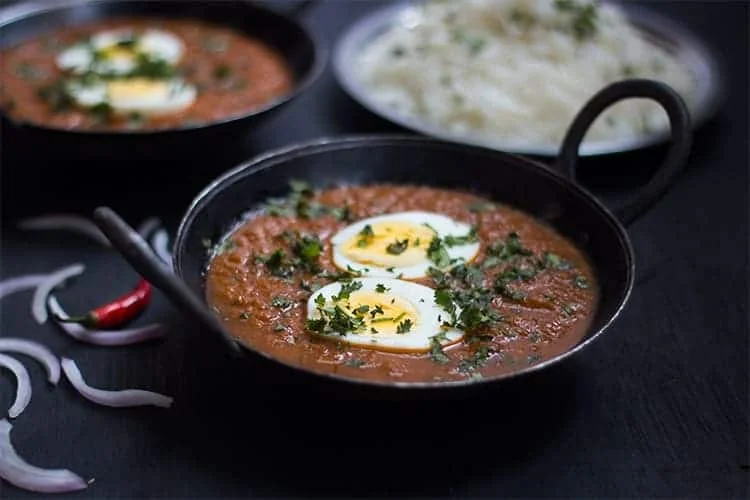
Boiled eggs are simmered in a warmly spiced onion and tomato gravy in this homestyle Indian curry. It makes a comforting weeknight meal or a generous Sunday lunch, served with rice or chapatis.
Ingredients
- 2onions, cut into chunks
- 1 teaspoon (or 3 cloves)garlic, chopped
- 1 teaspoon (or a 1.3 cm piece)ginger, chopped
- 2green chillies, finely chopped
- 15 g (¼ cup)coriander leaves
- 2 tablespoonsghee or butter
- 1 tablespoonoil
- 1 teaspooncumin seeds
- 2cloves
- 1bay leaf
- 1 small stickcinnamon
- 2 podsgreen cardamom
- 3tomatoes, finely chopped
- ½ teaspoonchilli powder
- 1 heaped teaspooncoriander powder
- ¼ teaspoonturmeric powder
- ½ teaspoongaram masala
- 1 teaspoontomato ketchup
- 1 teaspoonsalt, to taste
- 120 ml (½ cup)water
- 2 teaspoonschopped coriander leaves
- ¼ teaspoonturmeric powder
- ¼ teaspoonsalt
- 5eggs, hard-boiled and peeled
- 1 teaspoonoil
Instructions
- 1
Blend the paste
Grind the onions, garlic, ginger, green chillies and coriander leaves together until you have a fine paste. Set it aside.
- 2
Bloom the spices
Heat the ghee in a heavy-based pan or kadhai. Add the cumin seeds, bay leaf, cinnamon, cloves and cardamom.
- 3
Cook the paste
When the whole spices begin to splutter, stir in the onion paste. Cook until it turns golden brown and the oil starts to separate.
- 4
Simmer the tomatoes
Add the tomatoes, chilli powder, coriander powder, turmeric and salt. Cook until the tomatoes have softened into the gravy. Pour in 120 ml (½ cup) water and simmer for 10 minutes.
- 5
Finish the gravy
Stir in the garam masala, ketchup and chopped coriander leaves, then cook for a further 2 minutes.
- 6
Smooth the gravy
You can add the tempered eggs now and serve the curry as it is. For a smoother gravy, remove the bay leaf, cinnamon, cardamom and cloves, then pulse the gravy in a mixer-grinder 4–5 times; this is optional.
- 7
Serve the curry
Garnish with a little more chopped coriander and serve hot with rice or chapatis.
- 8
Season the eggs
Make a slit along the length of each egg. Toss the eggs with the salt and turmeric, then set them aside.
- 9
Temper the eggs
Heat 1 teaspoon oil in a pan and add the eggs. Sauté for 2 minutes, turn off the heat, then add the eggs to the gravy.
What is egg curry?
Egg curry is a home-style Indian dish in which boiled eggs are served in a spiced sauce, often built from onions and tomatoes. Versions vary between households and regions, with different spice blends and gravy textures.
This version starts with a blended onion, ginger, garlic, chilli and coriander paste, then layers in whole spices and tomatoes. Briefly sautéing the eggs with turmeric and salt gives them extra seasoning before they meet the gravy.
Nutrition and macros by portion
The nutrition label shows one serving as written: 346 calories, 13g protein, 27g carbs, 23g fat.
| Portion | Adjustment | kcal | Protein | Carbs | Fat |
|---|---|---|---|---|---|
| Lighter | Use less ghee and oil | 242 kcal | 9g | 19g | 16g |
| This serving | As written | 346 kcal | 13g | 27g | 23g |
| Hungry | Serve with extra rice | 519 kcal | 20g | 41g | 35g |
The eggs provide most of the protein, while the onions and tomatoes contribute carbohydrates. Ghee or butter and the two additions of oil account for much of the fat. Pair a serving with vegetables or a modest portion of rice or chapati for a more balanced plate.
Build the aromatic base
Whole spices: cumin seeds, bay leaf, cinnamon, cloves and cardamom go into the hot ghee first. Let them splutter, but keep the heat controlled so they release their fragrance without scorching.
Onion paste: give it time to cook until golden and the oil begins to separate. This is an important cue that the raw onion flavour has cooked out and the base is ready for the tomatoes.
Let the tomatoes melt
Tomatoes: cook them with the powdered spices and salt until they soften into the onion mixture rather than remaining as distinct pieces. Add the measured water and simmer for 10 minutes so the flavours come together.
Finishing spices: garam masala, ketchup and chopped coriander go in near the end, followed by just 2 minutes of cooking. Adding them late keeps their flavour distinct in the finished gravy.
Choose your gravy texture
Chunky: leave the gravy as it is and add the tempered eggs. This keeps the texture rustic and avoids an extra blending step.
Smoother: remove the whole spices first, then pulse the gravy 4–5 times. Take care when handling hot gravy, and avoid blending the whole spices into the sauce.
Season and temper the eggs
Slits: make a lengthwise cut in each boiled egg so the turmeric and salt can coat the surface. Keep the cut shallow enough that the egg stays intact.
Sautéing: cook the seasoned eggs in 1 teaspoon oil for 2 minutes, then add them to the gravy. They are already cooked, so this brief step is for seasoning rather than cooking them through.
Serve it while hot
Rice: serve the curry with plain rice to soak up the tomato gravy. Chapatis are another easy option for scooping up the sauce.
Fresh finish: add a little extra chopped coriander just before serving. If the gravy thickens while waiting, stir it gently before bringing it to the table.
Recipe notes & tips
- Prepare the onion paste before heating the ghee so it is ready as soon as the whole spices splutter.
- Keep the heat moderate while browning the paste to prevent the onions and garlic from catching on the pan.
- Cook the tomatoes until they soften into the gravy before adding the water.
- Remove every whole spice you can find before pulsing the gravy.
- Make the egg slits before tossing them with the turmeric and salt.
- Add the eggs near the end so they warm in the gravy without breaking apart.
Variations
- Milder curry: use less green chilli and chilli powder to reduce the heat.
- Chunkier gravy: skip the blending step and serve the sauce as cooked.
- Smoother gravy: remove the whole spices and pulse the sauce 4–5 times.
- Butter version: use butter in place of ghee as listed in the recipe.
- Herb finish: add extra chopped coriander just before serving.
Common mistakes to avoid
- Scorching the whole spices: keep the heat controlled and add the paste as soon as they splutter.
- Undercooking the onion paste: continue until it is golden and the oil begins to separate.
- Adding water too soon: first cook the tomatoes until they soften into the gravy.
- Blending whole spices: fish out the bay leaf, cinnamon, cardamom and cloves before pulsing.
- Overcooking the eggs: sauté them for just 2 minutes, then add them to the gravy.
How to store
Refrigerate leftover curry in a covered container and use within 3 days. Reheat gently in a pan until piping hot, stirring carefully to keep the eggs intact; add a splash of water if the gravy has thickened.
Frequently asked questions
Can I make the gravy chunky?
Yes. The recipe allows you to skip blending and add the tempered eggs directly to the gravy.
Do I have to remove the whole spices?
Only if you plan to blend the gravy, as the recipe instructs. You can leave the gravy unblended and serve it as it is.
Why make a slit in each egg?
The slit lets the turmeric and salt coat the egg more readily. Make it lengthwise and shallow enough to keep the egg together.
Can I use butter instead of ghee?
Yes. The ingredient list gives butter as an alternative to ghee.
What should I serve with egg curry?
Serve it hot with rice or chapatis, as suggested in the recipe.
Can I prepare the curry ahead?
You can make the gravy ahead and refrigerate it, then reheat it gently. Add the freshly tempered eggs when you are ready to serve.
Cook it from the original
This recipe comes from myfoodstory.com. Their page has the author’s own photos, notes and tips — the best place to cook it from.
Open the recipe on myfoodstory.com