
Lasagna alla Bolognese
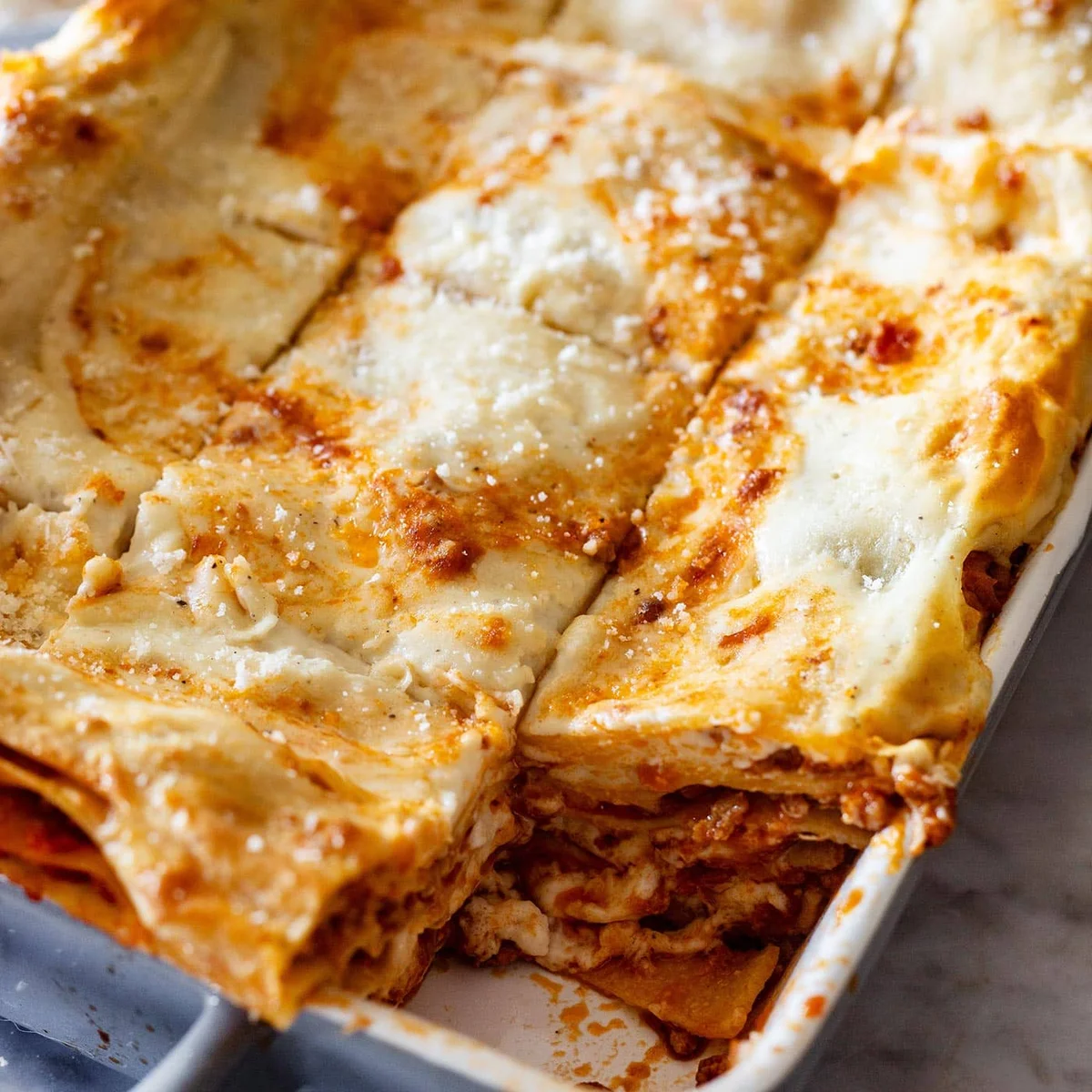
Lasagna alla Bolognese layers slow-cooked meat sauce, besciamella, fresh pasta and Parmigiano. It takes time to make, but the generous tray is well suited to sharing around the table.
Ingredients
- 1 recipehomemade spinach pasta sheets (see notes)
- 454 gground beef
- 454 gground pork
- 160 mldiced pancetta or bacon
- 360 mltomato passata
- 1 tablespoon (15 ml)tomato paste
- 3 tablespoons (45 ml)extra-virgin olive oil
- 240 mldry white wine (optional)
- 480 mlfreshly grated Parmigiano cheese
- 160 mlsoffritto (chopped onion, carrots, celery and garlic)
- 1 recipebesciamella sauce (see notes)
- to tastesalt and pepper
Instructions
- 1
Cook the pancetta
Heat the olive oil in a heavy pot over medium heat. Add the pancetta and cook for 3–4 minutes, then stir in the soffritto and cook for 5–6 minutes.
- 2
Brown the meat
Add the ground beef and pork. Cook for about 10 minutes, until the meat is no longer pink and has released its juices.
- 3
Add the wine
Pour in the wine, if using, and cook until it has completely evaporated.
- 4
Simmer the sauce
Stir in the passata and tomato paste, season with salt and pepper, and cook for 1 minute. Pour in 710–950 ml hot water and bring to the boil. Loosely cover and simmer over medium-low heat for 2 hours, checking occasionally and adding more water if needed.
- 5
Thicken the sauce
After 2 hours, remove the lid and raise the heat to medium-high. Cook for a further 10–15 minutes, until the sauce is thick and rich. Adjust the salt, turn off the heat and leave the sauce to cool slightly.
- 6
Layer the lasagna
Bring a pot of salted water to the boil. Cook fresh pasta sheets for about 30 seconds; for dried pasta, follow the packet instructions. Butter a lasagna dish and spread 1–2 tablespoons of besciamella over its base. Add pasta sheets, a layer of ragu, a few dollops of besciamella spread with the back of a spoon, and a good sprinkle of Parmigiano. Repeat the layers until the dish is full, then finish with a generous layer of besciamella and another good sprinkle of Parmigiano.
- 7
Bake and rest
Preheat the oven to 180°C. Bake the lasagna on the middle rack for 30–40 minutes, until the top is slightly golden and the pasta edges are crisp. Remove it from the oven and leave it to stand for 10 minutes before cutting and serving.
What is lasagna alla Bolognese?
This is a layered baked pasta associated with Bologna and the Emilia-Romagna region of Italy. Its defining combination is meat ragu, besciamella and pasta, finished with cheese.
Here, spinach pasta sheets add colour, while a long simmer gives the beef-and-pork sauce time to become rich. The creamy sauce and grated Parmigiano bring the layers together.
Nutrition and macros by portion
The nutrition label shows one serving as written: 904 calories, 42g protein, 48g carbs, 58g fat.
| Portion | Adjustment | kcal | Protein | Carbs | Fat |
|---|---|---|---|---|---|
| Lighter | Smaller slice, extra salad | 633 kcal | 29g | 34g | 41g |
| This serving | As written | 904 kcal | 42g | 48g | 58g |
| Hungry | Larger lasagna portion | 1356 kcal | 63g | 72g | 87g |
The pasta sheets and tomato contribute most of the carbohydrates, while the beef, pork and Parmigiano provide much of the protein. Fat comes chiefly from the meat, pancetta, olive oil and besciamella; pair a slice with vegetables or salad to balance the plate.
Build the ragu patiently
Pancetta first: cooking it in olive oil starts the sauce with savoury flavour. The soffritto follows, softening before the meat goes in.
Meat and wine: let the beef and pork cook until their pink colour disappears and their juices have come out. If using wine, allow it to evaporate fully before adding the tomato.
Give the sauce time
The covered, two-hour simmer is the longest part of the recipe. Check the pot from time to time and add more hot water if the sauce is getting too dry.
The final 10–15 minutes are uncovered over medium-high heat. Look for a thicker, rich consistency rather than a watery sauce, which can make the finished layers loose.
Layer for an even bake
Start with a little besciamella on the buttered dish so the first pasta layer has a creamy base. Spread the sauce gently across each layer rather than leaving it in concentrated dollops.
Keep layering pasta, ragu, besciamella and Parmigiano, and finish with besciamella and cheese. Distribute the layers evenly so each portion includes both sauces.
Watch the pasta
Fresh sheets need only about 30 seconds in salted boiling water according to the method. For dried sheets, use the packet directions instead.
The lasagna is ready when the top is slightly golden and the edges of the pasta are crisp. Resting it for 10 minutes after baking helps it settle before you slice it.
Serve it simply
A crisp green salad or cooked vegetables make a fresh counterpoint to the rich layers. Serve the lasagna as the centrepiece of a shared meal, with extra grated Parmigiano if desired.
Recipe notes & tips
- Use a heavy pot for the long simmer so the sauce heats steadily.
- Check the ragu occasionally during its two-hour simmer and add hot water if needed.
- Drain fresh pasta sheets well after their brief boil before assembling.
- Spread the besciamella across the layers with the back of a spoon.
- Let the baked lasagna rest for the full 10 minutes before slicing.
Variations
- Skip the wine: leave it out and continue with the sauce method.
- Use bacon: choose diced bacon in place of pancetta.
- Choose dried pasta: cook it according to the packet instructions.
- Make it ahead: prepare the ragu in advance, then assemble and bake when ready.
- Serve with greens: add a simple salad or cooked vegetables alongside.
Common mistakes to avoid
- Rushing the simmer: give the sauce the full 2 hours, checking for dryness along the way.
- Leaving the wine in: wait until it has completely evaporated before adding the tomato.
- Adding too much water: check the pot occasionally and add more only if needed.
- Overcooking fresh pasta: boil fresh sheets for about 30 seconds, then drain them.
- Cutting too soon: rest the baked lasagna for 10 minutes so it can settle.
How to store
Cool leftovers and refrigerate them in a covered container for up to 3 days. Reheat portions in the oven or microwave until hot throughout.
Frequently asked questions
Can I leave out the wine?
Yes. The wine is optional; omit it and continue with the recipe.
How long should I boil fresh pasta sheets?
The method calls for about 30 seconds in salted boiling water. For dried sheets, follow the packet instructions.
How do I know when the ragu is ready?
After its covered simmer and final 10–15 minutes uncovered, it should be thick and rich rather than watery.
What tells me the lasagna is baked?
The top should be slightly golden and the pasta edges nicely crisp after 30–40 minutes at 180°C.
Why should the lasagna rest before serving?
The 10-minute rest lets it settle, making it easier to cut and serve.
Cook it from the original
This recipe comes from maricruzavalos.com. Their page has the author’s own photos, notes and tips — the best place to cook it from.
Open the recipe on maricruzavalos.com