
Tasca di Vitello Ripiena (stuffed veal breast)
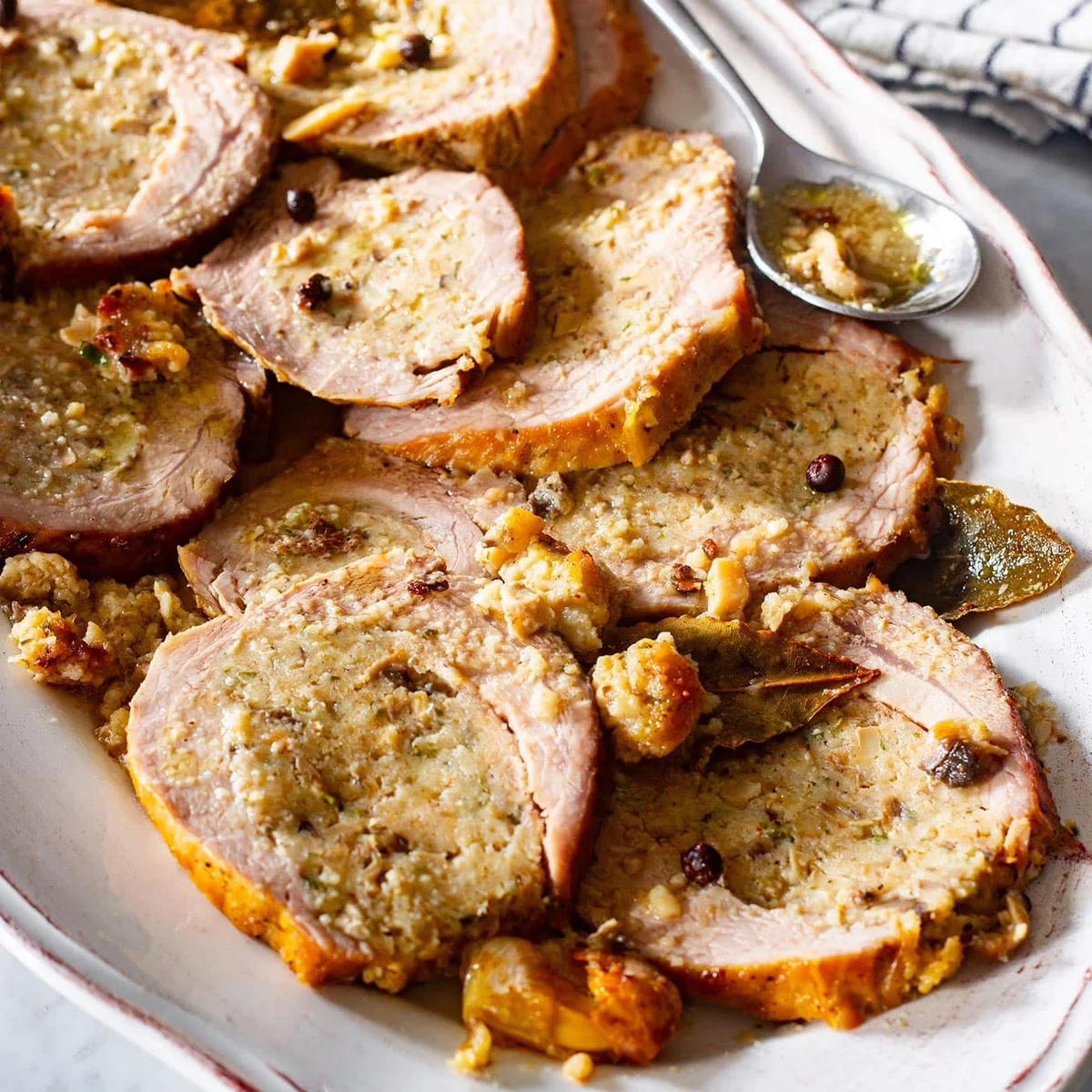
Tasca di vitello ripiena is a roast veal breast filled with mushrooms, bread, cheese and herbs. It makes a generous centrepiece for a family meal or special occasion, with the pan juices spooned over each slice.
Ingredients
- 907 g (2 lb)veal breast, one piece, cut into a pocket
- 720 ml (3 cups)mixed mushrooms, chopped
- 80 g (½ cup)Provola cheese, grated
- 600 ml (2½ cups)white bread, cut into small pieces
- 50 g (¼ cup)Italian breadcrumbs
- 40 g (¼ cup)Parmigiano cheese, grated
- 1 smallegg
- 240 ml (1 cup)dry white wine
- 720–960 ml (3–4 cups)beef stock
- 45 ml (3 tablespoons)parsley, finely chopped
- 1 smallonion, finely chopped
- 2 cloves (1 whole and 1 finely chopped)garlic
- 22.5 ml (1½ tablespoons)juniper berries, slightly crushed
- 2bay leaves
- 2.5 ml (½ teaspoon)ground nutmeg
- As neededextra-virgin olive oil
- To tastesalt and pepper
Instructions
- 1
Soak the bread
Soak the bread in 360 ml (1½ cups) of beef stock for 10 minutes. Squeeze out the excess liquid, crumble the bread and put it in a bowl.
- 2
Cook the aromatics
Warm olive oil in a pan over medium-low heat. Add the onion and chopped garlic and sauté for 3–4 minutes.
- 3
Cook the mushrooms
Add the mushrooms, season with salt and pepper, and cook until their liquid has evaporated and they are tender. Take the pan off the heat and let the mushrooms cool.
- 4
Mix the filling
Add the mushrooms to the bowl of bread, then add the Parmigiano, Provola, egg, breadcrumbs, parsley and nutmeg. Season with salt and pepper and mix everything together.
- 5
Fill the veal
Season the veal breast all over with salt and pepper. Fill the pocket with the mushroom mixture, then sew it closed with kitchen twine.
- 6
Prepare the dish
Put the stuffed veal in a baking dish. Add the bay leaves, whole garlic clove and juniper berries, then drizzle generously with olive oil.
- 7
Heat the oven
Preheat the oven to 220°C (430°F).
- 8
Roast with wine
Roast the veal for 20 minutes. Pour the wine over the meat and roast for another 10 minutes.
- 9
Cook the first hour
Lower the oven to 160°C (320°F). Pour 360 ml (1½ cups) of beef stock into the dish and cook for 1 hour, basting every 20 minutes with the pan liquid.
- 10
Turn and continue
Turn the stuffed veal over and cook for another hour, continuing to baste about every 20 minutes.
- 11
Brown the top
Raise the oven temperature to 220°C (430°F) and move the dish to a higher rack position. Roast for 10 minutes, or until the top is slightly golden.
- 12
Rest and serve
Remove the dish from the oven and leave the veal to cool slightly before slicing. Serve with the cooking sauce drizzled over the slices.
What is tasca di vitello ripiena?
The name refers to a pocket of veal breast filled with a savoury stuffing. It belongs to the Italian tradition of rolled or stuffed roasts, where a larger cut is made into a special meal by filling it with bread, cheese and other flavourings.
Here, tender cooked mushrooms, Provola and Parmigiano bring savoury depth, while bread and egg help bind the filling. A slow roast in stock and wine keeps the meat moist and creates a sauce for serving.
Nutrition and macros by portion
The nutrition label shows one serving as written: 400 calories, 44g protein, 23g carbs, 11g fat.
| Portion | Adjustment | kcal | Protein | Carbs | Fat |
|---|---|---|---|---|---|
| Lighter | Serve with extra vegetables | 280 kcal | 31g | 16g | 8g |
| This serving | As written | 400 kcal | 44g | 23g | 11g |
| Hungry | Larger slice with potatoes | 600 kcal | 66g | 35g | 17g |
The bread and breadcrumbs provide most of the carbohydrates, while the olive oil and cheeses contribute fat. Veal supplies much of the protein, with additional protein from the egg and cheeses. Pair a slice with vegetables or salad to add freshness and balance the meal.
The filling ingredients
Mushrooms: cook them until their released liquid has evaporated, so the stuffing does not become watery. Let them cool before combining them with the other ingredients.
Bread and cheese: soaked bread gives the filling body, while the two cheeses contribute savoury flavour. Breadcrumbs and egg help the mixture hold together inside the veal.
Close the pocket securely
Filling: spoon the mixture into the pocket without packing it so tightly that the opening strains. Leave enough room to sew the opening closed with kitchen twine.
Sewing: keep the stitches close enough to stop the stuffing escaping as it cooks. Tie off the twine securely before transferring the veal to the baking dish.
Follow the two-stage roast
Initial heat: the first 20 minutes at 220°C gives the roast a hot start; adding wine and roasting for 10 more minutes begins the braising stage.
Gentler cooking: lower the oven to 160°C and baste every 20 minutes with the pan liquid. Turn the veal after the first hour and continue cooking for another hour.
Look for these cues
Mushrooms: the pan should no longer hold a pool of liquid when they are ready for the filling. Tender mushrooms that are not wet make the mixture easier to handle.
Finish: the final 10 minutes at 220°C should leave the top slightly golden. Let the roast cool a little before slicing so the stuffed centre is easier to portion.
Serve with the cooking juices
Slice the veal and spoon the pan sauce over the top, making sure each portion gets some of the savoury liquid. Roasted or boiled potatoes make a natural accompaniment.
For a fresher contrast, serve it with a green salad or simply cooked vegetables. This also gives the rich, cheese-and-bread filling a lighter partner on the plate.
Recipe notes & tips
- Chop the mushrooms evenly so they cook at a similar rate.
- Cook the mushrooms until their liquid has fully evaporated before mixing the filling.
- Allow the mushroom mixture to cool before adding the egg and cheeses.
- Keep the stuffing below the pocket's capacity so you can close it securely.
- Baste at roughly 20-minute intervals during both slow-cooking stages.
- Let the roast cool slightly before removing the twine and slicing.
Variations
- Herb swap: replace some of the parsley with finely chopped fresh sage.
- Mushroom mix: use a different combination of fresh mushrooms while keeping the total amount the same.
- Cheese choice: use another grated, semi-firm cheese in place of the Provola.
- Stock adjustment: use the remaining stock to loosen the pan sauce if needed.
- Serving sides: pair the roast with potatoes or a crisp green salad.
Common mistakes to avoid
- Wet mushrooms: cook until the liquid in the pan has evaporated before adding them to the filling.
- Hot filling: let the mushrooms cool before mixing them with the egg and cheese.
- Overfilled pocket: leave room to sew the opening closed without stretching the meat.
- Loose stitching: secure the pocket with kitchen twine so the stuffing stays inside.
- Skipping the basting: spoon pan liquid over the veal about every 20 minutes during the slow roast.
- Slicing too soon: allow the roast to cool slightly before cutting so the filling is easier to portion.
How to store
Refrigerate leftover veal and sauce in a covered container for up to 3 days. Reheat slices gently with some sauce in a covered pan or in the oven until hot throughout.
Frequently asked questions
Can I prepare the filling ahead?
Yes. Cook the mushrooms and mix the filling ahead, then cover and refrigerate it. Let it lose some of its chill before stuffing the veal.
How do I keep the stuffing from falling out?
Avoid overfilling the pocket and sew the opening closed securely with kitchen twine. Keep the roast seam-side up when placing it in the dish.
Can I use a different mushroom mixture?
Yes. Use another combination of mushrooms, chopped to a similar size, and cook them until the pan is dry before adding them to the filling.
How often should I baste the veal?
Baste it about every 20 minutes during each of the two hours at 160°C. Use the liquid in the baking dish.
How can I tell when the roast is done?
Follow the stated cooking time and check that the meat is cooked through before serving. The final hotter stage is for making the top slightly golden.
Can I make the roast ahead?
You can cook it ahead and refrigerate it with its sauce. Reheat it gently with some of the sauce to help keep the slices moist.
Cook it from the original
This recipe comes from maricruzavalos.com. Their page has the author’s own photos, notes and tips — the best place to cook it from.
Open the recipe on maricruzavalos.com