
Vella Dosai-Wheat Jaggery Dosa
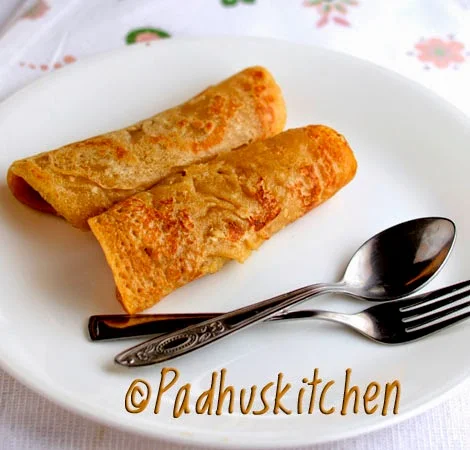
Vella dosai is a South Indian sweet dosa made with wheat flour, rice flour and jaggery. These small, gently cooked dosas make a warm breakfast or an easy snack, with coconut and cardamom adding fragrance.
Ingredients
- 60 g (½ cup)wheat flour
- 80 g (½ cup)rice flour
- 150 g (¾ cup)jaggery, grated or shaved
- 2–3 tbspgrated coconut
- ¼ tspground cardamom
- 120 ml (½ cup), plus more as neededwater
- as neededghee, for cooking
- 3cashew nuts (optional)
Instructions
- 1
Melt the jaggery
Put the jaggery in a pan with 120 ml (½ cup) water. Warm over low heat until it dissolves, then strain to remove any impurities and leave to cool.
- 2
Mix the batter
Combine the rice flour, wheat flour, cardamom and grated coconut in a bowl. Stir in the cooled or lukewarm jaggery water. For a more pronounced flavour, you can pound the coconut and cardamom together before adding them.
- 3
Adjust the consistency
Add more water as needed until the batter is pourable, neither thick nor very thin.
- 4
Heat the tawa
Grease the centre of a tawa with a little ghee and heat it. Once hot, turn the heat down to low.
- 5
Cook the dosas
Pour a ladleful of batter into the centre of the tawa and spread it in a circle, keeping the dosa small rather than spreading it too thinly.
- 6
Flip and finish
Drizzle 1 tsp ghee around the dosa. When its edges begin to lift, flip it and drizzle another ½ tsp ghee on the other side. Cook over low heat throughout.
- 7
Serve while hot
When the dosa is cooked through, take it off the tawa and serve hot.
What is vella dosai?
Vella dosai is a sweet South Indian dosa, with vella referring to jaggery. Unlike a savoury dosa made from a fermented batter, this version combines wheat flour and rice flour with jaggery water for a simple, sweet mixture.
Small dosas and gentle heat help the sweet batter cook without becoming too dark before the middle is done. Coconut and cardamom bring a fragrant finish.
Nutrition and macros by portion
The nutrition label shows one serving as written: 700 calories, 10g protein, 145g carbs, 12g fat.
| Portion | Adjustment | kcal | Protein | Carbs | Fat |
|---|---|---|---|---|---|
| Lighter | Use less ghee | 490 kcal | 7g | 102g | 8g |
| This serving | As written | 700 kcal | 10g | 145g | 12g |
| Hungry | Make an extra dosa | 1050 kcal | 15g | 218g | 18g |
Most of the carbohydrate comes from the wheat flour, rice flour and jaggery, while the jaggery also contributes much of the sugar. Ghee and coconut provide most of the fat, and the flours provide some protein. Pair a dosa with plain yoghurt or fruit for a more rounded plate.
The flour combination
Wheat flour: it gives the batter body and a soft, tender centre.
Rice flour: it lightens the mixture and helps the cooked dosa hold its shape. Stir both flours well with the spices before adding the liquid to limit lumps.
Preparing the jaggery
Dissolve the jaggery over low heat with the specified water, then strain it before it goes into the flour. This removes any impurities that may be present in the jaggery.
Temperature: let the jaggery water cool or become lukewarm before mixing it with the flours. Very hot liquid can make the batter harder to handle.
Getting the batter right
Consistency: add extra water gradually until the batter pours from a ladle but is not watery. A batter that is too thick can leave the dosa heavy; one that is too thin is harder to keep small.
Flavour: the coconut and cardamom can be mixed in as they are, or pounded together first as suggested in the method. The cashew nuts are listed as optional, but the method does not specify when to use them.
Cooking gently
Heat control: heat the greased tawa first, then turn it down to low before adding the batter. Jaggery browns readily, so low heat gives the centre time to cook.
Size and texture: spread each dosa in a small circle rather than making it very thin. Look for the edges to begin lifting before turning it.
When to serve it
These dosas are best served hot, when their centres are soft and the edges have had a chance to cook through. They work as a breakfast or an afternoon snack.
Serve them on their own, or alongside plain yoghurt or fresh fruit if you want something cool and fresh with the sweetness.
Recipe notes & tips
- Strain the melted jaggery while it is still fluid so it is easier to remove impurities.
- Add the extra water a little at a time, stopping when the batter is pourable.
- Keep the dosas small so they are easier to flip.
- Lower the heat before pouring the batter to help prevent the jaggery from darkening too quickly.
- Wait for the edges to lift before turning each dosa.
- Use a little ghee for each dosa and avoid letting it pool heavily around the edges.
Variations
- More coconut: use the upper end of the stated range for a more noticeable coconut flavour.
- Pounded aromatics: pound the coconut and cardamom together before mixing them into the batter.
- Cashew garnish: add the optional cashews as a topping when serving.
- Cardamom-forward: increase the cardamom slightly if you prefer a stronger spice aroma.
- Less sweet: reduce the jaggery to suit your taste, keeping in mind that it will change the batter's sweetness.
Common mistakes to avoid
- Hot jaggery water: let it cool to room temperature or become lukewarm before mixing it with the flour.
- Lumpy batter: stir the dry ingredients together first, then add the jaggery water gradually.
- Batter too thick: add water a little at a time until it pours from a ladle.
- Batter too thin: mix in a little more flour so the dosa is easier to spread and turn.
- High heat: lower the tawa heat after warming it, as jaggery can brown before the centre cooks.
- Spreading too widely: keep each dosa small so it is less likely to break when flipped.
How to store
Keep cooled dosas in an airtight container in the fridge for up to 2 days. Reheat gently on a tawa over low heat, or in a microwave, until warmed through.
Frequently asked questions
Can I make the batter ahead?
You can mix it ahead and keep it covered in the fridge, but it may thicken as it stands. Stir it and add a little water if needed before cooking.
How do I know when to flip a dosa?
Flip it when the edges begin to lift from the tawa. Keep the heat low so the underside has time to cook without browning too quickly.
Can I leave out the coconut?
Yes. The method allows for coconut to be mixed in, but the dosa can be made without it; the flavour and texture will be slightly different.
Are the cashews necessary?
No. They are marked optional, and the cooking method does not require them.
Why is my dosa browning too quickly?
The tawa may be too hot. Reduce the heat to low before pouring the batter and keep it low while cooking.
Can I use only wheat flour?
The recipe uses both wheat flour and rice flour. Replacing the rice flour will change the dosa's texture, so the result may not be the same.
Cook it from the original
This recipe comes from padhuskitchen.com. Their page has the author’s own photos, notes and tips — the best place to cook it from.
Open the recipe on padhuskitchen.com