
Ladi Pav
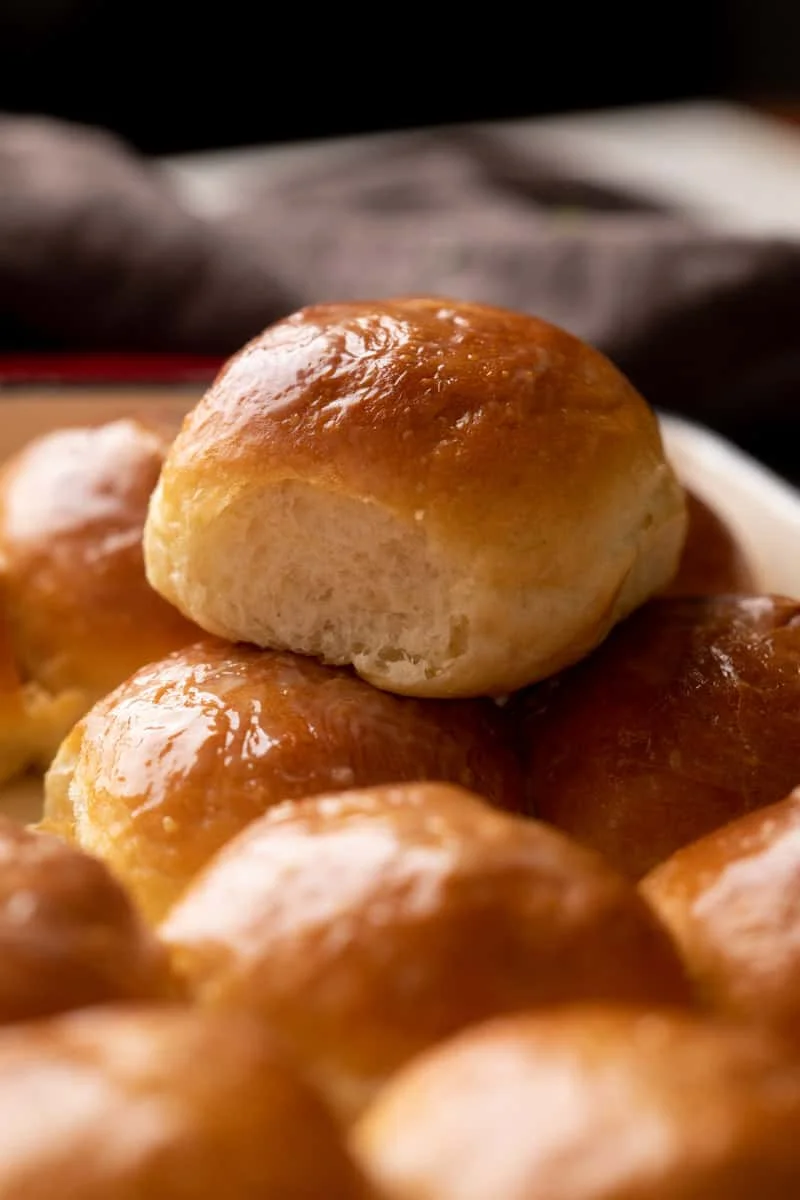
Ladi pav are soft, buttery Mumbai-style bread rolls with a tender crumb and a lightly golden top. Make them to serve alongside pav bhaji or misal, or use them for vada pav.
Ingredients
- 200 mllukewarm milk (38–42°C)
- 2½ teaspoonsactive dry yeast
- 1 tablespoonsugar
- 250 gplain flour
- 2 tablespoonsmilk powder
- 20 gsoftened butter
- 1 teaspoonsalt
- 1–2 teaspoonsoil
- 3 tablespoonsmilk, for brushing
- 30 gsoftened butter, for brushing
Instructions
- 1
Activate the yeast
Mix the milk, sugar and yeast in a bowl. Leave for 10 minutes, or until frothy with bubbles on the surface. If there is no bubbling, the yeast is not active, so do not continue with the dough.
- 2
Mix the dough
Put the flour and milk powder in a mixing bowl and make a well in the centre. Add the milk and yeast mixture, then mix until combined. Transfer the dough to the work surface and knead for 5–10 minutes, until it starts to come together.
- 3
Add butter and salt
The dough will be sticky at first; keep kneading until it begins to come together. Add the butter and salt, then knead for a few more minutes.
- 4
Shape a ball
When the dough has nearly come together, rub about 1 teaspoon of oil between your palms and shape the dough into a ball.
- 5
Proof the dough
Grease a large mixing bowl with the remaining oil and transfer the dough to it. Rub a little oil over the dough, cover the bowl and leave it to proof for 1 hour.
- 6
Shape the rolls
Divide the dough into 12 portions of about 45 g each and shape them into small balls. Place the balls in a buttered pan, leaving space between them.
- 7
Proof the rolls
Cover the rolls with a wet cloth and leave them to proof for 1 hour.
- 8
Bake the pav
Lightly brush the rolls with the milk. Bake in an oven preheated to 180°C for 30–35 minutes.
- 9
Cool and serve
Remove the rolls from the oven when done and brush them with melted butter. Cover again with a wet cloth for 5 minutes. Once cool, remove them from the pan and serve hot, toasted, with bhaji.
What is ladi pav?
Ladi pav is a soft, joined-together style of bread roll associated with Mumbai, where it is a familiar partner for street-food dishes such as pav bhaji, misal and vada pav.
This version uses milk, milk powder and butter for a tender, rich crumb. The rolls are baked close together in a pan, making them easy to pull apart for serving.
Nutrition and macros by portion
The nutrition label shows one serving as written: 139 calories, 4g protein, 19g carbs, 5g fat.
| Portion | Adjustment | kcal | Protein | Carbs | Fat |
|---|---|---|---|---|---|
| Lighter | Use less brushing butter | 97 kcal | 3g | 13g | 4g |
| This serving | As written | 139 kcal | 4g | 19g | 5g |
| Hungry | Serve an extra roll | 209 kcal | 6g | 29g | 8g |
The flour and sugar provide most of the carbohydrates, while the milk, milk powder and yeast contribute some protein. Butter and milk provide much of the fat; serve a roll with a generous portion of bhaji or another vegetable-rich dish to round out the plate.
Getting the yeast started
Warm milk: Keep it lukewarm, within the stated 38–42°C range, so it is ready to mix with the yeast and sugar.
Check the foam: After 10 minutes, look for bubbles and a frothy surface. If there is no activity, stop here rather than making dough that will not rise.
Kneading sticky dough
At first: The dough is expected to feel sticky as you knead it with the flour, milk powder and yeast mixture. Keep working it for the stated 5–10 minutes so it starts to come together.
Additions: Knead in the butter and salt after the dough has begun to form. Oil your palms to shape it into a ball rather than adding extra flour.
Proofing and shaping
First rise: Put the oiled dough in a greased bowl, cover it and leave it for 1 hour. The method does not specify a target size, so follow the stated proofing time.
Even portions: Divide the dough into 12 pieces of about 45 g each, then shape them into balls. Leave gaps between the balls in the pan before the second 1-hour proof.
Baking for a soft crumb
Milk glaze: Brush the proved rolls lightly with milk before baking. This gives the tops a light coating without changing the soft-roll style.
Doneness: Bake at 180°C for 30–35 minutes, as directed. Brush with melted butter after baking, then cover the rolls with a wet cloth for 5 minutes.
How to serve ladi pav
Traditional pairing: Serve the pav with bhaji, misal or vada pav fillings. For bhaji, the soft crumb is handy for scooping up the curry.
To toast: Split and toast the rolls before serving, as suggested in the recipe. They also work as a soft bread roll alongside a savoury meal.
Recipe notes & tips
- Check that the yeast mixture is frothy before you start mixing the dough.
- Expect the dough to be sticky at first and keep kneading rather than adding flour.
- Use the oil on your hands to make shaping the dough ball easier.
- Leave space between the shaped dough balls in the pan.
- Brush the rolls lightly with milk before baking.
- Cover the baked rolls with a wet cloth for 5 minutes as directed.
Variations
- Toast to serve: Split the rolls and toast them before serving with bhaji.
- Make vada pav: Use a roll to hold a vada and serve it with the usual accompaniments.
- Serve with misal: Set the pav alongside misal for a traditional pairing.
- Pull apart at the table: Bake the rolls together in the pan and separate them for serving.
Common mistakes to avoid
- Inactive yeast: If the milk mixture has no bubbles after 10 minutes, do not proceed with the dough.
- Adding flour too soon: The dough is sticky initially; knead it as directed instead of adding extra flour.
- Skipping the second proof: Cover the shaped rolls with a wet cloth and leave them for the full 1 hour.
- Crowding the dough balls: Leave space between them in the pan before proofing.
- Brushing too heavily: Apply the milk lightly before baking so the rolls are only lightly coated.
How to store
Once cool, store the rolls in an airtight container at room temperature and eat within 2 days. Reheat briefly in a warm oven or split and toast before serving.
Frequently asked questions
How can I tell if the yeast is active?
After 10 minutes, the milk, sugar and yeast mixture should look frothy and show bubbles at the surface. If it does not, the recipe advises not to continue.
Why is the dough sticky?
The method says the dough will be sticky at first and come together as you knead. Keep kneading before adding the butter and salt.
How many rolls does this recipe make?
It makes 12 rolls, with each portion weighing about 45 g.
How long do the rolls need to proof?
The dough proofs for 1 hour in the bowl, then the shaped rolls proof for another 1 hour under a wet cloth.
Can I serve ladi pav without bhaji?
Yes. The recipe also names misal pav and vada pav as traditional ways to serve these rolls.
Can I toast ladi pav?
Yes. The recipe suggests serving the rolls hot and toasted with bhaji.
Cook it from the original
This recipe comes from myfoodstory.com. Their page has the author’s own photos, notes and tips — the best place to cook it from.
Open the recipe on myfoodstory.com