
Tomato Pickle
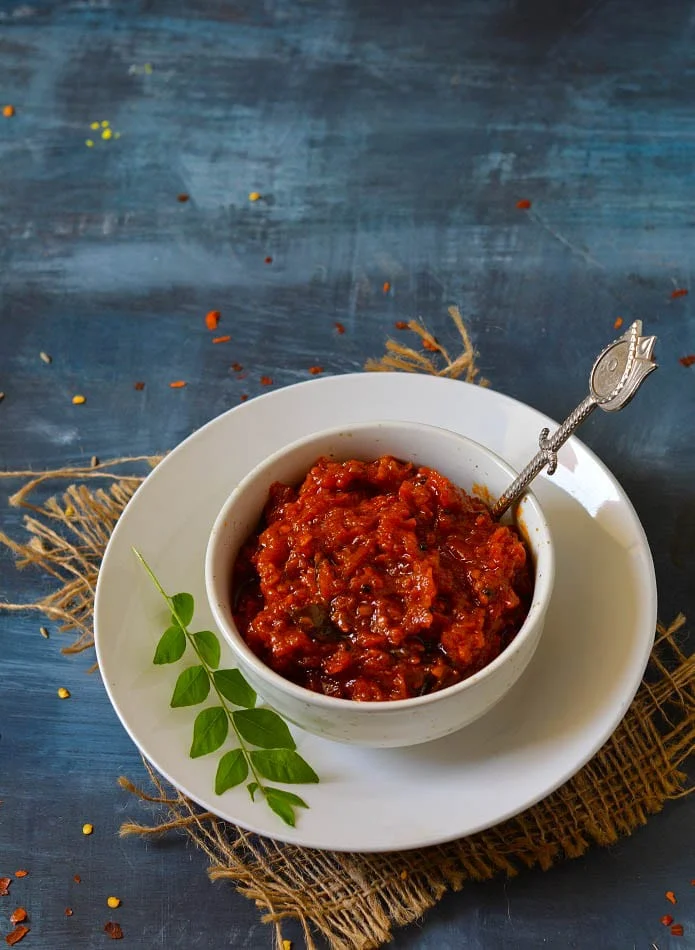
This Andhra-style tomato pickle cooks tomatoes down with tamarind, chilli, jaggery and a fragrant mustard-seed tempering. It is a punchy, tangy-sweet relish to serve in small spoonfuls alongside rice, dal or other South Indian dishes.
Ingredients
- 1250 gtomatoes
- 20 g (about the size of a lime)tamarind
- 2.5 tsp, or to tastesalt
- 1 tspfenugreek seeds, for dry-roasting
- 2.5 tbspjaggery
- 1/2 tspground turmeric
- 2.5 tspKashmiri chilli powder
- 120 ml (1/2 cup)cooking oil
- 1.5 tspmustard seeds
- 1/4 tspfenugreek seeds, for tempering
- 8whole dried red chillies
- 20curry leaves
- 1/4 tspasafoetida powder
Instructions
- 1
Chop the tomatoes
Wash the tomatoes and cut them into medium-sized pieces.
- 2
Roast the fenugreek
Dry-roast 1 tsp fenugreek seeds over low heat until they turn a deep reddish colour. Grind them to a fine powder.
- 3
Temper the spices
Heat the oil in a heavy-based pan. Add the mustard seeds and 1/4 tsp fenugreek seeds; once they begin to crackle, add the curry leaves, whole dried red chillies and asafoetida.
- 4
Add tomatoes
Stir in the chopped tomatoes, tamarind and turmeric.
- 5
Cook until soft
Cover the pan and cook over low heat until the tomatoes are soft.
- 6
Mash and thicken
Roughly mash the tomatoes with a ladle. Add the salt, chilli powder, jaggery and roasted fenugreek powder, then cook until thickened and oil starts to show around the edges.
- 7
Cool completely
Take the pan off the heat and leave the pickle to cool completely.
- 8
Jar and chill
Transfer the cooled pickle to a glass jar and refrigerate.
What is tomato pickle?
Tomato pickle is a spicy, tangy preserve-style condiment popular in South Indian cooking, including Andhra Pradesh. Tomatoes are cooked down with tamarind and spices until concentrated, then served as an accompaniment rather than as a main dish.
This version balances sharp tomato and tamarind with jaggery, while toasted fenugreek and a hot oil tempering give it depth. The slow simmer helps the tomatoes soften and the flavours come together.
Nutrition and macros by portion
The nutrition label shows one serving as written: 325 calories, 5g protein, 28g carbs, 27g fat.
| Portion | Adjustment | kcal | Protein | Carbs | Fat |
|---|---|---|---|---|---|
| Lighter | Use less oil | 227 kcal | 4g | 20g | 19g |
| This serving | As written | 325 kcal | 5g | 28g | 27g |
| Hungry | Serve a larger spoonful | 488 kcal | 8g | 42g | 41g |
The tomatoes and jaggery provide most of the carbohydrates, while the cooking oil supplies most of the fat. Tomatoes contribute a little protein, but this is mainly a condiment rather than a protein-rich dish. Serve a modest spoonful with dal or another protein-rich main and plenty of vegetables to make a more balanced plate.
The tomato and tamarind base
Tomatoes: medium pieces soften readily and are easy to mash once cooked. Use ripe tomatoes for a fuller flavour, while keeping the quantity as stated for the intended consistency.
Tamarind: it brings a concentrated sourness that cuts through the cooked tomato and oil. Its intensity can vary, so taste the finished pickle before serving rather than adjusting the listed amount during cooking.
Building the tempering
Whole spices: let the mustard seeds and the smaller portion of fenugreek seeds crackle in the hot oil before adding the other aromatics. This is the cue that the seeds have started releasing their flavour.
Chillies and leaves: curry leaves, dried red chillies and asafoetida go in after the seeds. Keep the heat controlled so these additions become fragrant without scorching.
Toasting fenugreek
Low heat: roast the teaspoon of fenugreek seeds gently, stirring or moving the pan so they colour evenly. The recipe calls for a reddish colour; take them off the heat before they turn very dark or smell burnt.
Fine powder: grind the roasted seeds finely so their flavour disperses through the pickle. Keep this powder separate from the quarter teaspoon of fenugreek used in the tempering.
Getting the right texture
Soft tomatoes: keep the pan covered and the heat low until the pieces collapse easily. The recipe gives no fixed cooking time for this stage, so use softness as your guide.
Thick finish: mash roughly rather than blending smooth, then continue cooking until the mixture thickens and oil appears at the sides. Stir as it reduces to prevent the concentrated mixture catching on the pan.
How to serve it
Small portions: the pickle is strongly flavoured, so a spoonful alongside rice, dal or a South Indian meal is usually enough to season each bite.
Pairings: it also works as a sharp counterpoint to plain rice, idli or dosa. Keep the rest of the plate relatively simple so the chilli, tang and spice remain distinct.
Recipe notes & tips
- Use a heavy-based pan to help the tomato mixture cook evenly as it thickens.
- Keep the fenugreek roasting gentle and watch its colour closely.
- Have the curry leaves and dried chillies ready before starting the tempering.
- Stir more often as the pickle thickens, since the reduced mixture can catch on the base.
- Let the pickle cool completely before putting it in the jar.
Variations
- Adjust the heat: use fewer whole dried chillies for a milder tempering.
- Change the sweetness: reduce the jaggery slightly for a sharper, less sweet pickle.
- Make it smoother: mash the cooked tomatoes more thoroughly for a less chunky texture.
- Serve with rice: pair a small spoonful with plain rice and dal for a simple meal.
- Use as a condiment: serve it alongside idli or dosa for a tangy, spicy contrast.
Common mistakes to avoid
- Scorching the fenugreek: roast it over low heat and stop once it turns reddish, before it darkens too far.
- Adding the aromatics too soon: wait for the mustard and tempering fenugreek seeds to crackle first.
- Cooking at high heat: keep the tomatoes at a low simmer so they soften without burning.
- Leaving the mixture unattended as it thickens: stir regularly once the liquid has reduced.
- Jarring it warm: cool the pickle completely before transferring it to the glass jar.
How to store
Keep the cooled pickle in a clean, sealed glass jar in the refrigerator and use a clean spoon each time. For best quality, use it within 1–2 weeks; discard it if you notice mould, an unusual smell or other signs of spoilage. This recipe does not specify a validated shelf life.
Frequently asked questions
How spicy is this tomato pickle?
It uses Kashmiri chilli powder as well as eight whole dried red chillies, so the heat can be noticeable. Reduce the whole chillies if you prefer a milder pickle.
When is the pickle thick enough?
It should look substantially reduced after the tomatoes have softened and been mashed, with oil beginning to show at the edges. Keep stirring as it thickens.
Can I make it less sweet?
Yes. Use less jaggery if you prefer a more sour, savoury balance, and taste before serving.
What should I serve with tomato pickle?
Serve a small amount with rice and dal, or alongside idli or dosa. Its strong flavour works well as a condiment.
Can I store it at room temperature?
The method specifies refrigeration, so keep the jar chilled rather than storing it at room temperature.
Why does the recipe use fenugreek twice?
One teaspoon is dry-roasted and ground to add to the cooked tomatoes; the separate quarter teaspoon is added whole to the oil tempering.
Cook it from the original
This recipe comes from maayeka.com. Their page has the author’s own photos, notes and tips — the best place to cook it from.
Open the recipe on maayeka.com