
Braised Apple Cider Turkey
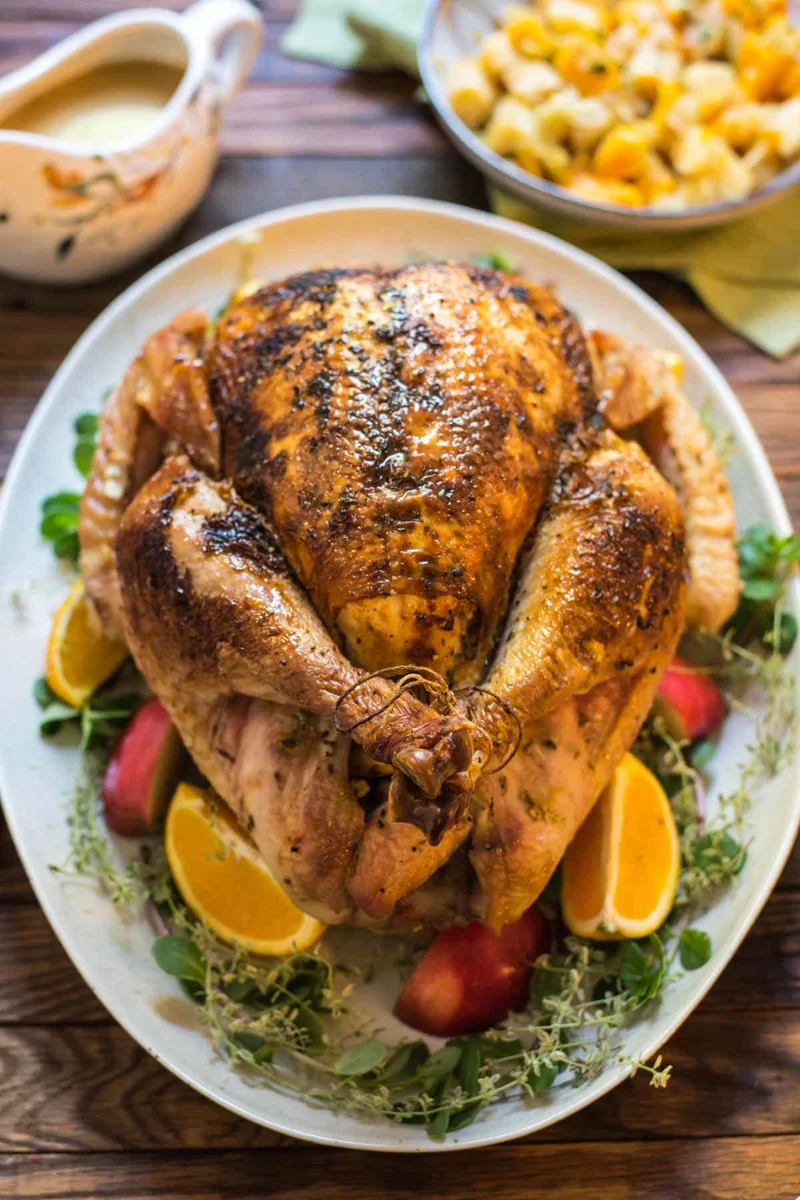
This American-style turkey is roasted with hard cider, apple cider, citrus and herbs, then served with a cider gravy. The covered roasting stage helps keep the meat tender, while a high-heat start gives the skin colour.
Ingredients
- 6.35–7.26 kg (14–16 lb)whole turkey, fresh or thawed
- 113 g (1 stick), at room temperatureunsalted butter
- 45 ml (3 tablespoons)thyme leaves
- 45 ml (3 tablespoons)chopped rosemary leaves
- Zest of 1 orange, plus the orange, halvedorange
- Zest of 1 lemon, plus the lemon, halvedlemon
- 3 clovesgarlic
- To tastekosher salt
- To tastepepper
- 240 ml (1 cup)chicken broth
- 720 ml (3 cups)hard apple cider
- 240 ml (1 cup)apple cider
- 28 g (2 tablespoons), meltedbutter
- 3 cloves, mincedgarlic
- 1butternut squash, peeled and chopped
- 2, cut into thick slicesapples
- 2, quarteredonions
- 32 g (4 tablespoons)cornstarch
- 480 ml (2 cups)chicken or turkey broth
- 240 ml (1 cup)apple cider
- 5 ml (1 teaspoon), optionalDijon mustard
- To tastesalt and pepper
Instructions
- 1
Prepare the vegetables
Preheat the oven to 260°C (500°F). In a roasting pan, toss the melted butter, minced garlic, butternut squash, apples and onions together. Season with salt and pepper.
- 2
Mix the herb butter
In a bowl, combine the softened butter, thyme, rosemary, orange and lemon zest, and the 3 garlic cloves. Put about 60 ml (¼ cup) of salt and 10 ml (2 teaspoons) of pepper in separate small bowls, and set out kitchen twine. Arrange everything near the roasting pan to keep preparation straightforward.
- 3
Season the turkey
Remove the turkey from its packaging and take out anything inside the cavity. Set it on top of the vegetables and pat it dry. Make a small slit in the skin above the cavity, then gently slide your hand between the skin and breast meat. Spread the herb butter under the skin and rub it over the breast, legs, thighs and inside the cavity. Sprinkle the bird with kosher salt, using less than the 60 ml (¼ cup) if needed, and add pepper.
- 4
Fill and tie
Put the orange halves in the cavity, along with a few apple and onion slices from the pan. Tie the legs together with kitchen twine and tuck the wing tips underneath the turkey.
- 5
Roast the turkey
Roast uncovered for 30 minutes, or until golden. Remove the pan and reduce the oven temperature to 175°C (350°F). Pour in the chicken broth, hard cider and apple cider, scraping up any browned bits from the bottom. Lay a small strip of parchment over the breast, cover the pan with foil, and place an oven-safe or probe thermometer in the breast meat. Return the turkey to the oven for 2–2½ hours, or until it reaches about 66°C (150°F). Remove the foil and continue roasting until it reaches 72°C (161°F). Take it out, tent it with foil and leave it to rest for about 30 minutes before carving.
- 6
Strain the pan liquid
For the gravy, strain the vegetables from the pan liquid, reserving both for another use. Skim the fat from the liquid; a gravy separator can help, or chill the liquid briefly to make the fat easier to remove.
- 7
Make the gravy
Put 60 ml (¼ cup) of the pan fat in a saucepan over medium heat; if you have less, top it up with butter. Measure 120 ml (½ cup) of pan liquid and whisk it with the cornstarch to make a slurry. Stir the slurry into the fat, whisking until it begins to thicken. Slowly add the broth and then the cider in a steady stream, alternating stirring and whisking. Cook for about 5 minutes, or until the gravy reaches the consistency you want. Whisk in the mustard if using, season with salt and pepper to taste, and serve with the turkey.
What is braised apple cider turkey?
This is a roast turkey cooked with liquid in the pan, combining a browned start with a covered, slower roasting stage. It is an American holiday-style preparation built around familiar roast-turkey flavours, with apple cider and hard cider bringing a fruity note to the cooking juices.
Citrus zest and fresh herbs flavour butter that is worked beneath the skin, while squash, apples and onions cook underneath the bird. Those pan flavours also provide the base for a cider gravy.
Nutrition and macros by portion
The nutrition label shows one serving as written: 950 calories, 146g protein, 34g carbs, 24g fat.
| Portion | Adjustment | kcal | Protein | Carbs | Fat |
|---|---|---|---|---|---|
| Lighter | Less gravy, more greens | 665 kcal | 102g | 24g | 17g |
| This serving | As written | 950 kcal | 146g | 34g | 24g |
| Hungry | Larger turkey portion | 1425 kcal | 219g | 51g | 36g |
The turkey supplies most of the protein, while the cider, apple and squash contribute carbohydrates. Butter and the fat used in the gravy are the main sources of fat; serve with a generous helping of vegetables to balance the plate.
Why use two kinds of cider?
Hard cider: It joins the broth in the roasting pan and contributes a more complex apple flavour to the cooking liquid.
Apple cider: The non-alcoholic cider adds another layer of apple flavour, both in the pan and in the finished gravy. Keep the two additions separate as directed.
Getting the herb butter under the skin
Make a small slit above the cavity and ease your hand between the skin and breast meat without tearing it. Spread the herb butter beneath the skin, then rub the remainder over the bird and inside the cavity.
The butter mixture includes thyme, rosemary, citrus zest and garlic. Have it ready before handling the turkey, and wash your hands and work surfaces after contact with raw poultry.
Roasting in two stages
High heat: The first 30 minutes uncovered are intended to colour the turkey. Keep an eye on the skin during this stage.
Covered roast: After adding the broth and ciders, cover the pan with foil and lower the oven temperature. Use a thermometer to check the breast, uncover for the final stage, and follow the temperatures and timings in the method.
How to tell when it is ready
A thermometer is more useful than judging by time alone, since the size and starting temperature of the bird affect how quickly it cooks. The method calls for about 66°C (150°F) before removing the foil, followed by 72°C (161°F) in the breast.
Rest the turkey under a loose foil tent for about 30 minutes before carving. This also gives you time to finish the gravy.
Making smooth cider gravy
Skim the fat from the strained pan liquid, then measure the amount needed for the gravy. Whisk the cornstarch with some of the liquid before adding it to the fat, so it forms a slurry rather than going straight into the pan as dry powder.
Add the broth and cider gradually while stirring and whisking. Cook for about 5 minutes and stop when the gravy is as thick as you prefer; mustard is optional.
What to serve alongside it
The squash, apples and onions are cooked in the roasting pan and can be kept for another use, as the method directs. For a full meal, serve the carved turkey and gravy with those vegetables or with a simple green vegetable.
The turkey is rich and savoury, so a crisp salad or steamed greens can add contrast. Spoon the gravy over the meat at the table to keep the skin from getting soggy before serving.
Recipe notes & tips
- Thaw a frozen turkey completely in the refrigerator before roasting.
- Pat the turkey dry before seasoning to help the skin brown.
- Keep the butter mixture and seasonings close to the roasting pan before handling the raw bird.
- Use a probe or oven-safe thermometer and check the breast rather than relying on the cooking time alone.
- Let the turkey rest for about 30 minutes before carving.
- Whisk the cornstarch with the measured pan liquid until smooth before adding it to the fat.
Variations
- Use fresh herbs: Replace dried herbs with fresh thyme and rosemary leaves as listed.
- Skip the mustard: Leave out the Dijon for a simpler cider gravy.
- Choose the broth: Use chicken or turkey broth in the gravy, according to what you have.
- Save the vegetables: Keep the strained squash, apples and onions to serve separately or use in another dish.
- Adjust the gravy: Cook it a little longer for a thicker consistency, stirring as it reduces.
Common mistakes to avoid
- Starting with a wet bird: Pat it dry before seasoning so excess moisture does not hinder browning.
- Tearing the breast skin: Ease your hand underneath gently and work slowly when spreading the butter.
- Skipping the temperature check: Use a thermometer to track the breast and follow the temperatures in the method.
- Adding dry cornstarch: Whisk it into the measured pan liquid first to make a smooth slurry.
- Pouring in liquid too quickly: Add the broth and cider steadily while whisking to help the gravy stay smooth.
- Carving straight away: Rest the turkey under foil for about 30 minutes before slicing.
How to store
Refrigerate leftover turkey and gravy promptly in separate airtight containers and use within 3–4 days. Reheat until piping hot throughout; freeze leftovers for longer storage.
Frequently asked questions
Can I use a fresh or thawed turkey?
Yes. The recipe specifies a fresh or fully thawed turkey weighing 6.35–7.26 kg (14–16 lb).
Do I need to use hard apple cider?
The recipe includes hard cider as well as non-alcoholic apple cider. For a version without alcohol, replace the hard cider with additional apple cider or broth, though the flavour will differ.
Can I make the gravy without a separator?
Yes. The method suggests chilling the pan liquid briefly so the fat is easier to skim from the top.
What can I do with the vegetables strained from the pan?
The method reserves them for another use. You can serve them separately if you like, or save them to add to another dish.
Can I make the gravy ahead?
The method makes the gravy from the turkey's pan liquid after roasting. You can prepare it in advance once the liquid is available, then reheat it gently and whisk before serving.
How long should the turkey rest?
Rest it under a foil tent for about 30 minutes before carving, as directed in the method.
Cook it from the original
This recipe comes from neighborfoodblog.com. Their page has the author’s own photos, notes and tips — the best place to cook it from.
Open the recipe on neighborfoodblog.com