
Sticky Toffee Pudding
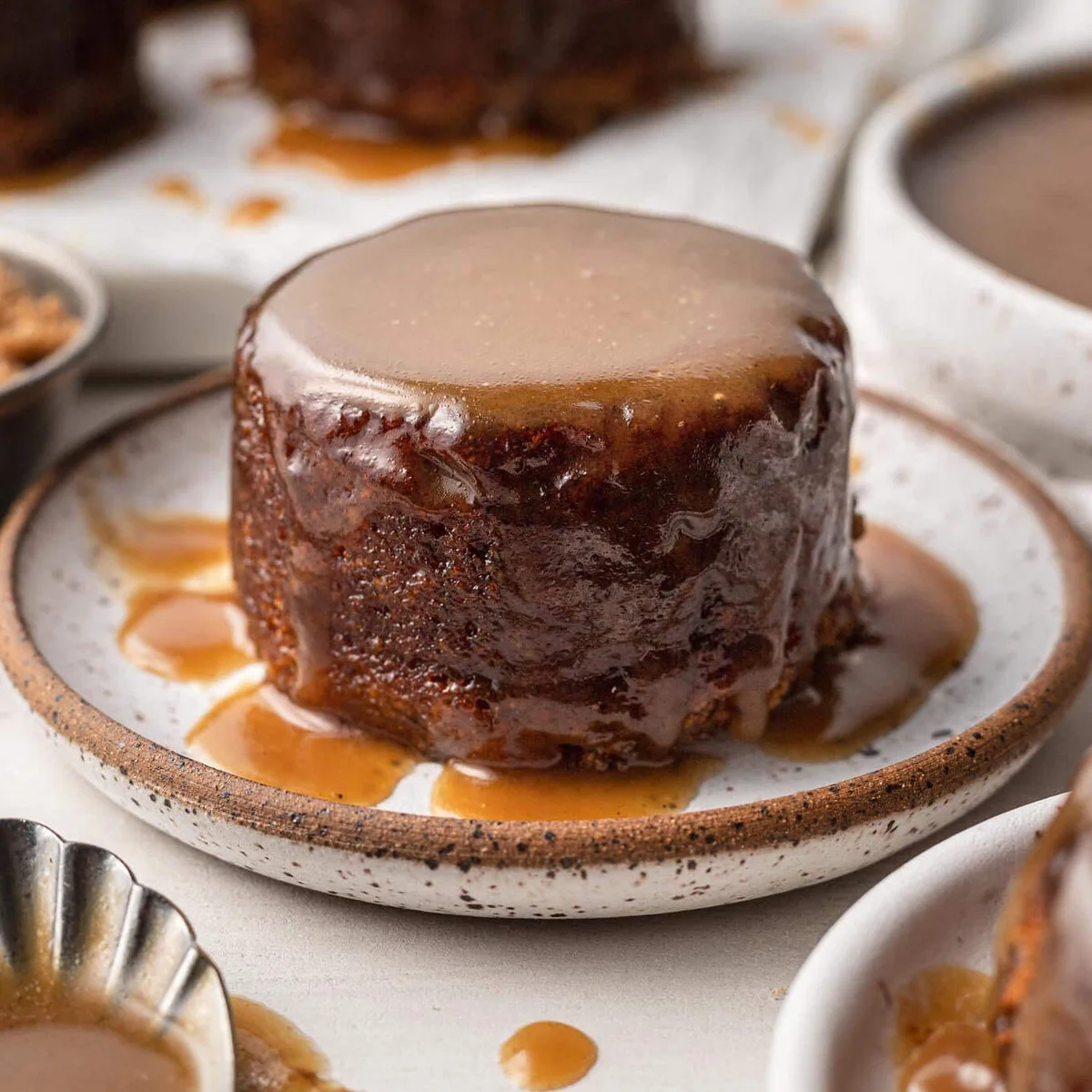
Sticky toffee pudding is a British date sponge served with a buttery brown-sugar toffee sauce. Baking it in individual ramekins gives each portion its own tender, sauce-ready cake.
Ingredients
- 226 g (8 oz)pitted dates, chopped (preferably Medjool)
- 240 ml (1 cup)water
- 1 teaspoonbicarbonate of soda
- 220 g (1¾ cups)plain flour, spooned and levelled
- 1 teaspoonbaking powder
- ¼ teaspoonsalt
- 115 g (½ cup; 1 stick)unsalted butter, softened
- 100 g (½ cup, packed)dark brown sugar
- 80 g (¼ cup)unsulphured molasses
- 3 largeeggs, at room temperature
- 2 teaspoonspure vanilla extract
- 115 g (½ cup; 1 stick)unsalted butter
- 200 g (1 cup, packed)dark brown sugar
- 360 g (1½ cups)double cream or heavy whipping cream
- 1 teaspoonpure vanilla extract
- ⅛ teaspoonsalt
Instructions
- 1
Prepare the ramekins
Heat the oven to 180°C (350°F) and grease ten 180 ml (6 oz) ramekins with non-stick cooking spray.
- 2
Soak the dates
Put the chopped dates and water in a medium saucepan over medium-high heat. Once the water starts to boil, cover the pan, take it off the heat and leave it for 10 minutes.
- 3
Blend the dates
Pour the date and water mixture into a vented food processor or blender. Add the bicarbonate of soda and blend to a smooth paste, then set it aside to cool slightly.
- 4
Mix dry ingredients
Whisk the flour, baking powder and salt together in a large bowl, then set aside.
- 5
Cream butter and sugar
Using a stand mixer with a paddle attachment or a handheld electric mixer, beat the softened butter and brown sugar for 3–4 minutes, until light and fluffy. Mix in the molasses.
- 6
Add eggs and vanilla
Mix in the eggs one at a time, beating each until fully incorporated. Stir in the vanilla extract.
- 7
Combine the mixtures
Add the dry ingredients in two additions, alternating with the date mixture. Begin and finish with the dry ingredients, mixing each addition only until combined.
- 8
Fill the ramekins
Divide the batter evenly between the ramekins, filling each about two-thirds full. If weighing it, use about 105 g of batter per ramekin.
- 9
Bake the cakes
Set the ramekins on a baking sheet and bake for 23–28 minutes, until a toothpick inserted into the centre comes out clean.
- 10
Cool the cakes
Take the cakes out of the oven and leave them to cool slightly on a wire rack while you make the sauce.
- 11
Simmer the sauce
Melt the butter in a medium saucepan over medium heat, then stir in the brown sugar and cream. Bring to the boil, reduce the heat and simmer for 5–6 minutes, until slightly thickened.
- 12
Season the sauce
Remove the pan from the heat and stir in the vanilla extract and salt.
- 13
Turn out the cakes
When the ramekins are cool enough to handle, level the tops of the cakes. Run a butter knife carefully around each edge to loosen it, then turn the cakes out of the ramekins.
- 14
Brush with sauce
While the cakes are still slightly warm, brush or spoon toffee sauce over their tops and sides.
- 15
Serve with sauce
Pour the remaining toffee sauce over the cakes just before serving.
What is sticky toffee pudding?
Sticky toffee pudding is a British dessert of soft sponge enriched with dates and served with a buttery toffee sauce. Despite its name, it is generally a baked cake rather than a steamed pudding.
Dates bring moisture and a deep, caramel-like sweetness to this version, while individual ramekins make it easy to portion and serve warm.
Nutrition and macros by portion
The nutrition label shows one serving as written: 590 calories, 5g protein, 71g carbs, 33g fat.
| Portion | Adjustment | kcal | Protein | Carbs | Fat |
|---|---|---|---|---|---|
| Lighter | Smaller cake, less sauce | 413 kcal | 4g | 50g | 23g |
| This serving | As written | 590 kcal | 5g | 71g | 33g |
| Hungry | Extra sauce and ice cream | 885 kcal | 8g | 107g | 50g |
The dates, flour and sugars provide most of the carbohydrates, while butter and cream account for much of the fat. Eggs and flour contribute some protein, but this is primarily a rich dessert; a modest scoop with fresh fruit can make a balanced finish to a meal.
Why the dates matter
Date paste: simmering the chopped dates softens them so they blend smoothly into the batter. Let the mixture cool slightly before combining it with the other ingredients.
Molasses: this adds a dark, rounded flavour alongside the dates and brown sugar. The recipe uses unsulphured molasses for the sponge.
Mixing for a tender sponge
Creaming: beat the softened butter and sugar until pale and fluffy to build a light base for the batter. Room-temperature eggs are easier to incorporate without making the mixture look split.
Alternating additions: add the dry ingredients and date mixture in turns, starting and ending with the dry ingredients. Stop mixing as soon as the flour disappears to avoid a tough sponge.
Check the cakes for doneness
Timing: begin checking at 23 minutes, as ovens and ramekin dimensions can vary. The cakes are ready when a toothpick inserted in the centre comes out clean.
Cooling: let the cakes rest briefly before loosening them. They should still be a little warm when you brush them with sauce so the sponge can take on its flavour.
Getting the sauce right
Gentle simmer: once the butter, sugar and cream boil, lower the heat and simmer for 5–6 minutes. The sauce should thicken slightly but remain pourable.
Finishing: stir in the vanilla and salt off the heat. Brush some sauce over the turned-out cakes, then save the rest for pouring on at the table.
How to serve it
Warm portions: serve the cakes while warm, with the remaining toffee sauce spooned over each one. Vanilla ice cream is a classic accompaniment; pouring cream or custard also works well.
A side of fresh fruit can bring a sharper contrast to the pudding's sweetness. Keep the accompaniment simple so the date sponge and sauce remain the focus.
Recipe notes & tips
- Grease the ramekins thoroughly so the cakes release cleanly after baking.
- Use a blender with a vent for the warm date mixture, as directed, and take care when blending hot ingredients.
- Weighing about 105 g of batter into each ramekin helps keep the cakes evenly sized.
- Start checking the cakes at 23 minutes rather than waiting until the end of the baking range.
- Let the cakes cool just enough to handle before turning them out.
- Keep the sauce warm and pourable for serving; rewarm it gently if it thickens as it cools.
Variations
- Serve with ice cream: add a scoop of vanilla ice cream beside each warm cake.
- Add custard: pour warm custard around the pudding for a traditional-style serving.
- Use a baking dish: bake the batter in one greased dish, checking the centre for doneness before serving in scoops.
- Add a pinch of spice: mix a little ground ginger or cinnamon into the dry ingredients for a warmer flavour.
- Include toasted nuts: scatter chopped toasted pecans over the sauce just before serving for crunch.
Common mistakes to avoid
- Overmixing the batter: this can make the sponge firm, so stop as soon as the ingredients are combined.
- Filling ramekins too high: leave room for the cakes to rise by filling them only about two-thirds full.
- Skipping the date cooling time: let the blended paste cool slightly before mixing it into the batter.
- Boiling the sauce for too long: simmer only until it thickens slightly, or it may become too thick to pour.
- Turning cakes out too soon: let the ramekins cool enough to handle and loosen the edges carefully first.
- Pouring on all the sauce at once: brush some over the cakes and keep the remainder for serving.
How to store
Store leftover cakes and sauce separately in airtight containers in the fridge for up to 3 days. Reheat the cakes gently in the microwave or a low oven, and warm the sauce separately over low heat, stirring until pourable.
Frequently asked questions
Can I make sticky toffee pudding ahead?
Yes. Bake the cakes and make the sauce ahead, then store them separately in the fridge. Reheat gently and brush and serve with the sauce while warm.
How do I know when the cakes are baked?
Insert a toothpick into the centre of a cake; it should come out clean. Begin checking at 23 minutes, as baking times can vary.
Can I bake this without ramekins?
The method specifies ten 180 ml ramekins. You can use a greased baking dish instead, but the baking time may change, so check the centre with a toothpick.
Why is bicarbonate of soda added to the dates?
It is blended into the softened date mixture before that mixture is added to the batter. Follow the recipe's order and blend until smooth.
What should the toffee sauce look like?
After simmering for 5–6 minutes, it should be slightly thickened but still easy to pour. It will thicken further as it cools.
Can I serve it without ice cream?
Yes. The recipe is also served with the remaining toffee sauce on its own; ice cream is optional.
Cook it from the original
This recipe comes from livewellbakeoften.com. Their page has the author’s own photos, notes and tips — the best place to cook it from.
Open the recipe on livewellbakeoften.com