
Chocolate Almond Cake
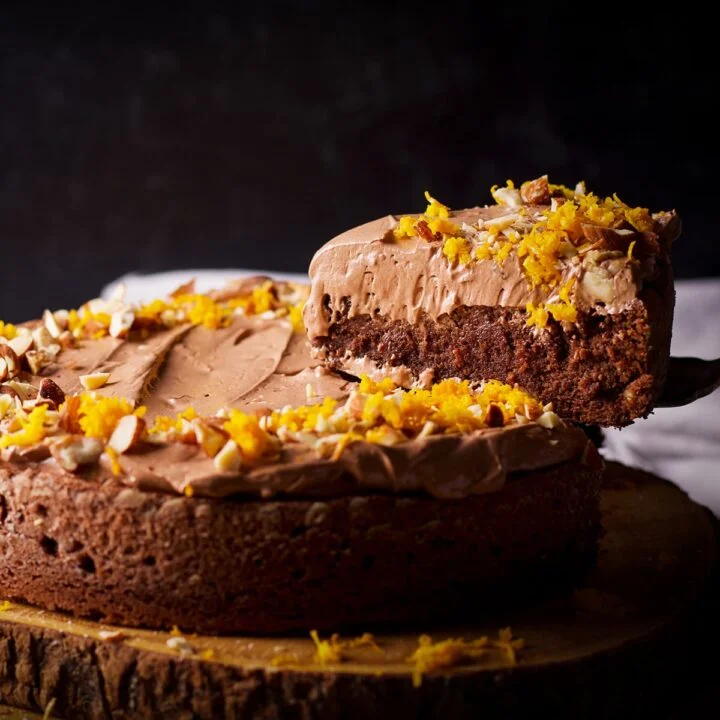
A single-layer chocolate and almond cake with a tender, dense crumb and a lighter texture from folded egg whites. Rum adds a gentle warmth, while chocolate orange buttercream and optional citrus zest make it a fitting choice for a celebration or an indulgent afternoon slice.
Ingredients
- 32 g (⅓ cup)almond flour
- 170 g (6 oz; about 1 cup, chopped)semi-sweet chocolate
- 30 ml (2 tablespoons)rum or brewed coffee
- 113 g (1 stick; 4 oz), at room temperaturebutter
- ½ teaspoonalmond extract
- 142 g (⅔ cup), packedlight or dark brown sugar
- 4 large, at room temperatureegg yolks
- 3 large, at room temperatureegg whites
- 12.5 g (1 tablespoon)granulated sugar
- 60 g (½ cup)cake flour
- ¼ teaspoon table salt, or ½ teaspoon kosher saltsalt
- 1 recipechocolate orange buttercream
- Optional; to tastechopped roasted and salted almonds, finely grated orange zest, or candied orange slices, for garnish
Instructions
- 1
Toast the almonds
Put the almond flour in a skillet over medium heat. Cook, stirring often, until around half is dark golden brown and the rest is light golden brown. Take the pan off the heat, transfer the flour to a bowl and leave it to cool completely.
- 2
Prepare the pan
Heat the oven to 176°C (350°F). Grease the inside of an 20 cm (8-inch) round cake pan with butter or vegetable shortening, line the base with a circle of parchment and grease the parchment too. Dust the pan with flour, then tap out the excess.
- 3
Melt the chocolate
Put the chocolate and rum or coffee in a heatproof bowl over a pan of simmering water, making sure the bowl does not touch the water. Keep the water at a low simmer and stir constantly until the chocolate is about three-quarters melted. Remove it from the heat and stir until smooth, then set aside.
- 4
Beat butter and sugar
Using an electric mixer, beat the butter and brown sugar until lighter in colour and fluffy. Beat in the almond extract.
- 5
Add the yolks
Beat the egg yolks into the butter mixture one at a time, mixing well after each addition before adding the next.
- 6
Whip the whites
In a separate bowl, beat the egg whites with an electric mixer until soft peaks form that droop when the beaters are lifted. Gradually add the granulated sugar while continuing to beat, then whip until stiff peaks hold their shape.
- 7
Mix dry ingredients
Stir the cooled almond flour together with the cake flour and salt in a small bowl.
- 8
Add the chocolate
Use a silicone spatula or wooden spoon to stir the melted chocolate into the butter and sugar mixture.
- 9
Fold in the mixtures
Gently fold about a third of the whipped egg whites into the batter until roughly three-quarters incorporated, then fold in about a third of the flour mixture to the same point. Repeat twice with the remaining whites and flour mixture. After the final addition, fold gently until everything is incorporated.
- 10
Bake the cake
Scrape the batter into the prepared pan and bake in the centre of the oven for 23–28 minutes. The cake is ready when it has puffed, the outer edge is set and just starting to pull away from the pan, and a toothpick inserted near the outside comes out without raw batter. The centre should still move slightly when the pan is gently shaken.
- 11
Cool and turn out
Set the cake in its pan on a wire rack and let it cool completely. Once it is at room temperature, run a knife or spatula around the edge and carefully turn the cake out onto a plate or cake stand.
- 12
Frost the cake
If the cake is still even slightly warm, let it cool completely before spreading a thick layer of chocolate orange buttercream over the top.
- 13
Add the garnish
If using, sprinkle the frosted cake around its outer edge with chopped roasted and salted almonds and finely grated orange zest. Candied orange slices can also be used as a garnish.
What is chocolate almond cake?
This is a one-layer cake built around melted chocolate, almond flour and whipped egg whites. It has a rich chocolate flavour and a close, tender crumb, with the egg whites helping keep it from feeling too heavy.
Chocolate-and-nut cakes appear in many baking traditions, so this recipe is best understood as a home-style version rather than a dish tied to one specific origin. Toasting the almond flour deepens its flavour, while chocolate orange buttercream adds a bright finish.
Nutrition and macros by portion
The nutrition label shows one serving as written: 491 calories, 7g protein, 53g carbs, 30g fat.
| Portion | Adjustment | kcal | Protein | Carbs | Fat |
|---|---|---|---|---|---|
| Lighter | Less buttercream | 344 kcal | 5g | 37g | 21g |
| This serving | As written | 491 kcal | 7g | 53g | 30g |
| Hungry | Larger cake slice | 737 kcal | 11g | 80g | 45g |
The brown and granulated sugars, cake flour and almond flour provide most of the carbohydrates, while the butter, chocolate and buttercream contribute much of the fat. Eggs and almonds add some protein. To balance a slice, serve it with fresh fruit and keep the accompanying cream or extra frosting modest.
Why toast the almond flour?
Toasting: Stir the flour frequently in the skillet so it colours evenly and does not scorch. The recipe looks for a mix of dark and light golden patches, not a uniform deep brown.
Cooling: Let the toasted flour cool completely before mixing it with the other dry ingredients. Warm flour can affect the texture of the batter.
How to melt the chocolate gently
Low heat: Keep the water at a gentle simmer rather than a boil, and stir the chocolate constantly. This helps it melt without overheating.
Finish off the heat: Take the bowl away when most of the chocolate has melted, then stir until the remaining pieces disappear. The rum or coffee goes into the bowl with the chocolate at the start.
Keep the batter light
Egg whites: Soft peaks should bend over when the beaters are lifted; after adding the granulated sugar, stiff peaks should stand up and hold their shape.
Folding: Add the whites and flour in alternating portions, folding gently each time. This preserves some of the air whipped into the whites and helps the cake rise.
How to tell when it is done
Edges: Look for a puffed cake with a set outer edge that is just beginning to pull away from the pan. A toothpick near the outside should show no raw batter.
Centre: A slight movement in the middle when the pan is gently shaken is expected. The cake cools in the pan, so avoid baking until the centre is completely firm.
Cool before decorating
Cooling: Leave the cake in its pan on a wire rack until it reaches room temperature, then loosen the edges and turn it out carefully. Allow it to cool fully before frosting, or the buttercream may soften.
Finishing: A thick layer of chocolate orange buttercream suits the cake's deep chocolate flavour. For extra contrast, use the optional toasted salted almonds, orange zest or candied orange slices.
Serving ideas
Serve a slice on its own for a rich dessert, or alongside fresh berries or lightly whipped cream for a less sweet contrast. Coffee also pairs well with the chocolate and almond flavours.
Cut the cake with a clean knife, wiping it between slices for neater portions. Add the optional garnish just before serving if you want the almonds to stay crisp.
Recipe notes & tips
- Bring the butter and eggs to room temperature so they combine more evenly.
- Stir the almond flour often as it toasts, since it can colour quickly.
- Keep the water beneath the chocolate at a low simmer.
- Use a clean bowl and beaters for the egg whites so they whip properly.
- Fold rather than stir vigorously when combining the whites and flour with the batter.
- Wait until the cake is fully cool before adding the buttercream.
Variations
- Coffee instead of rum: Use brewed coffee in the same amount for a chocolate-forward version without alcohol.
- Salted almond topping: Scatter chopped roasted and salted almonds around the frosted edge for a crisp contrast.
- Candied orange: Use candied orange slices as the garnish for a sweeter citrus finish.
- Extra orange: Add finely grated orange zest over the frosting just before serving.
- Different buttercream: Use another frosting or buttercream if you do not have chocolate orange buttercream.
Common mistakes to avoid
- Scorching the almond flour: Stir it frequently over medium heat and remove it once it reaches the described golden colours.
- Boiling the water: Keep the double-boiler water at a low simmer while melting the chocolate.
- Adding yolks all at once: Beat them in individually, mixing well after each one.
- Deflating the egg whites: Fold the whites gently into the batter instead of beating them in.
- Overbaking the centre: Use the set-edge and toothpick cues, remembering that the middle should still move slightly.
- Frosting a warm cake: Let it cool fully first so the buttercream does not soften.
How to store
Once frosted, cover the cake and refrigerate it; it keeps for about 3 days. Let a slice sit briefly at room temperature before serving so the cake and buttercream soften. Store leftover unfrosted cake covered at room temperature for up to 2 days.
Frequently asked questions
Can I use coffee instead of rum?
Yes. The recipe gives brewed coffee as an alternative in the same quantity, and it can be used with the chocolate in the double boiler.
How do I know the egg whites are at stiff peaks?
Lift the beaters from the bowl: the peak that forms should hold its shape rather than droop over.
Should the centre still wobble when the cake is done?
Yes, it should move slightly when the pan is gently shaken. The outside should be set, and a toothpick inserted near the edge should not show raw batter.
Can I frost the cake while it is warm?
No. Cool it completely first; even slight warmth can soften the buttercream.
Do I have to garnish the cake?
No, the garnish is optional. Chopped roasted and salted almonds, orange zest or candied orange slices are suggested choices.
Can I make this without a double boiler?
The method calls for a heatproof bowl set over a pan of simmering water. Keep the water at a low simmer and the bowl above the water, rather than letting it touch.
Cook it from the original
This recipe comes from ofbatteranddough.com. Their page has the author’s own photos, notes and tips — the best place to cook it from.
Open the recipe on ofbatteranddough.com