
Rava Kara Paniyaram-Sooji Appe
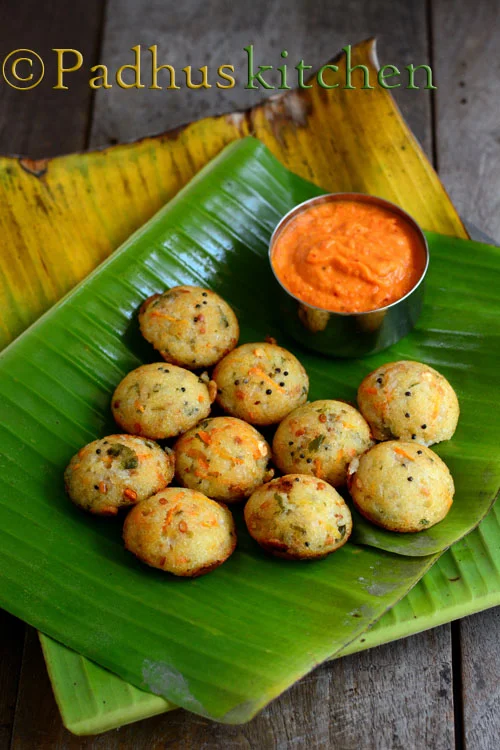
Rava kara paniyaram are savoury South Indian bites made with semolina, curd, vegetables and a spiced tempering. Cooked in a paniyaram pan until browned, they make a handy tea-time snack or light breakfast.
Ingredients
- 80 g (½ cup)rava, semolina or sooji
- 60 g (¼ cup)curd
- 1onion
- 2.5 cm (1 inch)ginger, grated or finely chopped
- 1green chilli
- 30 g (¼ cup)grated carrot
- 2 tbspcoriander leaves, finely chopped
- ⅛ tspcooking soda or bicarbonate of soda
- To tastesalt
- As neededoil for cooking the paniyarams
- 10 ml (2 tsp)oil
- 1 tspmustard seeds
- 2 tspurad dal
- 2 tspBengal gram dal (chana dal)
- A few tender leavescurry leaves
Instructions
- 1
Soak the semolina
Mix the rava and curd in a bowl with a little water. Leave the mixture to stand for 1 hour.
- 2
Prepare the tempering
Heat the 2 tsp oil in a kadai or pan and add the mustard seeds. Once they splutter, add the urad dal and Bengal gram dal; when the dals turn golden brown, add the finely chopped onion, green chilli and ginger. Sauté until the onion is transparent.
- 3
Mix the batter
Stir the onion mixture, grated carrot, coriander leaves, salt and cooking soda into the rava and curd mixture. Add enough water to bring it to the consistency of idli batter.
- 4
Oil the pan
Heat a paniyaram or appe pan and add ¼–½ tsp oil to each cavity.
- 5
Fill the cavities
Pour the rava batter into the cavities.
- 6
Cook the first side
Cover the pan and cook over a low heat.
- 7
Turn and brown
When the edges begin to release, turn each paniyaram over with a spoon. Cook over a low heat until browned, turning two or three times if needed to brown all sides evenly.
- 8
Cook remaining batter
Repeat the same process with the remaining batter.
What are rava paniyaram?
Paniyaram, also known as appe, are small South Indian savoury cakes cooked in a pan with rounded cavities. This version uses semolina and curd rather than a fermented rice-and-lentil batter, with vegetables and a tempered mixture for flavour.
The curd moistens the rava as it rests, while the pan gives the bites a browned outside and a soft centre. They are often served as a snack or a light breakfast.
Nutrition and macros by portion
The nutrition label shows one serving as written: 260 calories, 7g protein, 42g carbs, 8g fat.
| Portion | Adjustment | kcal | Protein | Carbs | Fat |
|---|---|---|---|---|---|
| Lighter | Use less cooking oil | 182 kcal | 5g | 29g | 6g |
| This serving | As written | 260 kcal | 7g | 42g | 8g |
| Hungry | Add another portion | 390 kcal | 11g | 63g | 12g |
Semolina provides most of the carbohydrates, while the curd and lentils contribute some protein; the cooking oil is the main source of fat. Pair a serving with fresh vegetables or a vegetable-rich side for a more balanced plate.
The semolina and curd batter
Rava and curd: the hour-long rest lets the semolina absorb moisture before cooking. Add water gradually afterwards, stopping when the mixture has the consistency of idli batter.
Why the tempering matters
Mustard and dals: let the mustard seeds splutter, then cook the urad dal and chana dal until golden. This builds a savoury, gently crunchy base for the batter.
Onion and aromatics: sauté the onion, chilli and ginger until the onion is transparent. This softens the onion and distributes their flavour through the paniyaram.
Getting an even cook
Low heat: cook the filled pan covered so the centres have time to set without the outsides browning too quickly. The recipe gives no fixed cooking time, so use the edges and colour as your cues.
Turning: wait until the sides start to release before turning each piece. A spoon helps you ease them around without tearing the soft batter.
Vegetables and seasoning
Carrot and coriander: fold these in with the tempered onion mixture so they are spread through the batter. Keep the carrot grated and the coriander finely chopped for small, even bites.
Soda and salt: mix them in thoroughly so the seasoning and leavening are distributed. Add salt to your taste.
Timing and serving
The listed total time is 25 minutes, but the method also calls for the rava and curd to stand for 1 hour. Allow for that resting time when planning when to serve them.
Serve the paniyarams warm as a tea-time snack or light breakfast. A fresh salad or extra vegetables alongside can make the plate more substantial.
Recipe notes & tips
- Let the rava and curd stand for the full 1 hour stated in the method.
- Add water little by little after the resting time so the batter does not become too thin.
- Wait for the mustard seeds to splutter before adding the dals.
- Keep the heat low and cook the paniyarams covered as directed.
- Turn the paniyarams only once their edges begin to release from the cavities.
Variations
- Add more vegetables: Stir finely chopped vegetables into the batter with the grated carrot.
- Adjust the chilli: Use less green chilli for a milder batch or more for extra heat.
- Change the herbs: Add another handful of chopped coriander for a fresher flavour.
- Use a different pan: Cook small portions in a standard pan if you do not have a paniyaram pan, shaping them as they cook.
- Serve with chutney: Offer a chutney alongside for dipping.
Common mistakes to avoid
- Skipping the rest: The semolina needs time to absorb moisture, so allow the stated 1 hour.
- Adding too much water: A thin batter may not hold its shape; add water gradually to reach idli-batter consistency.
- Darkening the dals: Remove the tempering from the heat once the dals are golden brown.
- Cooking over high heat: The outside can brown before the centre cooks; keep the pan on low heat.
- Turning too early: If the sides have not begun to release, wait before easing the paniyaram over with a spoon.
How to store
Cool leftovers and refrigerate them in a covered container for up to 2 days. Reheat gently in a paniyaram pan or a frying pan until warmed through.
Frequently asked questions
Why does the batter need to rest?
The recipe rests the rava and curd mixture for 1 hour so the semolina can absorb moisture. Add the remaining ingredients and water after this rest.
How thick should the batter be?
The method calls for idli-batter consistency. Add water gradually until it reaches that texture.
When should I turn the paniyarams?
Turn them when their sides begin to leave the pan cavities. Use a spoon to ease them over.
Can I make these without a paniyaram pan?
The recipe specifies a paniyaram or appe pan. If you do not have one, you can try cooking smaller portions in a standard pan, though the shape will differ.
How do I know when they are cooked?
The method uses even browning on all sides as its cue. Turn them two or three times if needed while keeping the heat low.
Can I prepare the batter ahead?
The method gives a 1-hour rest for the rava and curd mixture, but it does not specify a longer make-ahead period. For the stated result, mix and rest it as directed before cooking.
Cook it from the original
This recipe comes from padhuskitchen.com. Their page has the author’s own photos, notes and tips — the best place to cook it from.
Open the recipe on padhuskitchen.com