
Homemade Beef Rendang
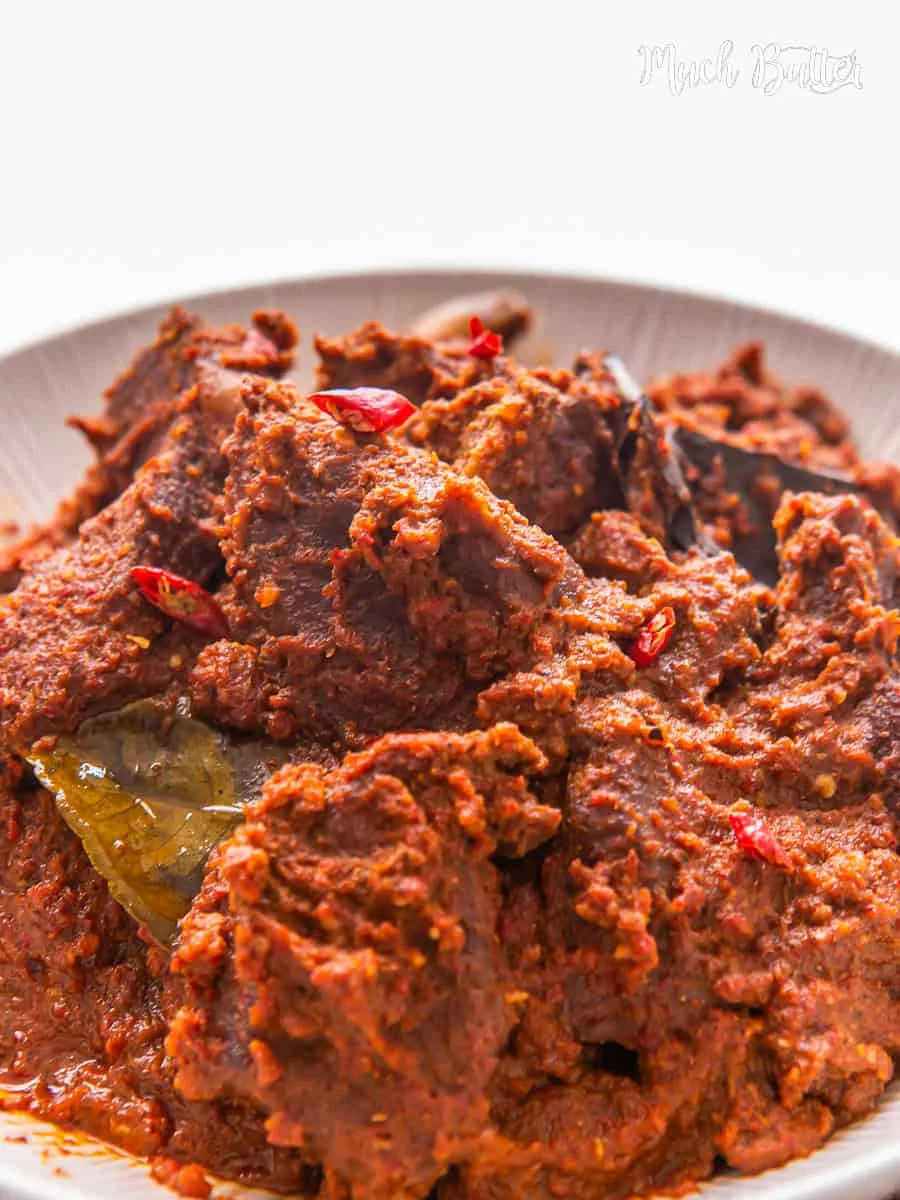
Homemade beef rendang is a slow-simmered dish of tender beef cooked with chillies, aromatics and coconut. This version builds its rich flavour with freshly toasted coconut paste and a fragrant spice blend.
Ingredients
- 1 kgbeef tenderloin
- to tastegrated coconut
- 65 mlcoconut cream
- 2bay leaves
- 2kaffir lime leaves
- 2lemongrass stalks
- 1/2cinnamon
- 2cloves
- 300 mlwater
- 50 gred curly chillies
- 100 gred chillies
- 1 inchgreater galangal
- 1 inchginger
- 6shallots
- 4 clovesgarlic
- 1/2 tspground nutmeg
- 1 1/2 tspsalt
- 1 tspchicken stock powder
- 2 tspsugar
- 1 tspground coriander
- 1/2 tspground white pepper
- 100 mlwater
Instructions
- 1
Toast the coconut
Toast the grated coconut in a pan over medium-high heat until brown. Grind it with a pestle and mortar or spice grinder until it forms a paste and releases its oil, then set aside.
- 2
Blend the seasonings
Use a hand blender or wet mill to grind all the seasoning ingredients. Put the mixture in a wok and combine it with the coconut paste, coconut cream, bay leaves, kaffir lime leaves, lemongrass, cinnamon, cloves and 300 ml water. Stir to combine, add the beef and turn it to coat, then set the wok over medium heat.
- 3
Simmer the beef
Cover the wok and bring the mixture to the boil. Lower the heat and simmer for about 2 hours, until the water has evaporated and the beef is tender, checking and stirring from time to time. Turn off the heat.
- 4
Serve the rendang
Serve the beef rendang with warm rice.
What is beef rendang?
Rendang is a richly spiced meat dish associated with the Minangkabau people of West Sumatra, Indonesia, and is widely enjoyed across Southeast Asia. Beef is cooked with chillies, aromatics and coconut until tender and intensely flavoured.
This version starts by toasting and grinding grated coconut into a paste, then simmers the beef in that paste with coconut cream and spices. The recipe calls for a long, gentle cook, which helps the flavours meld as the liquid reduces.
Nutrition and macros by portion
The nutrition label shows one serving as written: 620 calories, 52g protein, 18g carbs, 34g fat.
| Portion | Adjustment | kcal | Protein | Carbs | Fat |
|---|---|---|---|---|---|
| Lighter | Smaller rice portion | 434 kcal | 36g | 13g | 24g |
| This serving | As written | 620 kcal | 52g | 18g | 34g |
| Hungry | Larger rice portion | 930 kcal | 78g | 27g | 51g |
Beef provides most of the protein, while the chillies and aromatics contribute some carbohydrates. Coconut and coconut cream account for much of the fat; serve with a measured portion of rice and add vegetables to balance the plate.
Building the flavour base
Toasted coconut: brown it over medium-high heat, watching closely so it colours without scorching. Grinding it until oily gives the dish a concentrated coconut base.
Fresh aromatics: chillies, shallots, garlic, ginger and greater galangal are blended together. The recipe also adds lemongrass, kaffir lime leaves, cinnamon, cloves and ground spices to the wok.
Getting the simmer right
Start over medium heat and bring the covered wok to the boil, then reduce the heat to low. The method gives an approximate simmering time of 2 hours; cook by the stated cues as well as the clock.
Check and stir from time to time so the mixture does not catch as the water evaporates. If the beef is not tender when the liquid has reduced, it may need more gentle cooking.
Choosing and checking the beef
Beef tenderloin is the cut specified here, and it should be cut into pieces suitable for simmering. Keep the pieces a similar size so they cook at a more even rate.
Tenderness is the recipe’s cue for doneness. Check a piece before switching off the heat; it should be tender rather than firm or chewy.
Serving the rendang
Warm rice is the suggested accompaniment and makes a simple base for the rich, spiced sauce. Serve the beef and sauce together so each portion gets some of the coconut mixture.
For a more rounded plate, add a fresh vegetable side, such as cucumber or lightly cooked greens. Keep accompaniments straightforward so they do not compete with the seasoning.
Planning the cooking time
The supplied total time is 70 minutes, but the method separately specifies simmering for about 2 hours after bringing the wok to the boil. Allow for the longer method time when planning, and use tenderness and evaporation as the final guides.
The coconut can be toasted and ground while preparing the seasonings. Keep an eye on the wok during the simmer and stir periodically, especially as the liquid gets low.
Recipe notes & tips
- Toast the coconut until brown, and keep it moving so it does not scorch.
- Grind the toasted coconut until it releases its oil and forms a paste.
- Stir the seasoning mixture thoroughly before adding the beef.
- Keep the heat low once the wok reaches a boil.
- Check and stir the rendang periodically as the liquid reduces.
- Taste the beef for tenderness before turning off the heat.
Variations
- Adjust the heat: use fewer chillies for a milder result.
- Add vegetables: serve with cucumber or greens for a fresh contrast.
- Change the accompaniment: offer the rendang with flatbread instead of rice.
- Use another beef cut: choose a cut suited to slow simmering and check that it becomes tender.
- Make it ahead: cook the rendang in advance and reheat it gently before serving.
Common mistakes to avoid
- Scorching the coconut: keep it moving over the heat and remove it once browned.
- Skipping the grinding: process the toasted coconut until it forms an oily paste.
- Boiling hard throughout: lower the heat after the mixture comes to the boil.
- Leaving it unstirred: check and stir from time to time, especially as the liquid evaporates.
- Relying only on the clock: check that the beef is tender before ending the cook.
- Planning only for 70 minutes: the method calls for about 2 hours of simmering after boiling.
How to store
Cool leftovers promptly and refrigerate in a covered container for up to 3 days. Reheat gently in a pan until piping hot, adding a small splash of water if the sauce has become too thick.
Frequently asked questions
How long does this beef rendang take to cook?
The listed total time is 70 minutes, but the method says to simmer for about 2 hours after bringing it to the boil. Allow for the longer time and check that the beef is tender.
Can I use a different cut of beef?
Yes, but choose a cut suitable for slow cooking and check it for tenderness before serving. Cooking time can vary with the cut and size of the pieces.
How can I tell when the beef is ready?
The method says the beef should be tender and the water should have evaporated. Check a piece before turning off the heat.
Can I make the rendang less spicy?
Use fewer chillies to reduce the heat. The recipe does not specify a separate chilli adjustment, so season to your preference.
What should I serve with beef rendang?
Warm rice is the suggested accompaniment. You can also add a simple vegetable side for freshness.
Why does the method call for more time than the total time?
The supplied total time is 70 minutes, while the simmering instruction says about 2 hours after the mixture boils. Follow the method’s tenderness and liquid-reduction cues rather than relying on the shorter total.
Cook it from the original
This recipe comes from muchbutter.com. Their page has the author’s own photos, notes and tips — the best place to cook it from.
Open the recipe on muchbutter.com