
Green Tomato Salsa Verde
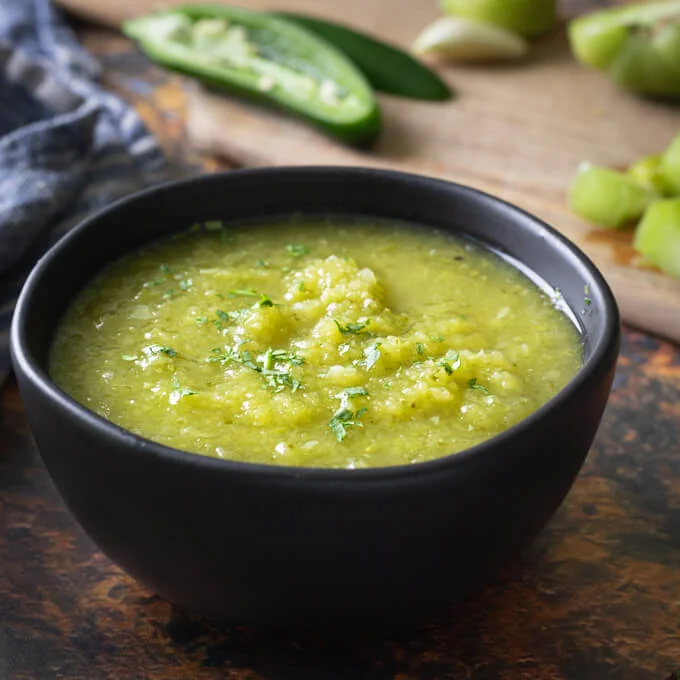
This Mexican-style salsa verde uses green tomatoes for a mild, tangy sauce with fresh coriander and a little chilli. Simmer it until its colour softens, then serve with grilled meat, eggs or other Mexican favourites.
Ingredients
- 227 g (½ lb/8 oz)green tomatoes, chopped
- 42 g (¼ cup/1.5 oz)white onion, finely chopped
- 1serrano or jalapeño pepper, chopped; remove the seeds and veins for a milder salsa
- 1 clovegarlic
- 45 ml (3 tbsp)white vinegar
- 15 ml (1 tbsp)lime juice
- 2.5 ml (½ tsp)low-carb sugar or sweetener of choice
- 1.25 ml (¼ tsp)salt
- 60 ml (¼ cup)water
- 30 ml (2 tbsp)chopped coriander
Instructions
- 1
Chop the ingredients
Put all the ingredients in a food processor and pulse until finely chopped; the mixture will not become liquid. For a smoother salsa, transfer it to a blender and blend.
- 2
Simmer the salsa
Pour the salsa into a pot and bring it to a simmer. Stir until its bright green colour changes to olive or yellow-green, then leave it to cool before serving.
- 3
Adjust the flavour
For the best flavour, let the salsa sit overnight before making final adjustments. Add only enough salt to bring out the flavour without making the salsa taste salty; add sweetener if it is too sour, or lemon or lime juice for more brightness.
- 4
Roast for smokiness
As an optional method, slice the tomatoes thickly or halve small tomatoes, then broil them with the pepper about 8–10 cm (3–4 inches) from the grill for around 5 minutes per side. When they change from bright green to yellow-green and develop a few brown or black spots, process them with the other ingredients as above; there is no need to simmer the sauce on the hob.
- 5
Chill and store
Transfer the salsa to an airtight container and keep it in the fridge for up to two weeks. The recipe makes about 475 ml (2 cups), or 8 servings of 60 ml (¼ cup) each.
What is green tomato salsa verde?
Salsa verde means green sauce, a broad name used for several sauces in Mexican cooking. This version gets its colour and fresh, tart character from green tomatoes, with onion, chilli, garlic, vinegar and coriander for balance.
Green tomatoes: their firm, tangy flesh keeps the salsa bright and textured after chopping and simmering. The short cook softens their raw edge without turning the sauce into a smooth purée.
Nutrition and macros by portion
The nutrition label shows one serving as written: 8 calories, 0g protein, 2g carbs, 0g fat.
| Portion | Adjustment | kcal | Protein | Carbs | Fat |
|---|---|---|---|---|---|
| Lighter | Use less sweetener | 6 kcal | 0g | 1g | 0g |
| This serving | As written | 8 kcal | 0g | 2g | 0g |
| Hungry | Serve a larger portion | 12 kcal | 0g | 3g | 0g |
The tomatoes and onion provide most of the carbohydrates, while the small amount of chilli and coriander contributes little protein. There is very little fat in the listed ingredients; serve the salsa alongside a source of protein and vegetables to make a more balanced plate.
Choosing the chilli
Serrano or jalapeño: either works here, so choose according to the heat you want. Removing the seeds and veins makes the result milder; leave some in if you prefer more kick.
Getting the texture right
Food processor: pulse rather than running the machine continuously, and stop when the ingredients are finely chopped. The salsa is meant to retain texture and will not liquefy.
Blender: use this only if you prefer a smoother consistency. Blend after processing, before simmering.
Watching the colour
Simmer gently and look for the bright green colour to shift towards olive or yellow-green. This colour change is the method’s doneness cue; cool the salsa before tasting and serving.
Balancing the flavour
Resting time: the salsa tastes best after sitting overnight, so hold off on final seasoning until then if you can. Add salt gradually, just enough to round out the flavour.
Fine-tuning: a little sweetener can soften excessive sourness, while lemon or lime juice adds extra brightness. Adjust in small increments and taste as you go.
Optional smoky version
Broiling: roasting the tomatoes and pepper until they have a few dark spots gives the salsa a smoky note. Keep the pieces about 8–10 cm (3–4 inches) from the grill and turn them after around 5 minutes per side.
Skip the hob: when using the roasted vegetables, the recipe says there is no need to simmer the finished sauce. Continue with the food processor or blender method.
Serving ideas
Serve the salsa with grilled meat, eggs or Mexican-inspired meals. Its tart, mildly spiced flavour also makes it a useful table sauce for dishes that benefit from a fresh, punchy contrast.
Recipe notes & tips
- Pulse the food processor so the salsa stays finely chopped rather than turning liquid.
- Remove the chilli seeds and veins if you want a milder result.
- Let the salsa cool before serving so its texture and flavour settle.
- Wait until after the overnight rest to make the final seasoning adjustments.
- Add sweetener or citrus a little at a time, tasting between additions.
Variations
- Smoky salsa: broil the tomatoes and pepper until they develop a few brown or black spots.
- Milder heat: remove the seeds and veins from the serrano or jalapeño before chopping.
- Smoother texture: blend the processed ingredients before simmering.
- More brightness: add a little extra lime juice after the salsa has rested.
- Gentler sourness: add a small amount of sweetener if the finished salsa tastes too sharp.
Common mistakes to avoid
- Over-processing: the salsa is meant to stay textured, so pulse and stop once the ingredients are finely chopped.
- Adding too much salt: season gradually until the flavour is balanced without a salty taste.
- Adjusting too soon: let the salsa sit overnight before making the final flavour corrections.
- Expecting bright green: simmer until the colour shifts towards olive or yellow-green.
- Simmering roasted salsa: when using the optional broiled vegetables, skip the hob simmer as directed.
How to store
Keep the salsa in an airtight container in the fridge for up to two weeks. The recipe makes about 475 ml (2 cups), divided into 8 portions of roughly 60 ml (¼ cup).
Frequently asked questions
How hot is this salsa?
It is described as mild, but the heat depends on the chilli and how much of its seeds and veins you leave in. Remove them for a gentler salsa.
Can I make the salsa smoother?
Yes. After processing the ingredients, blend them to the consistency you like, then continue with the simmering step.
Do I have to simmer it?
Simmer the salsa if you are following the standard method. If you broil the tomatoes and pepper first, the recipe says you can skip cooking the sauce on the hob.
Can I serve it straight away?
Yes, once it has cooled, but the flavour is best after resting overnight. If serving it immediately, you can still adjust the seasoning to taste.
How do I make it less sour?
Add sweetener a little at a time and taste after each addition. The recipe recommends making this adjustment after the salsa has rested.
What can I serve it with?
Try it with grilled meat, eggs or other Mexican favourites.
Cook it from the original
This recipe comes from lowcarbmaven.com. Their page has the author’s own photos, notes and tips — the best place to cook it from.
Open the recipe on lowcarbmaven.com