
Methi Ki Launji / Fenugreek Seed Pickle
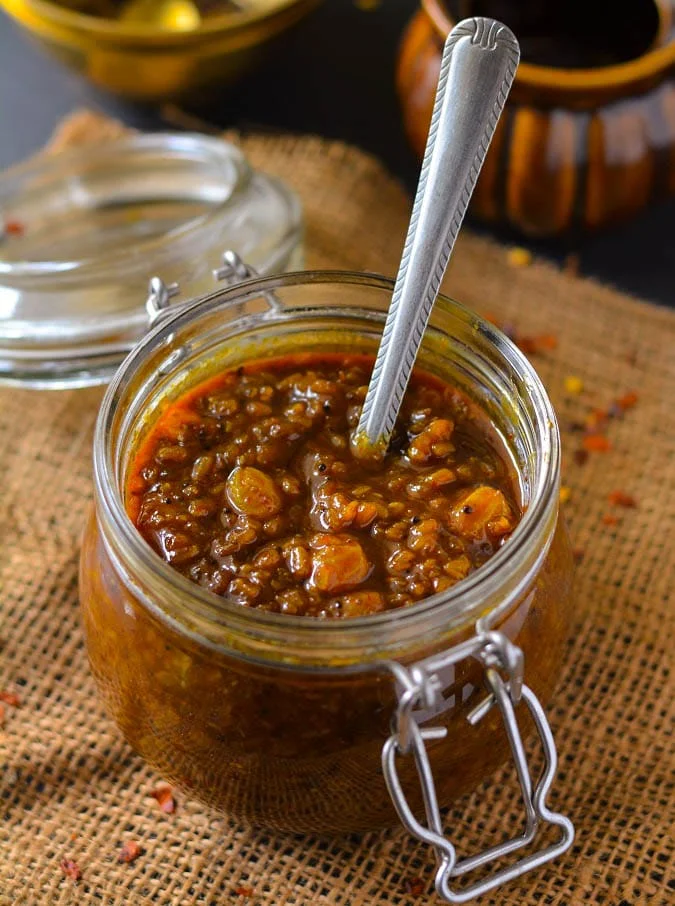
Methi ki launji is a sweet, tangy and spiced Rajasthani condiment made with sprouted fenugreek seeds, jaggery, sugar, dried fruit and warming spices. Serve a small spoonful alongside a savoury meal for a punchy contrast.
Ingredients
- 85 g (½ cup)fenugreek seeds
- 150 g (¾ cup)jaggery
- 150 g (¾ cup)sugar
- 14 g (2 tbsp)red chilli powder
- 12 g (2 tbsp)coriander powder
- 18 g (4 tbsp)amchoor powder
- 12 g (2 tbsp)chaat masala
- 9 g (1½ tsp)salt
- 30 ml (2 tbsp)cooking oil
- 2 g (1 tsp)cumin seeds
- 2 g (1 tsp)fennel seeds
- 40 g (¼ cup)raisins
- 10dates
Instructions
- 1
Soak the seeds
Cover the fenugreek seeds with water and soak for about 5 hours, then drain.
- 2
Rinse the seeds
Rinse the seeds in fresh water and drain them thoroughly.
- 3
Sprout the seeds
Put the seeds in a bowl and cover it with muslin cloth. Leave them for 2 days to sprout.
- 4
Cook the seeds
Once sprouted, wash the seeds again and pressure cook them with 1.5 glasses of water for 3 whistles over medium heat.
- 5
Drain and rinse
Drain the cooked seeds and rinse them with fresh water. Alternatively, steam the seeds instead of boiling them.
- 6
Prepare the dates
Soak dried dates in water for 4 hours, remove their stones and slice them thinly. If using fresh, soft dates, chop them and add them directly.
- 7
Heat the oil
Heat the oil in a pan, then add the cumin and fennel seeds.
- 8
Sauté the fenugreek
When the seeds begin to crackle, add the cooked fenugreek seeds and sauté for a few seconds.
- 9
Add the seasonings
Add all the spices, sugar, jaggery, raisins and dates to the pan, then mix well.
- 10
Simmer the launji
Simmer for about 20 minutes, or until the gravy thickens.
- 11
Cool and store
Let the launji cool completely, then transfer it to a glass jar.
What is methi ki launji?
Launji is a sweet-sour Indian condiment, and this version comes from Rajasthan, where fenugreek seeds meet fruit, sugar and spices. It is served in small amounts alongside a savoury meal.
Sprouting and cooking the seeds softens their strong flavour, while jaggery, dates and amchoor create a layered sweet and tangy gravy.
Nutrition and macros by portion
The nutrition label shows one serving as written: 555 calories, 12g protein, 119g carbs, 10g fat.
| Portion | Adjustment | kcal | Protein | Carbs | Fat |
|---|---|---|---|---|---|
| Lighter | Use a smaller spoonful | 389 kcal | 8g | 83g | 7g |
| This serving | As written | 555 kcal | 12g | 119g | 10g |
| Hungry | Serve a larger spoonful | 833 kcal | 18g | 179g | 15g |
The jaggery, sugar, dates and raisins provide most of the carbohydrate, while the cooking oil contributes much of the fat. Fenugreek and the spices provide a smaller share of the protein; pair a modest spoonful with a protein-rich main and vegetables to balance the plate.
The fenugreek preparation
Soaking and sprouting: allow time for the full 5-hour soak and 2-day sprouting period before cooking. Rinse and drain the seeds as directed so they are ready for the pan.
Cooking: pressure cook the sprouts for 3 whistles over medium heat, then drain and rinse them. Steaming is also given as an alternative to boiling.
Balancing sweet and sour
Sweeteners: jaggery and sugar give the gravy its rich sweetness, with raisins and dates adding fruitiness. The dates should be sliced if dried, or chopped and added directly if fresh and soft.
Tang and spice: amchoor brings sourness, while chilli, coriander and chaat masala build the seasoning. Add all of these with the sweeteners and fruit, as directed.
Getting the texture right
Crackling seeds: wait for the cumin and fennel to begin crackling in the hot oil before adding the fenugreek. Sauté the fenugreek only for a few seconds at this stage.
Thickened gravy: simmer the mixture for around 20 minutes, using the thickening of the gravy as the cue to stop. The cooked seeds should remain part of the condiment rather than disappearing into the sauce.
Plan the timing
Advance preparation: the 5-hour soak, 2-day sprouting and, for dried dates, 4-hour soak all need to happen before the final pan cooking. The listed 35-minute total does not include these long preparation stages.
Final simmer: once the seeds are cooked and the ingredients are combined, allow about 20 minutes for the gravy to thicken.
Serving ideas
Small accompaniments: spoon a little launji beside a savoury Indian meal, such as flatbreads, rice or a lentil dish. Its concentrated sweet-sour flavour is best used as a condiment rather than as the main part of the plate.
A balanced plate: pair it with a source of protein and vegetables, and use a modest serving to complement the rest of the meal.
Recipe notes & tips
- Start soaking the fenugreek well ahead, since sprouting takes 2 days.
- Drain the cooked seeds thoroughly before adding them to the pan.
- If using dried dates, allow the full 4-hour soak before removing the stones and slicing.
- Keep the seeds moving briefly in the pan after adding them so they are coated in the oil and spices.
- Use the thickening of the gravy, rather than the clock alone, to judge when the simmer is done.
- Wait until the launji is completely cool before putting it in the glass jar.
Variations
- Steam the seeds: use steaming instead of boiling, as suggested in the method.
- Use soft dates: chop fresh, soft dates and add them directly without soaking.
- Choose dried dates: soak them for 4 hours, then stone and slice them thinly.
- Adjust the heat: use less red chilli powder for a milder condiment.
- Serve as a side: pair a small portion with rice, flatbreads or a lentil dish.
Common mistakes to avoid
- Rushing the sprouting: give the covered seeds the full 2 days to sprout.
- Leaving water on the seeds: drain them completely after rinsing and cooking.
- Adding unprepared dried dates: soak them for 4 hours, then remove the stones and slice.
- Overcooking the spices at the start: add the fenugreek as soon as the cumin and fennel crackle, and sauté for just a few seconds.
- Stopping before the gravy thickens: continue simmering for around 20 minutes, checking its consistency.
- Jarring it while warm: cool the launji completely before transferring it to glass.
How to store
Once completely cool, transfer the launji to a clean glass jar, cover and refrigerate. Use a clean spoon and, as a cautious home-storage guide, aim to use it within 1–2 weeks; warm a portion gently if you prefer it less chilled.
Frequently asked questions
How long does it take to sprout the fenugreek?
After soaking for around 5 hours and rinsing, leave the seeds covered with muslin cloth for 2 days to sprout.
Can I steam the fenugreek seeds instead of pressure cooking them?
Yes. The method gives steaming as an alternative to boiling the sprouted seeds.
Do I need to soak the dates?
Soak dried dates in water for 4 hours, then remove the stones and slice them thinly. Fresh, soft dates can be chopped and added directly.
How do I know when the launji is ready?
Simmer for around 20 minutes, stopping when the gravy has thickened.
Can I make this in 35 minutes?
The final cooking is about 20 minutes, but the preparation also calls for a 5-hour seed soak and 2 days of sprouting. Dried dates need an additional 4-hour soak.
How should I serve methi ki launji?
Serve a small amount as a sweet-sour condiment alongside a savoury meal, such as flatbreads, rice or lentils.
Cook it from the original
This recipe comes from maayeka.com. Their page has the author’s own photos, notes and tips — the best place to cook it from.
Open the recipe on maayeka.com