
Japanese Fruit Sandwich
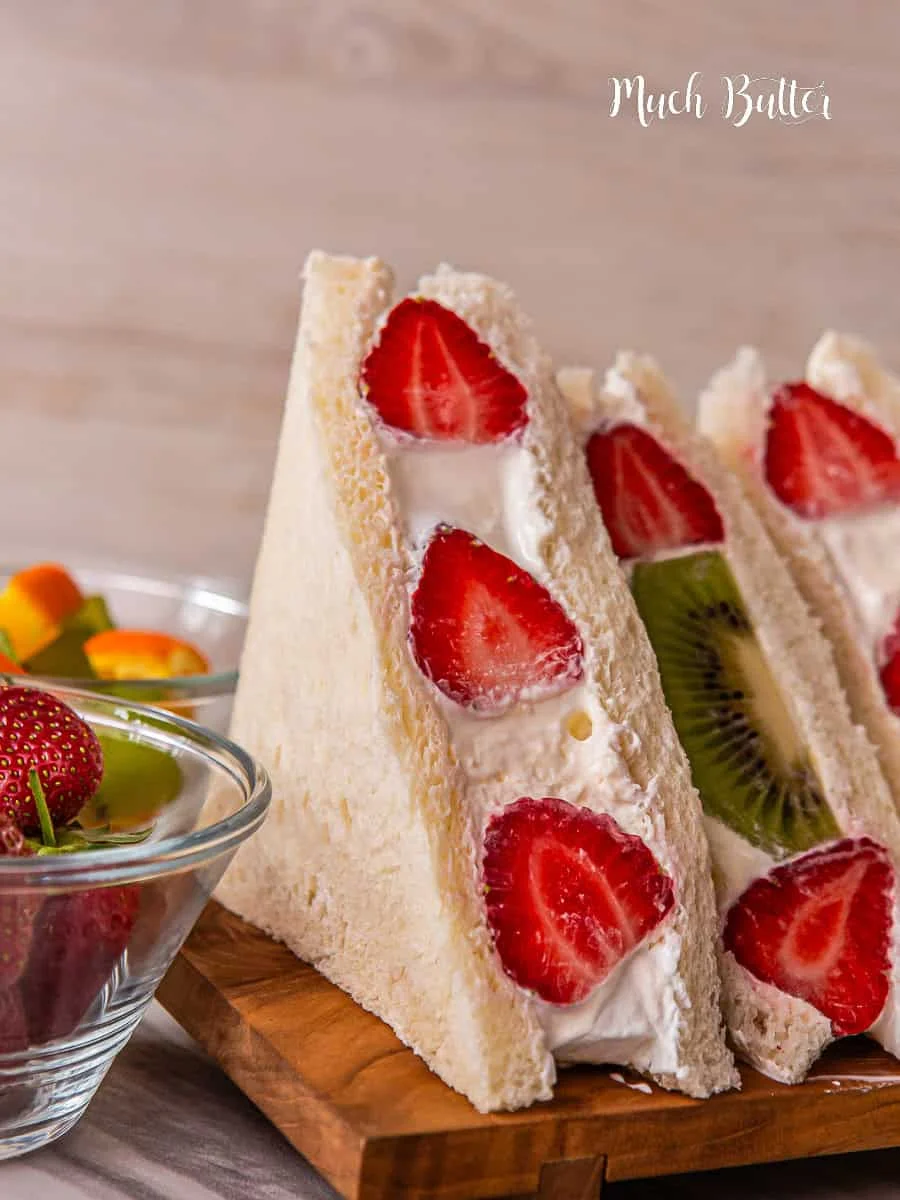
Japanese fruit sandwiches pair soft bread with whipped cream and fresh fruit, making a colourful sweet snack or light dessert. They are simple to assemble, and chilling them helps create neat, attractive slices.
Ingredients
- 4 slicesbread
- 9strawberries
- 1/2kiwi
- 120 ml (1/2 cup)sweetened whipping cream
Instructions
- 1
Dry the fruit
Pat all the fruit dry with a paper towel and set it aside.
- 2
Whip the cream
Beat the whipping cream in a bowl with a hand mixer until it forms stiff peaks.
- 3
Prepare the bread
Place one slice of bread on your work surface and spread a thin layer of whipped cream evenly over it.
- 4
Arrange the fruit
Place 5 strawberries around the edge and centre of the bread, then arrange the remaining 4 strawberries around the edge and the kiwi in the centre.
- 5
Cover the filling
Spread more whipped cream over the fruit, filling the gaps, then top with another slice of bread.
- 6
Wrap and chill
Wrap each sandwich in cling film and mark a cutting line on the wrap with a marker. Refrigerate for 1 hour.
- 7
Trim and serve
After 1 hour, unwrap the sandwich, remove the crusts and cut it in half. Serve straight away.
What is a Japanese fruit sandwich?
Often called a fruit sando, this Japanese-style sandwich layers fresh fruit and whipped cream between soft slices of bread. It is enjoyed as a sweet snack or dessert, with the cut face showing off the fruit inside.
This version uses strawberries and kiwi for a mix of colour and flavour. Whipped cream fills the spaces around the fruit, while chilling helps the layers hold together for slicing.
Nutrition and macros by portion
The nutrition label shows one serving as written: 315 calories, 6g protein, 43g carbs, 13g fat.
| Portion | Adjustment | kcal | Protein | Carbs | Fat |
|---|---|---|---|---|---|
| Lighter | Use less whipped cream | 221 kcal | 4g | 30g | 9g |
| This serving | As written | 315 kcal | 6g | 43g | 13g |
| Hungry | Serve a larger half | 473 kcal | 9g | 65g | 20g |
Bread provides most of the carbohydrate, while the sweetened cream contributes much of the fat and some of the sugar. The fruit adds natural sugars and a little fibre; pair a portion with plain yoghurt or another savoury food if you want a more balanced plate.
Choose and prepare the fruit
Dry fruit: patting it dry helps prevent excess moisture from loosening the cream or making the bread soggy.
Arrange carefully: position the strawberries and kiwi with the intended cut line in mind, so the fruit is visible when the sandwich is halved.
Whip the cream to stiff peaks
Stiff peaks: the cream should hold its shape when the beaters are lifted. This makes it easier to spread around the fruit without the filling slumping.
Spread gently: use enough cream to cover the bread and fill gaps, but avoid pressing so hard that the fruit shifts.
Chill for a clean cut
Wrap snugly: cling film helps the sandwich keep its shape while it rests in the fridge. Mark the intended cut direction on the wrap before chilling.
Wait the full hour: the recipe calls for 1 hour in the refrigerator, even though the listed total time is 20 minutes. Use a sharp knife and wipe it between cuts for tidier halves.
Serve it simply
Serve the sandwich soon after cutting, while the bread is soft and the fruit looks fresh. It works well as a sweet snack, a picnic treat or a light dessert.
For a more balanced plate, pair a half sandwich with plain yoghurt or a savoury dish rather than adding another sweet accompaniment.
Recipe notes & tips
- Use ripe but firm strawberries so they keep their shape in the filling.
- Make sure the kiwi and strawberries are completely dry before assembling.
- Beat the cream until it holds stiff peaks, checking frequently as it thickens.
- Mark the cut direction before wrapping so you can slice through the fruit arrangement.
- Keep the wrapped sandwich chilled for the full hour before trimming and cutting.
Variations
- Try other fruit: replace some of the strawberries or kiwi with firm, well-dried fruit.
- Use white bread: choose a soft, even-textured loaf for a classic look.
- Use wholemeal bread: swap the bread for soft wholemeal slices for a nuttier flavour.
- Make smaller portions: assemble the filling in smaller slices for bite-sized sandwiches.
- Change the fruit layout: place the cut face of larger fruit pieces along the marked slicing line.
Common mistakes to avoid
- Wet fruit: it can make the filling loose; pat every piece dry before assembly.
- Softly whipped cream: it may not support the fruit; beat until it forms stiff peaks.
- Too little cream between fruit: gaps can leave the sandwich unstable; fill them with cream.
- Loose wrapping: the layers may shift in the fridge; wrap each sandwich snugly.
- Cutting too soon: the filling may slide; chill for the full 1 hour first.
How to store
Keep the wrapped sandwiches refrigerated and eat them as soon as possible, ideally shortly after slicing. The fruit and cream can soften the bread over time, so these are best made fresh rather than frozen.
Frequently asked questions
Can I make Japanese fruit sandwiches ahead of time?
You can assemble and chill them for the required 1 hour before serving. For the freshest texture, avoid making them far in advance.
How do I get a neat cut?
Chill the wrapped sandwich for 1 hour, mark the cut line before chilling and use a sharp knife. Wipe the blade clean between cuts if needed.
Can I use frozen strawberries?
Fresh strawberries are better for this recipe. Frozen berries release moisture as they thaw, which can make the cream and bread soggy.
What does stiff-peak cream look like?
When you lift the beaters, the cream should form peaks that hold their shape rather than folding over. Stop once it reaches this stage.
Do I need to remove the crusts?
The method removes the crusts after chilling. This gives the sandwich a neat edge, but you can leave them on if you prefer.
Cook it from the original
This recipe comes from muchbutter.com. Their page has the author’s own photos, notes and tips — the best place to cook it from.
Open the recipe on muchbutter.com