
Greek Salad Wrap Recipe
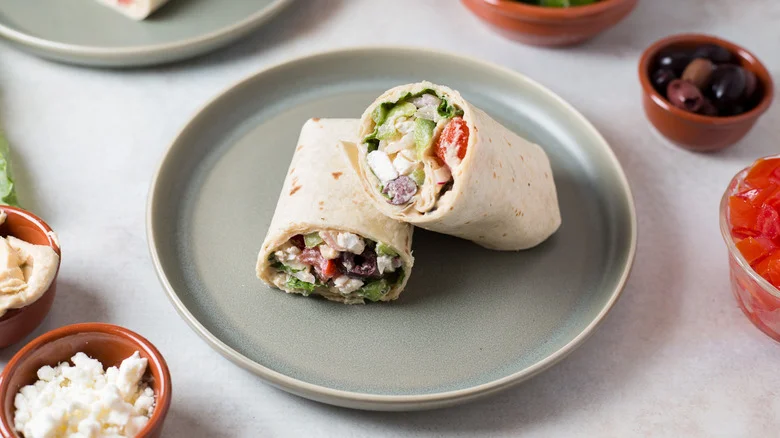
These no-cook Greek salad wraps bring cucumber, tomato, feta and Kalamata olives together with a tangy oregano dressing, all tucked into tortillas with hummus and romaine. They make a colourful, portable lunch that comes together in 10 minutes.
Ingredients
- 104 g (1 cup)thinly sliced cucumber
- 180 g (1 cup)chopped tomato
- 149 g (¾ cup)thinly sliced green pepper
- 40 g (¼ cup)thinly sliced red onion
- 113 g (4 oz)crumbled feta cheese
- 75 g (½ cup)Kalamata olives, halved
- 15 ml (1 tablespoon)extra virgin olive oil
- 15 ml (1 tablespoon)red wine vinegar
- 1 small clovegarlic, crushed
- 2.5 ml (½ teaspoon)dried oregano
- 5 ml (1 teaspoon)Dijon mustard
- 0.75 g (⅛ teaspoon)salt
- 0.3 g (⅛ teaspoon)black pepper
- 240 g (1 cup)hummus
- 4 (30 cm/12-inch)flour tortillas
- 4romaine lettuce leaves
Instructions
- 1
Combine the salad
Put the cucumber, tomato, green pepper, red onion, feta and Kalamata olives in a bowl.
- 2
Mix the dressing
In a small bowl or measuring jug, whisk together the olive oil, red wine vinegar, crushed garlic, oregano, Dijon mustard, salt and black pepper.
- 3
Dress the vegetables
Pour the dressing over the salad ingredients and toss until coated. Taste and add more salt or black pepper if you like.
- 4
Spread the hummus
Spread 60 g (¼ cup) hummus over each tortilla, leaving a border around the edges.
- 5
Add the lettuce
Lay a romaine leaf horizontally on each tortilla, towards the front and with 2.5–5 cm (1–2 inches) of space at the sides. Tear larger leaves if needed, and flatten thick stems to make rolling easier.
- 6
Fill the wraps
Spoon a quarter of the Greek salad onto each lettuce leaf, allowing excess liquid to drip away before adding it.
- 7
Roll the tortillas
Fold in the sides, then roll from the front edge nearest the filling. Set each wrap seam-side down.
- 8
Cut and serve
Cut each wrap in half and serve.
What is a Greek salad wrap?
It takes the familiar ingredients of a Greek-style salad—crisp vegetables, feta, olives and a sharp dressing—and wraps them up as a handheld meal. Greek salad traditions centre on fresh produce, briny olives and feta; this version borrows those flavours for a convenient tortilla lunch.
Hummus adds a creamy layer, while romaine keeps the filling distinct from the soft tortilla. The salad is tossed before it goes into the wraps, so the dressing seasons the ingredients evenly.
Nutrition and macros by portion
The nutrition label shows one serving as written: 437 calories, 14g protein, 40g carbs, 26g fat.
| Portion | Adjustment | kcal | Protein | Carbs | Fat |
|---|---|---|---|---|---|
| Lighter | Use less hummus | 306 kcal | 10g | 28g | 18g |
| This serving | As written | 437 kcal | 14g | 40g | 26g |
| Hungry | Add an extra wrap | 656 kcal | 21g | 60g | 39g |
The tortillas and hummus provide much of the carbohydrate, while olive oil, feta, olives and hummus contribute fat. Feta and hummus supply much of the protein; serve a wrap with extra fresh vegetables if you want to add volume and balance the plate.
The key ingredient choices
Crisp vegetables: cucumber and green pepper bring crunch, while tomato adds juiciness and red onion gives the filling a sharper note. Slice them thinly so they sit neatly in the tortillas.
Briny elements: Kalamata olives and feta supply the salty, savoury character associated with Greek salad. Both are also easy to distribute through the chopped filling.
Get the dressing balanced
Whisking: combine the oil, vinegar, garlic, oregano, mustard and seasoning before dressing the vegetables. Dijon helps the mixture come together, while the vinegar gives it a tangy edge.
Seasoning: feta and olives already bring saltiness, so taste the dressed salad before adding any extra. The recipe starts with a small amount of salt and leaves further adjustment to you.
Keep the wraps crisp
Drain the filling: the tomatoes and dressing can release liquid, so let excess dressing drip off as you spoon the salad onto the lettuce. This helps prevent the tortillas from becoming soggy.
Use the lettuce: place each romaine leaf between the hummus and salad. It gives the filling a sturdy layer and helps keep the wetter ingredients contained.
Roll without tearing
Flatten the stems: thick romaine ribs can make a tortilla harder to roll. Break up large leaves and press the stems flatter before filling.
Fold and roll: leave room at the sides, fold those edges in first, then roll from the end closest to the filling. Resting each wrap seam-side down helps it stay closed for cutting.
Make it a meal
These wraps can be served on their own for lunch or a quick supper. For a more substantial plate, pair one with a simple vegetable soup or extra crunchy salad.
If packing them to take away, keep the filling well drained and cut the wraps just before serving where possible. That helps preserve the contrast between the crisp vegetables and soft tortilla.
Recipe notes & tips
- Slice the vegetables thinly so the filling is easier to portion and roll.
- Taste the salad after dressing it before adding extra salt.
- Let excess liquid drain from the salad as you fill each tortilla.
- Flatten thick romaine stems to make the wraps easier to roll.
- Keep the tortilla edges clear so they can fold over the filling.
Variations
- Add fresh herbs: fold chopped parsley or mint into the salad for a fragrant note.
- Use wholemeal tortillas: swap in wholemeal wraps for a nuttier flavour.
- Include extra greens: add a handful of baby spinach alongside the romaine.
- Make it spicier: add a pinch of chilli flakes to the dressing.
- Change the cheese: use a similar quantity of crumbled goat’s cheese in place of feta.
Common mistakes to avoid
- Overfilling the tortillas: use a quarter of the salad per wrap so the edges can fold in.
- Adding a puddle of dressing: let excess liquid drip off the salad before filling.
- Skipping the lettuce layer: place romaine under the salad to separate it from the tortilla.
- Rolling over a thick stem: flatten or break up large lettuce leaves before assembling.
- Adding extra salt too soon: taste first, as feta and olives already make the filling savoury.
How to store
For the best texture, assemble the wraps just before serving. If you need to prepare ahead, refrigerate the salad and dressing separately in covered containers for up to 2 days, then drain and assemble when ready to eat.
Frequently asked questions
Can I make these wraps ahead?
You can prepare the salad and dressing ahead and keep them covered in the fridge, but assemble the wraps shortly before serving. The vegetables can release liquid and soften the tortillas over time.
How do I stop the wraps getting soggy?
Let excess liquid drip from the dressed salad before adding it, and place the romaine leaf between the hummus and the filling. Assemble close to serving time for the crispest result.
Can I use a different tortilla size?
Yes, but smaller tortillas may be harder to fill and roll with the same amount of salad. Divide the filling evenly and avoid overstuffing.
Can I make the wraps without hummus?
Yes. The hummus adds a creamy layer, but you can omit it or use another spread you enjoy. Keep the filling drained so the tortilla holds together.
Are these wraps served hot or cold?
They are assembled and served without cooking, so they are usually eaten cold or at room temperature.
Cook it from the original
This recipe comes from mashed.com. Their page has the author’s own photos, notes and tips — the best place to cook it from.
Open the recipe on mashed.com