
Oats Dosa - Healthy Breakfast Recipe
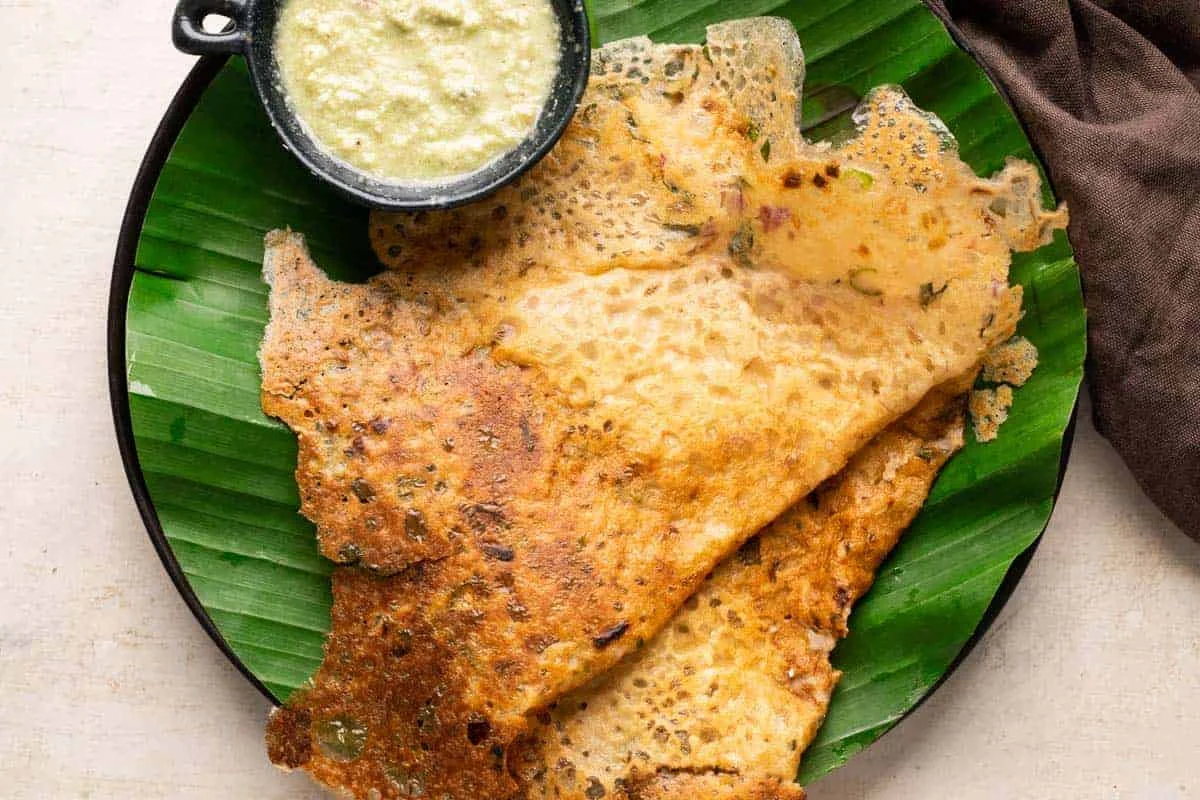
These crisp, lacy oats dosas are quick Indian savoury pancakes flavoured with cumin, ginger, chillies and fresh herbs. They make a handy breakfast, especially with chutney or sambar alongside.
Ingredients
- 45 g (½ cup)rolled or instant oats
- 42 g (¼ cup)semolina
- 40 g (¼ cup)rice flour
- 60 ml (¼ cup)homemade curd or yoghurt, lightly whisked
- 1 teaspooncumin seeds
- 75 g (½ cup)onion, finely chopped
- 1.3 cm (½ inch)ginger, finely chopped
- 2–3green chillies, finely chopped
- 2–3 sprigscurry leaves, finely chopped
- 3 tablespoonscoriander leaves, chopped
- 1–2 teaspoonssalt
- 600–720 ml (2½–3 cups)water
- 30–45 ml (2–3 tablespoons)oil or ghee, for cooking
Instructions
- 1
Grind the oats
Grind the oats to a fine powder in a mixer or food processor, then set aside.
- 2
Mix the batter
In a large bowl, combine the ground oats, semolina, rice flour, curd and 240 ml (1 cup) of water into a smooth paste. Stir in the cumin, onion, ginger, chillies, curry leaves, coriander and salt, then add another 360 ml (1½ cups) of water and mix well. Start with 600 ml (2½ cups) of water in total; add the remaining 120 ml (½ cup) if needed to adjust the consistency.
- 3
Rest the batter
Mix until there are no lumps and the batter is loose and runny. Leave it to rest for 20 minutes.
- 4
Heat the pan
Warm a tawa or non-stick pan over medium heat. Drizzle over ½ teaspoon of oil or ghee, spread it around, then wipe away the excess with a paper towel or kitchen cloth.
- 5
Pour the batter
Check the consistency and stir the batter well before making each dosa. When the tawa is hot, use a deep ladle to pour batter around the outside first, then towards the centre. Do not spread it; pour a little more into any gaps.
- 6
Cook the dosas
Cook over medium heat for 2–3 minutes, drizzling oil or ghee around the edges and into the gaps. When the dosa looks golden brown and its edges lift easily, flip it and cook for another minute. Flip it back, fold and serve hot; repeat with the remaining batter. Serve with chutney or sambar.
What is oats dosa?
Dosa is a South Indian savoury pancake, traditionally made from a fermented rice-and-lentil batter. This quicker version uses ground oats, semolina and rice flour, with yoghurt and water to make a pourable batter.
The batter is poured loosely over a hot pan rather than spread into a smooth circle. That technique leaves gaps which help the dosa cook up lacy and crisp.
Nutrition and macros by portion
The nutrition label shows one serving as written: 201 calories, 4g protein, 27g carbs, 9g fat.
| Portion | Adjustment | kcal | Protein | Carbs | Fat |
|---|---|---|---|---|---|
| Lighter | Use less cooking oil | 141 kcal | 3g | 19g | 6g |
| This serving | As written | 201 kcal | 4g | 27g | 9g |
| Hungry | Serve with extra sambar | 302 kcal | 6g | 41g | 14g |
The oats, semolina and rice flour provide most of the carbohydrates, while the oil or ghee supplies much of the fat. The yoghurt contributes some protein, though this is a relatively modest-protein breakfast; pair a serving with sambar or another protein-rich accompaniment to make the plate more filling.
Why these flours work
Oats: Grinding them finely helps them blend into the batter and gives it body.
Semolina and rice flour: These bring a slightly grainy texture and help the dosa turn crisp at the edges. Whisk the dry ingredients into the yoghurt and water until no lumps remain.
Getting the batter right
Consistency: This batter should be much thinner than a typical pancake batter. Add water gradually, stopping when it pours freely from a ladle.
Resting: Leave it for the stated 20 minutes before cooking. The dry ingredients absorb liquid as the batter stands, so stir it well and check whether it needs a little more water before each dosa.
Pouring a lacy dosa
Hot pan: Start with a well-heated tawa or non-stick pan and a thin film of oil or ghee. Wiping off excess fat keeps the surface lightly coated rather than greasy.
Pouring: Begin at the outside and work towards the centre, allowing the batter to form its own irregular pattern. Fill only the larger gaps; spreading it would close up the lacy texture.
How to judge doneness
First side: Cook over medium heat until the edges lift easily and the underside is golden brown. A little oil or ghee around the edges helps the dosa crisp as it cooks.
Second side: Flip and cook for another minute. If it still feels soft, give it a little longer before folding and serving.
Serving ideas
Chutney: Coconut or coriander chutney makes a fresh, savoury accompaniment.
Sambar: Serve with a bowl of sambar for a heartier breakfast. These dosas are best served hot, while their edges are at their crispest.
Recipe notes & tips
- Stir the batter thoroughly before pouring each dosa, as the oats and semolina can settle.
- Begin with the smaller amount of water and add more only if the batter does not pour freely.
- Use a deep ladle to pour the batter in a steady stream around the pan.
- Keep the heat at medium so the dosa has time to brown without scorching.
- Wipe the pan lightly with oil or ghee between dosas if it starts to stick.
Variations
- More heat: Add another finely chopped green chilli for a spicier dosa.
- Extra herbs: Increase the coriander leaves for a fresher, more herbal flavour.
- Peppery note: Add freshly ground black pepper with the cumin.
- Dairy-free: Use an unsweetened plant-based yoghurt in place of the curd.
- Ghee finish: Cook with ghee instead of oil for a richer flavour.
Common mistakes to avoid
- Batter too thick: Add water a little at a time until it pours easily.
- Skipping the stir: Mix before every dosa so the flour and chopped ingredients are evenly distributed.
- Spreading the batter: Pour it into place instead, leaving gaps for the characteristic lacy texture.
- Pan not hot enough: Let it heat over medium before pouring, or the batter may not set properly.
- Flipping too soon: Wait until the edges lift easily and the underside is golden before turning.
How to store
Refrigerate leftover batter in a covered container and use it within 1–2 days, stirring well before cooking. Cooked dosas can be kept covered in the fridge for up to 2 days; reheat in a lightly oiled pan to bring back some crispness.
Frequently asked questions
Can I use instant oats instead of rolled oats?
Yes. Either rolled or instant oats work; grind them to a fine powder before mixing the batter.
Why is the batter so runny?
A loose batter is needed for it to spread into a lacy pattern as you pour it over the pan. Add the water gradually and stop once it flows freely.
Can I make the batter ahead?
Yes, keep it covered in the fridge and use it within 1–2 days. Stir it well and adjust with a little water if it has thickened.
Why are my dosas not crisp?
The batter may be too thick, the pan may not be hot enough, or the dosa may need more cooking time. Check that it is runny and wait for the underside to turn golden before flipping.
Can I leave out the green chillies?
Yes. Omit them for a milder dosa, or use fewer chillies to keep just a little heat.
What can I serve with oats dosa?
Serve it hot with chutney or sambar. Coconut and coriander chutneys both suit its savoury flavour.
Cook it from the original
This recipe comes from myfoodstory.com. Their page has the author’s own photos, notes and tips — the best place to cook it from.
Open the recipe on myfoodstory.com