
Beef Wellington
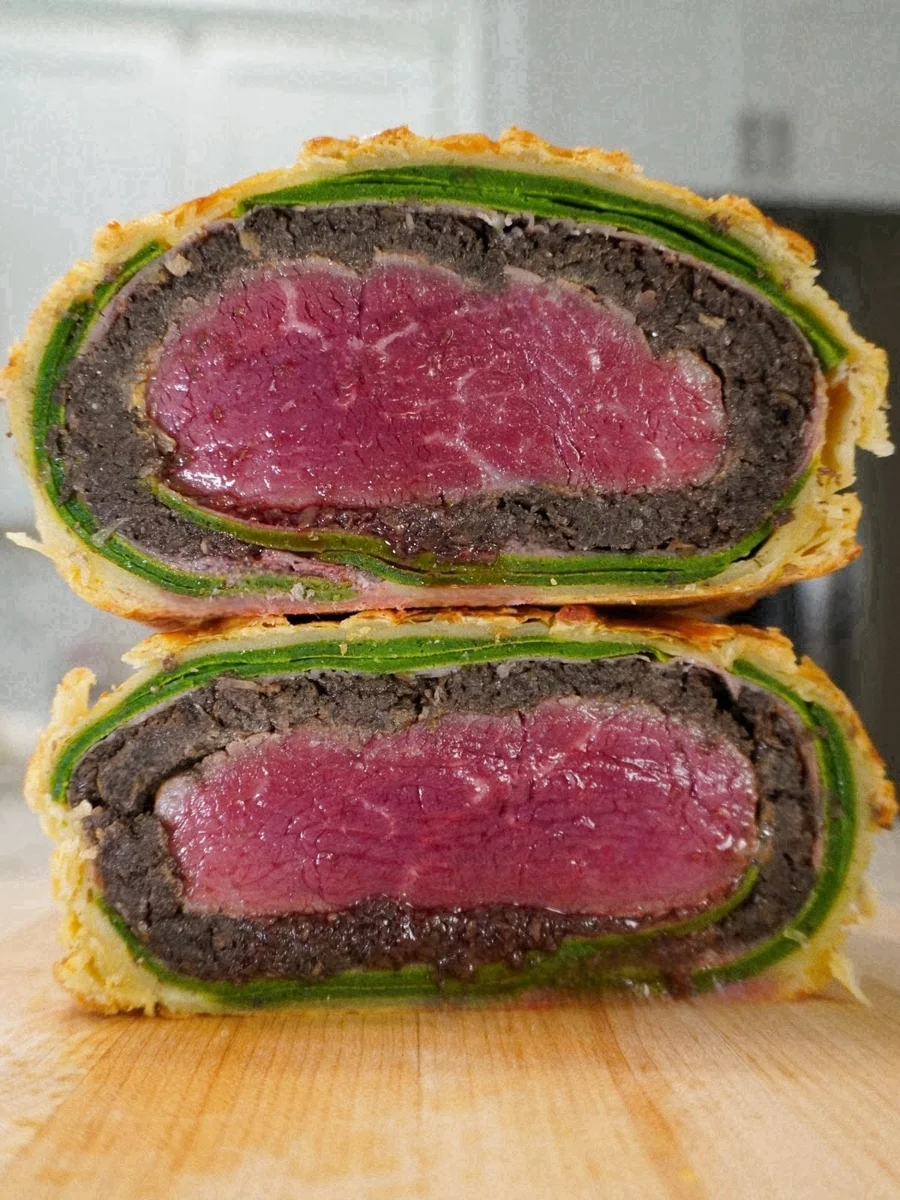
This Beef Wellington wraps tenderloin in mushroom duxelles, prosciutto and spinach crepes before enclosing it in puff pastry. It is a special-occasion centrepiece with crisp pastry and several savoury layers to prepare ahead.
Ingredients
- 680 g (1.5 lb)centre-cut beef tenderloin
- 1½ tbspkosher salt
- 1 tsppepper
- 1 tbsphigh-smoke-point oil, such as avocado, peanut, sunflower or soya oil
- 2 tbspDijon mustard
- 680 g (1.5 lb)baby portobello mushrooms, finely chopped
- 2 clovesgarlic, minced
- 2shallots, minced
- 43 g (3 tbsp)unsalted butter
- 3 sprigsfresh thyme leaves
- to tastesalt
- to tastepepper
- 200 gfresh spinach
- 125 g (1 cup)plain flour
- 2 largeeggs
- 120 ml (½ cup)milk, whole, reduced-fat or plant-based
- ¼ tspsalt
- as neededcooking oil or butter, for greasing
- 6 slicesprosciutto
- 2 sheets (you will use 1½ sheets)puff pastry
- 1 largeegg
Instructions
- 1
Season the beef
Spread the kosher salt and pepper over a chopping board or large plate. Roll the tenderloin over the seasoning to coat it evenly on all sides.
- 2
Sear the tenderloin
Heat the oil in a frying pan over a medium-high heat. Brown the beef on all sides, for about 1 minute per side.
- 3
Brush with mustard
Take the beef out of the pan, brush it with Dijon mustard and leave it to cool.
- 4
Chop the mushrooms
Pulse the mushrooms, garlic and shallots in a food processor until finely chopped. Alternatively, chop or mince them finely by hand.
- 5
Cook the duxelles
Melt the butter in a large pan over a medium heat. Add the mushroom mixture and thyme leaves, then sauté until all the moisture has evaporated and the mixture is completely dry.
- 6
Season and cool
Season the duxelles with salt and pepper to taste; it should be slightly saltier than usual to bring out the flavour of the beef. Transfer it to a plate and leave it to cool completely.
- 7
Blend the batter
Put the spinach, 2 eggs, flour, milk and ¼ tsp salt in a blender and blend until smooth. Pass the batter through a fine-mesh sieve to remove any lumps.
- 8
Cook the crepes
Heat a 15 cm (6-inch) non-stick frying pan over a medium heat and grease it lightly with oil spray or a thin layer of butter. Pour in a small ladleful of batter and swirl to coat the pan. Shake it gently; when the crepe slides freely, the underside is cooked. Flip it, cook for about 30 seconds on the other side, then transfer it to a plate. Repeat with the remaining batter and leave the crepes to cool completely.
- 9
Layer the crepes
Lay a large sheet of cling film on a work surface. Arrange 6 crepes in a 3-by-2 layout, with their edges overlapping slightly.
- 10
Add the prosciutto
Arrange the 6 slices of prosciutto in the centre of the crepes, overlapping them slightly.
- 11
Spread the duxelles
Spread the mushroom duxelles evenly over the prosciutto.
- 12
Wrap the beef
Place the tenderloin at one edge of the crepes. Use the cling film to roll the crepes tightly around the beef. If you like, trim excess crepe from both ends with scissors or a small knife. Twist the cling film at each end to seal the roll.
- 13
Chill the roll
Refrigerate the wrapped beef for at least 40 minutes to help it hold its shape.
- 14
Heat the oven
Preheat the oven to 200°C (400°F) and line a baking tray with baking parchment.
- 15
Prepare the pastry
Thaw the puff pastry at room temperature for 40 minutes before using it. Roll out one sheet on a floured surface.
- 16
Beat the egg
Crack the egg into a bowl and remove half of the white. Beat the remaining white and yolk together until combined.
- 17
Brush the pastry
Brush the far end of the pastry sheet, about a quarter of the way across, with the beaten egg.
- 18
Enclose the beef
Remove the cling film from the beef roll and place it at the near end of the pastry. Wrap the pastry around the beef, sealing the edges tightly.
- 19
Cut the lattice
Roll out another pastry sheet on a lightly floured surface and cut it with a lattice cutter. Press the cutter firmly so it cuts through the pastry; if any areas remain connected, carefully follow the pattern with a small knife.
- 20
Finish the pastry
Lift the lattice pastry gently and lay it over the Wellington. Trim any excess and fold the edges to seal. Brush the whole pastry surface with a thin layer of beaten egg.
- 21
Bake the Wellington
Place the Wellington on the lined baking tray and bake on the middle shelf at 200°C (400°F) for 30 minutes.
- 22
Rest and serve
Take the Wellington out of the oven and leave it at room temperature for about 20 minutes before slicing and serving warm. The beef's internal temperature will continue to rise as it rests.
What is Beef Wellington?
Beef Wellington is a beef tenderloin wrapped in savoury layers and baked inside puff pastry. Its history is often associated with British cooking, while this version takes an American recipe approach with spinach crepes added to the traditional-style mushroom and prosciutto wrap.
The crepes create a barrier between the filling and pastry, while the duxelles contribute earthy flavour. Thoroughly cooling the filling and keeping the mushrooms dry helps the pastry bake up crisp.
Nutrition and macros by portion
The nutrition label shows one serving as written: 745 calories, 0g protein, 0g carbs, 0g fat.
| Portion | Adjustment | kcal | Protein | Carbs | Fat |
|---|---|---|---|---|---|
| Lighter | More vegetables, smaller slice | 522 kcal | 0g | 0g | 0g |
| This serving | As written | 745 kcal | 0g | 0g | 0g |
| Hungry | Larger Wellington slice | 1118 kcal | 0g | 0g | 0g |
The beef supplies most of the protein, while the puff pastry, flour and milk contribute carbohydrates. Pastry, butter and oil account for much of the fat; serve a slice with vegetables or salad to round out the plate.
Build the mushroom layer
Chop evenly: finely cut mushrooms, garlic and shallots help the duxelles form a cohesive layer around the beef.
Cook it dry: sauté the mixture until its moisture has evaporated. This is a key step, since wet mushrooms can soften the pastry.
Cool completely: spread the finished duxelles on a plate and let it cool before assembling, so it does not warm the crepes or beef.
Make flexible spinach crepes
Smooth batter: blending the spinach with the eggs, flour and milk gives the crepes their colour and holds the mixture together. Sieving removes lumps before cooking.
Thin layers: swirl a small ladleful around a lightly greased 15 cm pan. Let each crepe cook until it slides freely before flipping it for about 30 seconds.
Cool before rolling: the crepes need to be completely cool so they can be layered without trapping extra heat around the beef.
Wrap it tightly
Overlapping crepes: arrange them in a 3-by-2 layout, with edges slightly overlapping, to create a continuous layer around the filling.
Taut cling film: use the film to roll the crepes and filling snugly around the tenderloin, then twist both ends to secure the shape. The 40-minute chill helps the roll hold together as you add the pastry.
Seal and decorate the pastry
Seal the first sheet: brush the far edge with beaten egg before wrapping the pastry around the chilled roll. Press the joins closed so the filling is enclosed.
Add the lattice: lift the cut pastry gently onto the Wellington, trim any excess and fold the edges to seal. A light coating of beaten egg on the outside gives the pastry a glossy finish.
Check the timing and texture
Bake: cook on the middle shelf at 200°C for 30 minutes, as directed. The recipe does not give a target internal temperature, so use its stated timing and allow for the required rest.
Rest: leave the Wellington at room temperature for about 20 minutes before slicing. Cutting straight away can make the juices run out and affect the appearance of the slices.
Serving ideas
Slice the Wellington while warm and serve it as the centrepiece of a special meal. Its pastry and layered filling make it rich, so a simple green salad or steamed vegetables can provide a fresh contrast.
Cut with a sharp knife and take care to keep the layers intact. Serve promptly after resting so the pastry retains its crispness.
Recipe notes & tips
- Dry the mushroom mixture thoroughly before taking it off the heat.
- Let the duxelles and crepes cool completely before assembling.
- Overlap the crepes slightly so there are no gaps in the wrap.
- Chill the cling-film-wrapped beef for at least 40 minutes.
- Press the lattice cutter firmly, then use a small knife to finish any uncut sections.
- Rest the baked Wellington for about 20 minutes before slicing.
Variations
- Change the mushrooms: use another finely chopped mushroom variety in place of baby portobellos.
- Use fresh thyme: keep the thyme leaves in the duxelles for a fragrant savoury layer.
- Choose the milk: use whole, reduced-fat or plant-based milk in the crepe batter.
- Skip the lattice: cover the roll with a full pastry sheet and seal the edges.
- Adjust the seasoning: season the duxelles to taste, keeping its savoury flavour in balance with the prosciutto.
Common mistakes to avoid
- Wet duxelles: continue cooking until all visible moisture has evaporated before cooling.
- Warm filling: cool the crepes and mushroom mixture completely before wrapping.
- Loose crepe wrap: roll the cling film tightly around the beef and twist both ends to secure it.
- Pastry that will not seal: brush the far edge with beaten egg and press the joins firmly closed.
- Incomplete lattice cuts: press the cutter down firmly and finish connected sections with a small knife.
- Slicing too soon: let the Wellington rest for about 20 minutes before cutting.
How to store
Refrigerate leftover slices in a covered container and eat within 2 days. Reheat in an oven until warmed through; the pastry may lose some of its crispness after storage.
Frequently asked questions
Can I make any components ahead?
You can prepare the duxelles and crepes ahead, but cool them completely before storing. Assemble and chill the beef roll for at least 40 minutes as directed.
How dry should the mushroom duxelles be?
Cook it until all its moisture has evaporated and it is completely dry. This helps keep the pastry from becoming soggy.
Why do the crepes need to cool?
Cooling them completely makes them easier to layer and keeps warm crepes from heating the beef and mushroom filling during assembly.
Can I leave off the lattice?
Yes. The recipe's first pastry sheet encloses the beef, while the lattice is an additional top layer; seal the pastry edges tightly either way.
How long does the Wellington rest?
Leave it at room temperature for about 20 minutes after baking, then slice and serve warm.
How should I thaw the puff pastry?
Leave it at room temperature for 40 minutes before using, then roll it out on a floured surface.
Cook it from the original
This recipe comes from msshiandmrhe.com. Their page has the author’s own photos, notes and tips — the best place to cook it from.
Open the recipe on msshiandmrhe.com