
Khatta Dhokla
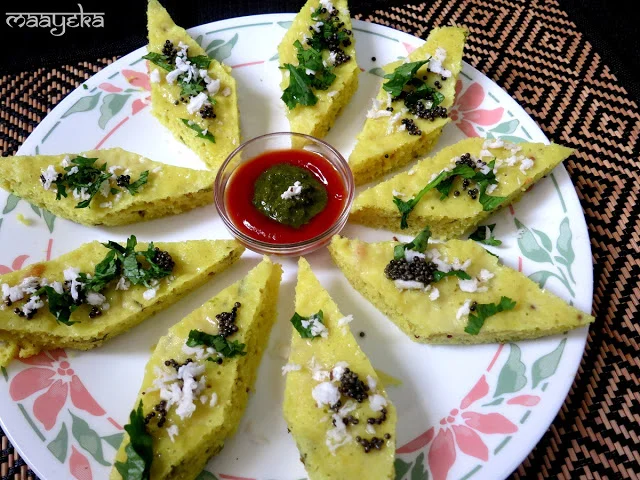
Khatta dhokla is a tangy, steamed Gujarati snack made from a fermented rice and Bengal gram batter. Mint, green chilli and raw mango bring freshness and bite, while steaming gives it a soft, savoury texture.
Ingredients
- ½ cup (about 95 g)rice
- ¼ cup (about 48 g)Bengal gram (chana dal)
- 1½ tbspraw mango, chopped
- ½ cup (about 120 g)sour yoghurt
- ½ cupmint leaves
- 5green chillies
- 1 inchginger
- 1 tspfenugreek seeds
- 4 tbspfresh coriander
- ¾ cup (180 ml)water
- 1 tspsalt
- ½ tspturmeric
- 1 tspEno fruit salt
- 2½ tbsp (about 37 ml)cooking oil
- 1 tspmustard oil
- ½ tspasafoetida
- 10curry leaves
- 2green chillies
Instructions
- 1
Soak and grind
Wash the rice and Bengal gram, then soak them in plenty of water for 5 hours. Drain and grind them into a paste with ¾ cup water, the first 5 green chillies and the ginger. Transfer the paste to a bowl.
- 2
Mix and ferment
Add the salt, turmeric, asafoetida, fenugreek seeds, mustard seeds and yoghurt, then mix well. Cover and leave the batter to ferment for at least 8–10 hours.
- 3
Add mango and mint
Add 2½ tbsp refined oil, the chopped mint and the mango pieces to the batter. Fold them in gently.
- 4
Prepare the steamer
Heat 2 glasses of water in a steamer and grease 2 steamer plates with oil. When the water boils, add 1 tsp Eno fruit salt to the batter and mix it in thoroughly.
- 5
Steam the batter
Divide the batter between the 2 plates and arrange them in the steamer. Cover it securely and steam for 15–20 minutes, starting on high heat and then reducing to medium.
- 6
Check and cool
Test the dhokla with a toothpick. If it comes out clean, remove the plates from the heat and leave the dhokla to cool for 10 minutes.
- 7
Cut and garnish
Cut the dhokla into pieces and garnish with fresh coriander and grated coconut.
- 8
Serve with chutney
Serve with coconut chutney, mint chutney or ketchup.
What is khatta dhokla?
Khatta dhokla is a savoury Gujarati steamed cake made from a fermented batter of rice and lentils. Its name refers to the pleasantly tangy flavour that fermentation and sour yoghurt bring.
This version adds mint, green chilli and raw mango for freshness and sharpness. The batter is steamed rather than fried, so it sets into a tender, sliceable snack.
Nutrition and macros by portion
The nutrition label shows one serving as written: 176 calories, 3g protein, 24g carbs, 8g fat.
| Portion | Adjustment | kcal | Protein | Carbs | Fat |
|---|---|---|---|---|---|
| Lighter | Use less cooking oil | 123 kcal | 2g | 17g | 6g |
| This serving | As written | 176 kcal | 3g | 24g | 8g |
| Hungry | Serve a larger portion | 264 kcal | 5g | 36g | 12g |
The recipe gives 176 kcal per serving, with 24 g carbohydrate, 8 g fat and 3 g protein. Rice and Bengal gram supply most of the carbohydrate, while the cooking oil and mustard oil contribute fat; serve a portion with a protein-rich accompaniment and vegetables to make a more balanced plate.
The rice and lentil base
Rice and Bengal gram: soaking them for 5 hours softens them for grinding into a smooth batter. Drain them before blending so the measured ¾ cup water controls the consistency.
Sour yoghurt: it contributes tang and is mixed into the batter before its long fermentation. The recipe also calls for mustard seeds at this stage, though they are not included in the supplied ingredient list.
Fermentation takes planning
Resting time: the method calls for at least 8–10 hours of covered fermentation after mixing. That is in addition to the 5-hour soak, so the listed 40-minute total time does not include the full preparation and resting period.
Batter check: the recipe does not specify a visual fermentation cue, so follow its stated minimum resting time and keep the bowl covered while the batter rests.
Fold in the flavourings
Mint and mango: add these with the oil after fermentation, folding gently so the batter stays aerated. Chop the mango into small pieces for an even distribution through the steamed dhokla.
Eno: stir it in only once the steamer water is boiling, then move promptly to filling the plates and steaming. This helps the batter rise during cooking.
Steam until set
Two plates: divide the batter between the greased plates and arrange them in the steamer. The recipe does not specify plate dimensions, so use plates that fit inside your steamer with room for the lid to close.
Doneness: steam for 15–20 minutes, beginning on high heat and then switching to medium. A toothpick inserted into the centre should come out clean; rest the plates for 10 minutes before cutting.
Serving ideas
Fresh coriander and grated coconut are suggested as a garnish, though coconut is not listed among the supplied ingredients. Add them if you have them to hand.
Coconut chutney, mint chutney and ketchup are the listed accompaniments. Serve the pieces as a snack or alongside other dishes for a more substantial meal.
Recipe notes & tips
- Soak the rice and Bengal gram for the full 5 hours before grinding.
- Drain the soaked grains well so the batter is not diluted beyond the stated water quantity.
- Have the steamer ready before mixing in the Eno fruit salt.
- Grease both plates so the cooked dhokla is easier to release.
- Leave the dhokla to cool for 10 minutes before slicing.
Variations
- More tang: use a little extra raw mango for a sharper flavour.
- More heat: increase the green chilli to suit your preference.
- Fresh garnish: finish with the listed coriander and grated coconut.
- Chutney pairing: serve with coconut or mint chutney instead of ketchup.
- Smaller bites: cut the cooled dhokla into bite-sized pieces for a snack platter.
Common mistakes to avoid
- Skipping the soak: the grains may not grind smoothly; soak them for the full 5 hours.
- Rushing fermentation: the method specifies at least 8–10 hours; allow that resting time before steaming.
- Adding Eno too early: wait until the steamer water is boiling, then mix it in just before filling the plates.
- Overfilling the plates: divide the batter between both greased plates as directed so it can steam through.
- Cutting straight away: the pieces may be harder to handle; cool the dhokla for 10 minutes first.
How to store
Refrigerate leftover dhokla in a covered container and eat within 2–3 days. Reheat gently in a steamer or microwave until warmed through; it may be less soft after chilling.
Frequently asked questions
How long does khatta dhokla take to make?
The recipe lists 40 minutes, but the method also calls for a 5-hour soak and at least 8–10 hours of fermentation. Plan for those resting periods as well as the steaming and cooling time.
Can I skip fermenting the batter?
Fermentation is part of this recipe and develops its characteristic tang. The method calls for at least 8–10 hours of covered resting.
How do I know when the dhokla is cooked?
Insert a toothpick into the dhokla; it should come out clean. If batter clings to it, continue steaming and check again.
Why is mustard seed mentioned in the method but not the ingredients?
The method includes mustard seeds when mixing the batter, but the supplied ingredient list gives no quantity for them. Check the original recipe for the intended amount before adding any.
Can I prepare the batter ahead?
The recipe already requires a long covered fermentation, so you can plan that resting period in advance. Add the Eno only when the steamer water is boiling and you are ready to steam.
What can I serve with khatta dhokla?
The recipe suggests coconut chutney, mint chutney or ketchup. Fresh coriander and grated coconut are suggested for garnish.
Cook it from the original
This recipe comes from maayeka.com. Their page has the author’s own photos, notes and tips — the best place to cook it from.
Open the recipe on maayeka.com