
Vegan Mapo Tofu
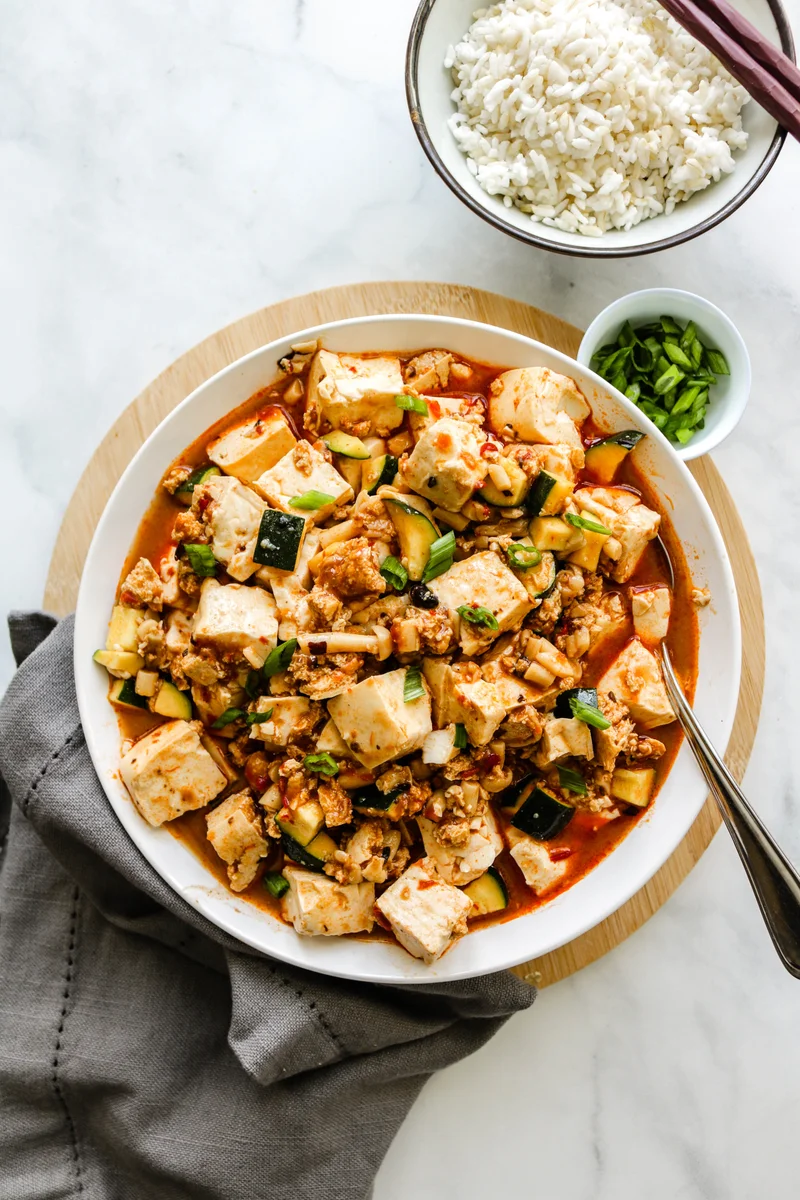
This vegan take on mapo tofu pairs soft tofu with mushrooms and a savoury, spicy fermented-bean sauce. It comes together quickly in one pan and is best served with rice to catch the thick sauce.
Ingredients
- 4 tbsp (60 g)doubanjiang paste
- 2.5 tbsp (50 g)black bean paste
- 2 tbsp (30 g)mirin or sake
- 2 tbsp (40 g)miso paste
- 2 tbsp (28 g)sesame oil
- 2.5 tbsp (15 g)cornflour
- 120 ml (½ cup)water
- 2 inches (about 5 cm)fresh ginger, grated
- 2 large clovesgarlic, minced
- 1 package (200 g)shimeji mushrooms, cut into small pieces
- 1 block (150 g)firm pressed tofu, crumbled
- 4 blocks (800 g)soft tofu, cubed
- 2green onion tops
Instructions
- 1
Mix the sauce
In a small bowl, stir together the doubanjiang, mirin or sake, miso, sesame oil, black bean paste, cornflour and water until combined.
- 2
Cook the aromatics
Set a large frying pan over medium-high heat. Sauté the garlic and ginger with a little sesame oil, or water for an oil-free option, until fragrant.
- 3
Brown the mushrooms
Add the shimeji mushrooms and crumbled pressed tofu. Cook until they are lightly browned.
- 4
Add sauce and tofu
Pour in the sauce. When it begins to simmer gently, add the soft tofu and carefully turn it through the sauce until coated and the sauce has thickened.
- 5
Serve with toppings
Transfer to a serving dish and top with the green onion tops and sesame seeds.
What is mapo tofu?
Mapo tofu is a Sichuan dish known for soft tofu in a bold, savoury, often spicy sauce. This version is vegan, using fermented bean pastes and mushrooms in place of meat.
The sauce brings salty, fermented depth, while the two types of tofu give the dish contrasting textures. It is a quick stovetop meal, though this version is milder or hotter depending on the doubanjiang you use.
Nutrition and macros by portion
The nutrition label shows one serving as written: 370 calories, 23g protein, 22g carbs, 22g fat.
| Portion | Adjustment | kcal | Protein | Carbs | Fat |
|---|---|---|---|---|---|
| Lighter | Use less sesame oil | 259 kcal | 16g | 15g | 15g |
| This serving | As written | 370 kcal | 23g | 22g | 22g |
| Hungry | Serve with extra rice | 555 kcal | 35g | 33g | 33g |
Most of the carbohydrates come from the cornflour and the small amount of sugar naturally present in the pastes, while the tofu supplies much of the protein. Sesame oil and the pastes contribute most of the fat, and the fermented pastes also make sodium a substantial part of the dish. Serve with a generous portion of non-starchy vegetables alongside rice to round out the plate.
Build the sauce first
Sauce base: mixing the pastes, liquid, oil and cornflour before they go into the pan helps distribute the thickener and flavour evenly.
Check the label: if you need the dish to be gluten-free, verify that the doubanjiang, black bean paste, miso and mirin or sake are labelled gluten-free.
Give the mushrooms colour
Shimeji: cut the mushrooms into small pieces so they brown more readily and are easy to eat alongside the tofu.
Pressed tofu: browning the crumbled firm tofu before adding the sauce adds a chewier contrast to the soft tofu. Let it sit against the hot pan briefly rather than stirring constantly.
Handle the soft tofu gently
Add the cubed tofu only after the sauce starts to simmer. Fold or turn it carefully so the pieces stay intact while the cornflour thickens the sauce around them.
Look for a glossy, coating consistency rather than a dry paste. If the sauce thickens too much, loosen it with a small splash of water.
Keep an eye on the timing
The sauce can be prepared while you grate the ginger and cut the mushrooms, keeping the cooking moving smoothly.
Once the tofu is in the pan, use gentle movements and cook just until it is coated and warmed through. Prolonged vigorous stirring can break up the soft cubes.
Choose a simple accompaniment
Steamed rice is a natural match for the savoury sauce and makes the meal more substantial. Plain noodles can also work if they suit your dietary needs.
For freshness, serve with a simple green vegetable on the side. Add it separately rather than to the sauce so the tofu remains the focus.
Recipe notes & tips
- Taste the doubanjiang before cooking so you know how spicy the finished sauce is likely to be.
- Whisk the sauce mixture again just before adding it, as cornflour can settle at the bottom.
- Use a wide frying pan to give the mushrooms and crumbled tofu room to brown.
- Cut the soft tofu into similarly sized cubes so it heats evenly.
- Use a spatula or large spoon to turn the soft tofu gently rather than stirring briskly.
Variations
- Add greens: fold in a handful of spinach near the end and cook just until wilted.
- Make it milder: use less doubanjiang and adjust the seasoning to taste.
- Add extra mushrooms: increase the shimeji for more texture and a stronger mushroom flavour.
- Use sake: choose sake instead of mirin for a less sweet sauce.
- Serve with rice: spoon the tofu and sauce over steamed rice for a more filling meal.
Common mistakes to avoid
- Lumpy sauce: stir the cornflour thoroughly into the cold liquid and pastes before cooking.
- Pale mushrooms: avoid overcrowding the pan and let the mushrooms cook against the hot surface.
- Broken tofu: add the soft cubes after the sauce simmers and fold them through gently.
- Over-thick sauce: loosen it with a small splash of water rather than stirring harder.
- Too much heat: start with less doubanjiang if its spice level is unfamiliar, then adjust next time.
How to store
Refrigerate leftovers in a covered container for up to 3 days. Reheat gently in a pan or microwave until piping hot, adding a splash of water if the sauce has thickened; the soft tofu may break up slightly.
Frequently asked questions
Is this mapo tofu spicy?
The heat depends on the doubanjiang brand and how much chilli it contains. Use less paste for a milder dish, bearing in mind it also provides savoury seasoning.
Can I make it gluten-free?
The recipe is labelled gluten-free, but check the packaging of the doubanjiang, black bean paste, miso and mirin or sake. Products and formulations vary.
Can I use only soft tofu?
You can, but the crumbled firm tofu adds a more substantial, browned texture. If using only soft tofu, handle it gently to keep the pieces intact.
What can I use instead of shimeji mushrooms?
Finely chopped shiitake or chestnut mushrooms are reasonable alternatives. Cook them until lightly browned, as with the shimeji.
What should I serve with mapo tofu?
Steamed rice is a straightforward accompaniment that goes well with the thick sauce. Plain noodles or a green vegetable can also be served alongside.
Cook it from the original
This recipe comes from okonomikitchen.com. Their page has the author’s own photos, notes and tips — the best place to cook it from.
Open the recipe on okonomikitchen.com