
Pho (Instant Pot Pho)
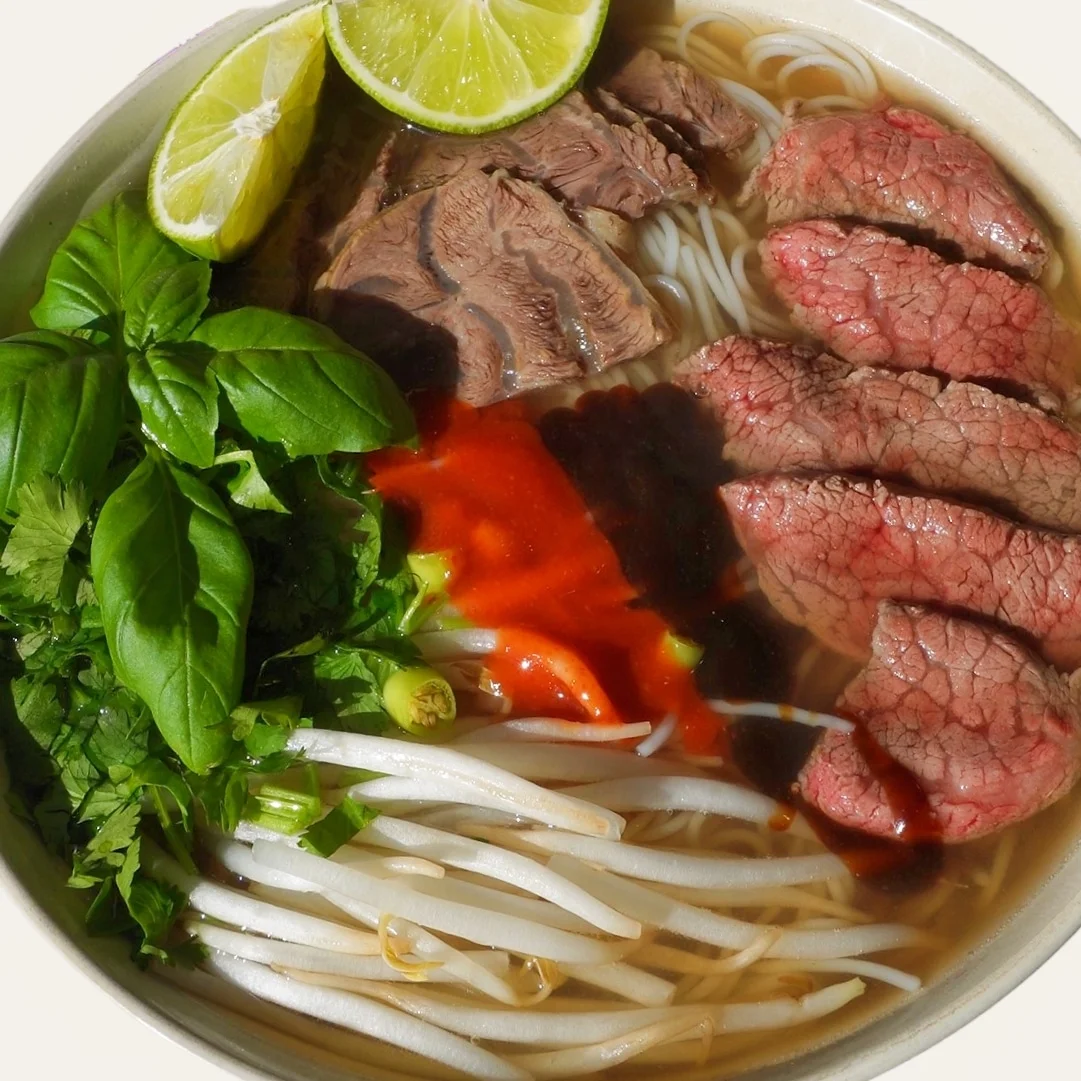
This Instant Pot pho pairs a clear, aromatic beef broth with rice noodles, herbs and fresh toppings. Pressure cooking makes a deeply savoury bowl more achievable on a weeknight, while the final pour of boiling broth cooks the thinly sliced beef.
Ingredients
- 907 g (2 lb)beef (beef shank or brisket)
- 454 g (1 lb)beef bones (optional)
- 1 large (or 2 small), halvedonion
- 1 piece, about 7.5 cm (3 inches)ginger
- 1.9 litres (8 cups)water
- 1 tbspsalt
- 1 tbspsugar (ideally rock candy)
- 1pho spice bag
- 355 ml (1½ cups)beef broth
- 1 tbspfish sauce (add gradually to taste)
- 1 servingrice noodles
- 5 slicesthinly sliced beef (brisket, sirloin or eye of round)
- 5 slicescooked beef
- 60 ml (¼ cup)bean sprouts
- 2 tbsp, choppedcoriander
- 4 leavesThai basil
- 1, cut into wedgeslime
- 1, optionalThai chilli pepper (or jalapeño)
- 1 tbsp, optionalsriracha
- 1 tbsp, optionalhoisin sauce
Instructions
- 1
Blanch the beef
Put the beef bones and meat in a large pot and cover completely with cold water. Bring to the boil, then boil for 5–10 minutes, skimming off foam and scum as they rise. Drain in a colander and rinse the beef and bones well under cold water.
- 2
Char the aromatics
Set the oven to broil, or to bake at 260°C (500°F) if it has no broil setting. Arrange the blanched bones on a foil-lined baking sheet. Halve the onion and slice the ginger lengthways, then place them cut-side down beside the bones. Broil on the top rack for 5–10 minutes, watching closely, until the bones are browned and the onion and ginger are charred. Remove the tray from the oven.
- 3
Toast the spices
Heat a small dry frying pan over medium heat, with no oil. Add the pho spices and stir frequently for 2–3 minutes, until fragrant; do not let them burn. Take them off the heat and leave to cool, then put them in a spice bag, or tie them in cheesecloth.
- 4
Pressure cook broth
Add the beef bones, meat, ginger, onion, spice bag, salt and sugar to the Instant Pot. Pour in enough water to cover the meat and bones by a couple of inches, about 1.9 litres (8 cups). Lock the lid and pressure cook on medium for 1 hour. Let the pressure release naturally for about 10 minutes.
- 5
Strain the broth
Open the Instant Pot carefully and remove the bones and meat. Lift out and discard the spice bag, then strain the broth through a fine-mesh strainer. Use it straight away, or cool to room temperature, cover and refrigerate overnight. If chilling it, skim the layer of solidified fat from the surface the next day with a fine-mesh strainer.
- 6
Cook the noodles
Bring a large pot of water to a rolling boil and add the dry rice noodles. Stir occasionally and cook according to the packet instructions, usually for 4–6 minutes. Drain, then place the noodles in a large bowl of iced water to stop them cooking and remove excess starch.
- 7
Assemble the bowls
Put the cooked noodles in a large bowl and arrange the thinly sliced beef, bean sprouts, coriander, basil, lime wedges and Thai chilli over them. Bring 355–475 ml (1½–2 cups) of beef broth to the boil in a pot, then gradually stir in fish sauce to taste. Pour the boiling broth over the raw beef to cook it. Add hoisin sauce or sriracha if you like, and serve hot.
What is pho?
Pho is a Vietnamese noodle soup built around broth, rice noodles and toppings such as herbs, lime and sliced beef. Its fragrant broth is commonly seasoned with spices and aromatics, then served hot enough to finish cooking very thin slices of meat.
This version uses an Instant Pot to cook beef, bones and charred onion and ginger under pressure. Toasting the spices first helps bring their aroma forward, while the fresh toppings keep each bowl bright.
Nutrition and macros by portion
The nutrition label shows one serving as written: 400 calories, 0g protein, 0g carbs, 0g fat.
| Portion | Adjustment | kcal | Protein | Carbs | Fat |
|---|---|---|---|---|---|
| Lighter | More sprouts, fewer noodles | 280 kcal | 0g | 0g | 0g |
| This serving | As written | 400 kcal | 0g | 0g | 0g |
| Hungry | Add more noodles and beef | 600 kcal | 0g | 0g | 0g |
The rice noodles provide most of the bowl's carbohydrate, while the beef contributes protein and the broth and meat can contribute fat. Add plenty of herbs and bean sprouts, and serve extra vegetables alongside if you want to balance the bowl with more produce.
Build a clean-tasting broth
Blanching first: boiling the beef and bones briefly brings foam and impurities to the surface. Skim them, drain the pot and rinse the meat and bones thoroughly before pressure cooking.
Optional bones: beef bones contribute body to the broth, but the recipe can be made without them. If you leave them out, keep the beef and the rest of the broth ingredients as directed.
Char the aromatics and toast the spices
Onion and ginger: place their cut sides against the hot tray so they develop a good char. Keep an eye on them under the grill, as the time needed can vary.
Spice bag: toast the spices in a dry pan until fragrant, then contain them in a bag or tied cheesecloth. This makes it easy to lift them out before serving the broth.
Get the pressure-cooking stage right
Water level: cover the meat and bones by a couple of inches, using about 1.9 litres (8 cups) as the recipe specifies. Avoid filling the cooker past its maximum line.
Release time: allow about 10 minutes for natural pressure release after the 1-hour cook. Open the lid carefully and strain the broth to remove the solids.
Noodles and beef need careful timing
Rice noodles: use the packet timing as your guide, since noodle thickness and brands vary. Rinsing them in iced water after cooking stops them softening further and washes away excess starch.
Thin slices: arrange the raw beef in the serving bowl, then pour over broth that has just come to the boil. The slices should be thin enough for the hot broth to cook them.
Finish each bowl to taste
Fresh toppings: bean sprouts, coriander, Thai basil, lime and chilli offer contrasting crunch, fragrance, acidity and heat. Add them just before serving so they retain their fresh character.
Seasoning: fish sauce is stirred into the hot broth gradually, so you can stop when the saltiness suits you. Hoisin and sriracha are optional additions at the table.
What to serve with pho
The noodles, beef, broth and toppings make a complete bowl. For a fresh side, serve extra bean sprouts, herbs and lime wedges alongside it.
Set out the optional sauces separately so everyone can season their own portion. Serve promptly while the broth is hot.
Recipe notes & tips
- Blanch and rinse the beef and bones well to remove the foam and residue from the first boil.
- Keep a close watch on the onion, ginger and bones while they broil so they char without burning.
- Stir the spices often as they toast and take them off the heat as soon as they smell fragrant.
- Taste the broth as you add fish sauce, rather than adding the full amount at once.
- Cook the noodles according to their packet, since thickness can change the cooking time.
- Pour the broth over the beef only when it has come to a boil.
Variations
- Skip the bones: leave them out for a broth made with beef alone.
- Choose your cut: use brisket, sirloin or eye of round for the thinly sliced beef.
- Adjust the heat: add Thai chilli or jalapeño, or leave it out for a milder bowl.
- Use rock candy: swap it for the sugar if you have it to hand.
- Serve the sauces separately: let each person add hoisin or sriracha to taste.
Common mistakes to avoid
- Skipping the rinse: leftover blanching residue can cloud the broth; rinse the drained meat and bones thoroughly.
- Burning the spices: they can turn bitter; stir often and stop once they smell fragrant.
- Over-charing the aromatics: they can burn quickly under the grill; watch the tray closely and remove it when charred.
- Overcooking the noodles: they can become too soft; follow the packet timing and cool them in iced water.
- Adding fish sauce all at once: the broth may become too salty; stir it in gradually and taste as you go.
- Using broth that is not boiling: the thin beef may not cook as intended; bring the broth to a boil before pouring.
How to store
Refrigerate leftover broth and cooked beef in covered containers for up to 3 days; keep noodles and fresh toppings separate where possible. Reheat the broth until boiling, then pour it over freshly arranged noodles and beef. Freeze broth without the fresh toppings for up to 3 months, and thaw it in the fridge before reheating.
Frequently asked questions
Can I make the broth without beef bones?
Yes. The bones are marked optional, so you can make the broth with the beef alone.
Can I prepare the broth ahead?
Yes. After straining, cool it to room temperature, cover and refrigerate overnight. Skim the solidified fat from the surface before using it.
How do I know when the noodles are done?
Follow the packet instructions; the method gives about 4–6 minutes as a usual guide. Drain and cool them in iced water to stop them cooking further.
Will the hot broth cook the raw beef?
The method relies on pouring boiling broth over thinly sliced beef. Slice it very thinly and make sure the broth is boiling when you pour it.
How should I adjust the fish sauce?
Stir it into the boiling broth a little at a time and taste as you go. Stop when the seasoning is to your liking.
Can I leave out the chilli or sauces?
Yes. Thai chilli, sriracha and hoisin are optional, so leave them out or serve them separately.
Cook it from the original
This recipe comes from msshiandmrhe.com. Their page has the author’s own photos, notes and tips — the best place to cook it from.
Open the recipe on msshiandmrhe.com