
Easy Veggie Stir Fry
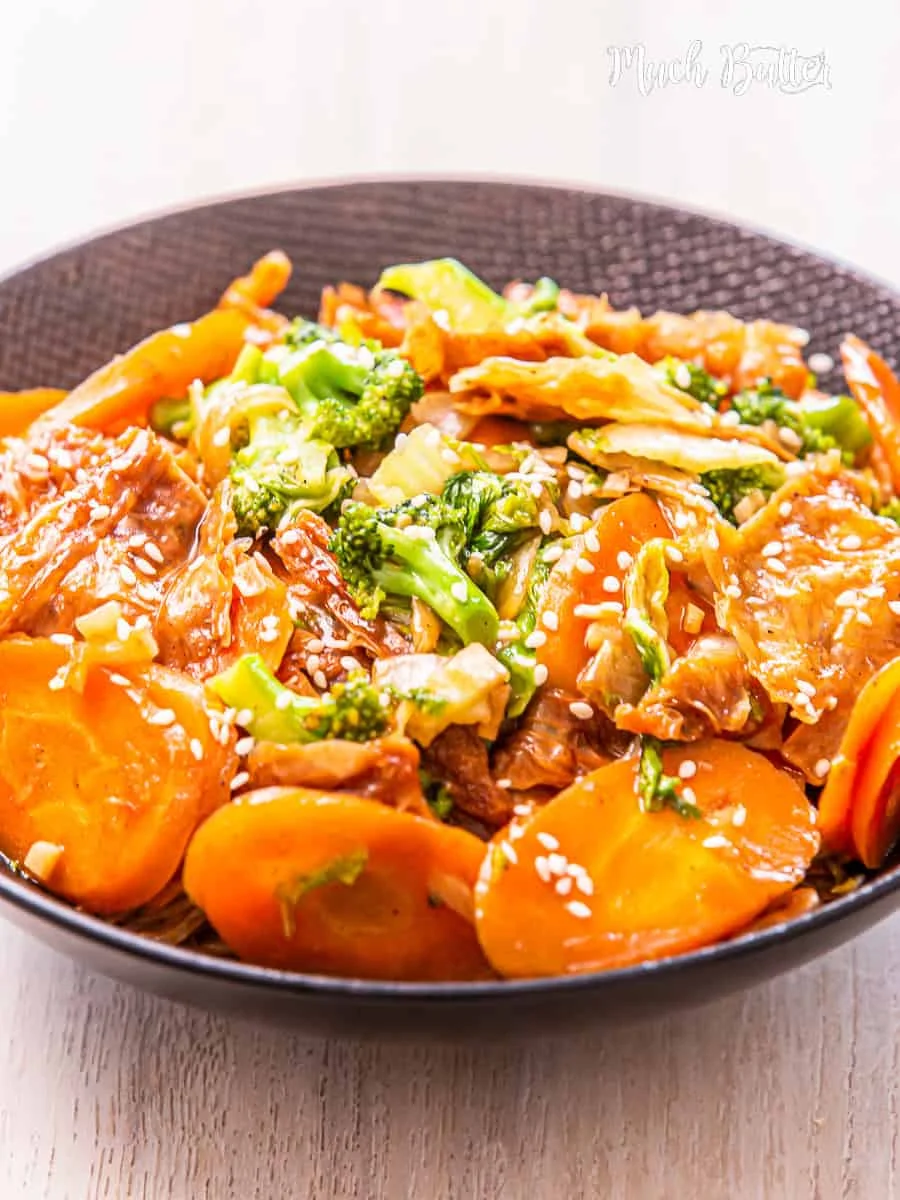
A colourful vegetable stir-fry with dried beancurd, cabbage, broccoli and carrots in a savoury oyster and Worcestershire sauce. It comes together in about 30 minutes and makes a straightforward meal alongside warm rice.
Ingredients
- 2 sheets (30 × 15 cm each)dried beancurd
- 2 largecarrots
- 300 g (2 cups)broccoli
- 225 g (3 cups)Chinese cabbage
- 1/2onion
- 4 clovesgarlic
- 30 ml (2 tbsp)oyster sauce
- 10 ml (2 tsp)sesame oil
- 30 ml (2 tbsp)Worcestershire sauce
- 1 tsppepper
- 1/2 tspsalt
- 1/2 tspchicken stock powder
- 2 tspsugar
- 80 ml (1/3 cup)water
Instructions
- 1
Prepare the vegetables
Cut the dried beancurd, carrots, broccoli and Chinese cabbage into bite-sized pieces, or to your preferred size. Heat oil in a pan over low heat and cook the beancurd for 30 seconds. Remove it, drain and set aside.
- 2
Cook the vegetables
Heat cooking oil in a wok over medium-high heat. Fry the onion and garlic until fragrant, then add the carrots and water. Cook until the carrots have softened, add the broccoli and Chinese cabbage, and stir as they cook.
- 3
Add the sauces
Add the sesame oil, oyster sauce, Worcestershire sauce, pepper, salt, chicken stock powder and sugar, then stir to combine. Return the cooked beancurd to the wok and mix it through. Cook for 3–5 minutes, or until the beancurd is soft.
- 4
Finish and serve
Turn off the heat and transfer the stir-fry to a plate. Garnish with sesame seeds and serve with warm rice, if desired.
What is a vegetable stir-fry?
A stir-fry cooks cut ingredients quickly in a hot pan or wok, with frequent stirring to help them cook evenly. This version combines crisp-tender vegetables with dried beancurd and a savoury, lightly sweet sauce.
Stir-frying is used across many Asian cuisines, so this is best thought of as an Asian-inspired home-style version rather than a single regional classic. The mix of cabbage, broccoli and carrots gives the sauce several textures to cling to.
Nutrition and macros by portion
The nutrition label shows one serving as written: 150 calories, 8g protein, 24g carbs, 4g fat.
| Portion | Adjustment | kcal | Protein | Carbs | Fat |
|---|---|---|---|---|---|
| Lighter | Use less cooking oil | 105 kcal | 6g | 17g | 3g |
| This serving | As written | 150 kcal | 8g | 24g | 4g |
| Hungry | Serve with extra rice | 225 kcal | 12g | 36g | 6g |
Carbohydrates come mainly from the vegetables and sugar, while the dried beancurd contributes protein and some fat; cooking oil and sesame oil also add fat. Oyster sauce, Worcestershire sauce, salt and stock powder are the main sources of sodium. Serve it with a measured portion of rice and plenty of stir-fry vegetables to balance the plate.
Choosing the ingredients
Dried beancurd: This soy-based ingredient adds a chewy, substantial contrast to the vegetables. The recipe briefly fries it first, then softens it in the wok with the sauce.
Vegetables: Cut the carrots, broccoli and cabbage into reasonably similar, bite-sized pieces so they are easy to stir and serve. Chinese cabbage softens quickly, while carrot takes longer to become tender.
Getting the vegetables tender
Carrots first: The recipe cooks them with water before adding the other vegetables, giving them a head start. Cook until softened, but check before they become mushy.
Add the cabbage and broccoli afterwards and keep stirring. This lets them cook in the same pan without spending as long over the heat as the carrots.
Balancing the sauce
Sauce mix: Oyster sauce and Worcestershire sauce bring savoury depth, while sesame oil adds a fragrant finish and sugar rounds out the flavour. Stir thoroughly so the seasonings coat the vegetables and beancurd.
The listed salt and stock powder add further seasoning, so taste cautiously if adjusting the dish at the table. The recipe does not specify amounts for the cooking oil or sesame-seed garnish.
Timing and texture
The method gives the beancurd 30 seconds of frying at the start, followed by 3–5 minutes in the finished stir-fry. The final cue is soft beancurd; the vegetables should still have some shape rather than collapsing.
Keep the wok at medium-high heat for the vegetable stage and stir regularly. If the vegetables are not ready when the liquid has cooked away, the recipe does not specify an extra amount of water, so monitor the pan closely.
What to serve with it
Warm rice is the suggested accompaniment and works well for soaking up the savoury sauce. Serve the stir-fry as soon as it is cooked so the vegetables and beancurd are at their best.
For a fuller meal, you can serve it with another dish or add a separate protein on the side. Keep any additions separate if you want to follow the ingredient list as written.
Recipe notes & tips
- Cut the vegetables before heating the wok so they are ready to add in sequence.
- Keep the beancurd pieces bite-sized so they are easy to stir through the vegetables.
- Stir the onion and garlic as they cook to help them become fragrant without catching.
- Add the broccoli and Chinese cabbage after the carrots, as directed, so they do not overcook.
- Stir well after adding the sauces so the seasonings are distributed evenly.
- Serve promptly once the beancurd is soft and the vegetables are cooked to your liking.
Variations
- Add mushrooms: Slice them and cook with the carrots for an earthy note.
- Use a different cabbage: Swap in another cabbage variety, cut into bite-sized pieces.
- Make it hotter: Add chilli while cooking the onion and garlic.
- Add more greens: Stir in a handful of leafy greens near the end of cooking.
- Finish with sesame seeds: Sprinkle them over the plated stir-fry for extra crunch.
Common mistakes to avoid
- Cutting uneven pieces: Smaller pieces cook faster, so aim for similar sizes within each vegetable.
- Adding everything at once: Carrots need longer than cabbage, so follow the order in the method.
- Skipping the stirring: Keep the vegetables moving around the wok for more even cooking.
- Overcooking the vegetables: Check their texture as they cook and stop while they still hold their shape.
- Adding too much salt early: The sauces and stock powder are already seasoned, so taste before making adjustments.
How to store
Refrigerate leftovers in a covered container and use within 3 days. Reheat in a pan over medium heat, stirring until thoroughly hot; add a small splash of water if the vegetables seem dry.
Frequently asked questions
Can I prepare the vegetables ahead?
Yes. Cut them ahead and keep them covered in the refrigerator, then cook them shortly before serving for the best texture.
How do I know when the beancurd is ready?
It should be soft after the final 3–5 minutes of cooking. Check a piece before turning off the heat.
Can I use fresh beancurd instead?
The method is written for dried beancurd, which is briefly fried and then softened in the sauce. Fresh beancurd has a different texture and may not need the same treatment.
Can I make this without a wok?
Yes. Use a wide frying pan and cook in batches if needed so the vegetables have room to stir and cook.
What can I serve with the stir-fry?
Warm rice is the suggested accompaniment. Serve it on the side or spoon the stir-fry over it.
Cook it from the original
This recipe comes from muchbutter.com. Their page has the author’s own photos, notes and tips — the best place to cook it from.
Open the recipe on muchbutter.com