
Chicken Cordon Bleu
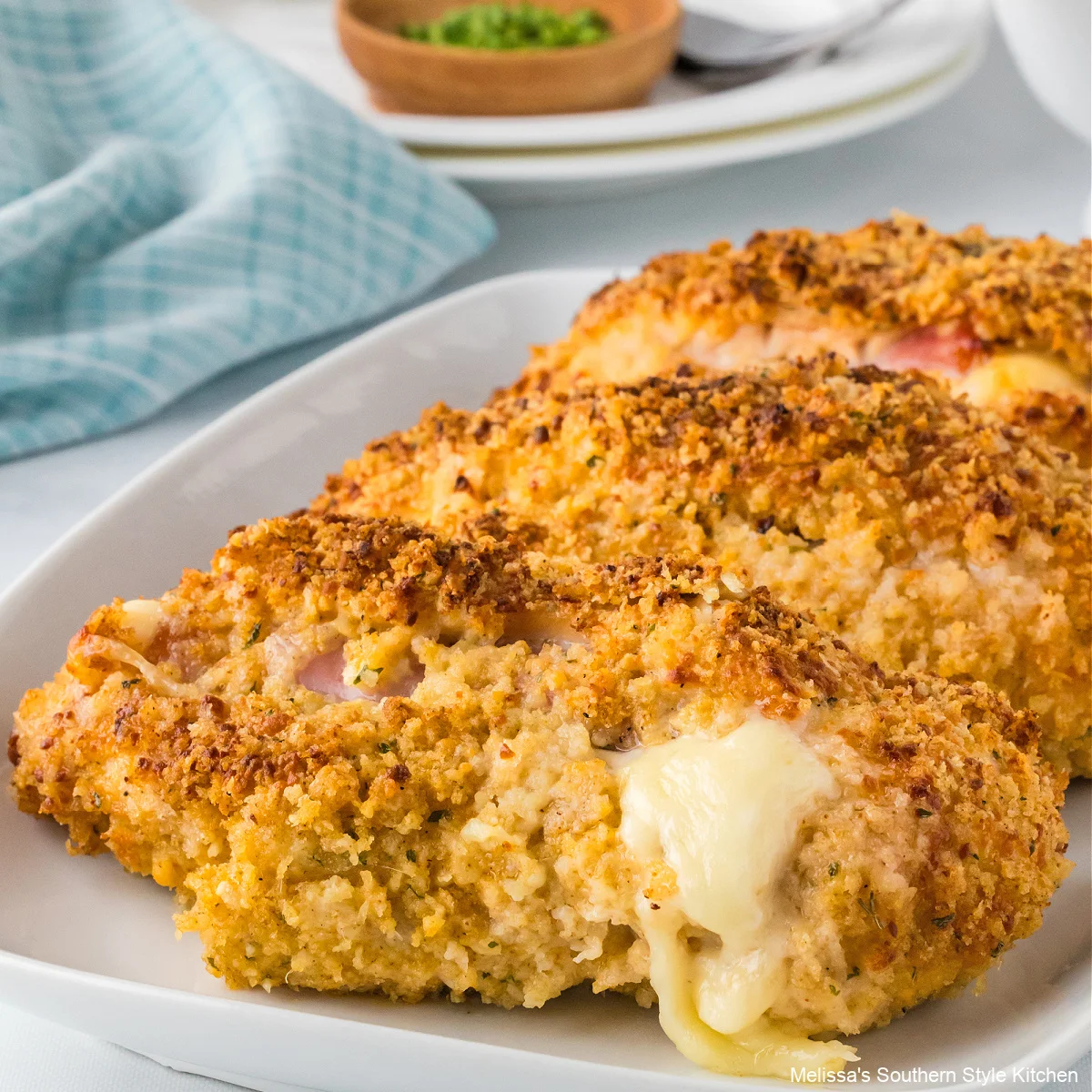
Chicken Cordon Bleu is chicken breast stuffed with honey ham and Swiss cheese, coated in seasoned breadcrumbs and baked until golden. This version adds an optional Dijon cream sauce for a rich, tangy finish.
Ingredients
- 4 breasts, 227 g (8 oz) eachboneless, skinless chicken breasts
- 4 slices, 6 mm (¼ inch) thickhoney ham
- 4 thick-cut slicesSwiss cheese
- 1½ tsp, dividedsalt
- 1 tsp, dividedblack pepper
- 80 g (⅔ cup)plain flour
- 1 tspgranulated garlic
- ½ tsponion powder
- 1 large egg, beaten with 45 ml (3 tbsp) milkegg and milk
- 105 g (1¾ cups)Italian-seasoned panko breadcrumbs
- 50 g (½ cup)finely grated Parmesan
- 113 g (½ cup), meltedunsalted butter
- Optional sauceDijon cream sauce
- 28 g (2 tbsp)unsalted butter
- 16 g (2 tbsp)plain flour
- 300 ml (1¼ cups)double cream
- 3 tbspDijon mustard
- 15 g (3 tbsp)finely grated Parmesan
- ⅛ tspground nutmeg
- 1–2 tbspchopped fresh chives
Instructions
- 1
Prepare the oven
Heat the oven to 200°C (400°F). Set an oven-safe wire rack inside a rimmed baking tray and spray it with cooking spray.
- 2
Season the chicken
Season the chicken breasts evenly with ½ teaspoon of the salt and ¼ teaspoon of the pepper. Using a sharp knife, cut a pocket into each breast without slicing through the opposite side.
- 3
Fill each pocket
Lay two slices of cheese on two slices of ham and roll them up tightly. Place one roll inside each chicken breast and secure the opening with cocktail sticks.
- 4
Set up coating
In a shallow bowl, whisk together the flour, remaining salt and black pepper, granulated garlic and onion powder. Put the beaten egg and milk in a second bowl. In a third bowl, mix the panko breadcrumbs with the grated Parmesan.
- 5
Coat the chicken
Coat one chicken breast at a time in the flour mixture, then dip it in the egg mixture and let the excess drip away. Press it into the panko-Parmesan mixture to coat, then place it on the prepared rack.
- 6
Add the butter
Drizzle the melted butter over the chicken, taking care not to dislodge the breadcrumb coating.
- 7
Bake until cooked
Bake for 25–30 minutes, until the juices run clear and an instant-read thermometer inserted into the thickest part reads 71°C (160°F). Broil at the end of baking to brown the coating further.
- 8
Make the sauce
For the optional Dijon cream sauce, melt the butter in a small, heavy-based saucepan over medium heat. Whisk in the flour and cook for 1 minute. Whisk in the cream, Dijon mustard, Parmesan and nutmeg. Simmer over low heat for 3–5 minutes, stirring occasionally, until thickened; it will thicken more as it cools.
- 9
Serve the chicken
Drizzle the Chicken Cordon Bleu with the sauce, if using, and garnish with fresh chives.
What is Chicken Cordon Bleu?
Chicken Cordon Bleu is a stuffed, breaded chicken dish built around the combination of chicken, ham and cheese. Its name and technique draw on the European tradition of rolled or filled meats, while this recipe presents it in a familiar American baked format.
The filling is tucked into a pocket rather than wrapped around the chicken, and a panko-Parmesan coating gives the outside a crisp finish. The optional Dijon cream sauce adds a tangy, savoury counterpoint.
Nutrition and macros by portion
The nutrition label shows one serving as written: 805 calories, 16g protein, 44g carbs, 64g fat.
| Portion | Adjustment | kcal | Protein | Carbs | Fat |
|---|---|---|---|---|---|
| Lighter | Skip the cream sauce | 564 kcal | 11g | 31g | 45g |
| This serving | As written | 805 kcal | 16g | 44g | 64g |
| Hungry | Add a larger side | 1208 kcal | 24g | 66g | 96g |
The breadcrumbs and flour contribute most of the carbohydrates, while butter, cream and cheese supply much of the fat. Chicken, ham and cheese provide protein; serve a portion with green vegetables or salad to balance the rich coating and sauce.
Choosing the filling
Ham and cheese: Use slices that can be rolled tightly together so the filling fits into the chicken pocket. The recipe specifies honey ham and thick-cut Swiss.
Chicken: Breasts of a similar size are easier to fill and cook evenly. Cut each pocket carefully, leaving the far side intact to hold the filling.
Keep the filling inside
Tight rolls: Roll the ham around the cheese before filling the chicken. This keeps the cheese more contained as it softens in the oven.
Secure opening: Use cocktail sticks to close each pocket, and take care when coating the chicken so the opening stays closed.
Build a crisp coating
Three bowls: The flour mixture, egg wash and panko-Parmesan coating each do a separate job. Let excess egg drip off before pressing the chicken into the crumbs.
Gentle butter: Drizzle the melted butter over the breading without touching or shifting it. The rack lets air circulate around the chicken as it bakes.
Check doneness and colour
Temperature: Check the thickest part of the chicken with an instant-read thermometer and follow the recipe's target of 71°C (160°F). The method also calls for clear juices.
Final browning: Broil at the end of baking to deepen the colour of the coating. Keep an eye on it during this step so it does not brown too far.
Make the Dijon cream sauce
Smooth base: Cook the flour in melted butter for 1 minute, then whisk in the cream and flavourings. Stir occasionally as it simmers over low heat for 3–5 minutes.
Thickening: The sauce continues to thicken as it cools, so take it off the heat once it has thickened in the pan. Spoon it over the chicken just before serving.
What to serve alongside
Fresh sides: A green salad or steamed green vegetables offer a fresh contrast to the rich filling and sauce. Serve them alongside rather than under the breaded chicken to help keep the coating crisp.
Hearty sides: For a more substantial plate, pair it with potatoes or another simple starch. Keep extra sauce available at the table for anyone who wants more.
Recipe notes & tips
- Cut each pocket carefully and leave the opposite side of the breast intact.
- Roll the ham and cheese firmly so the filling is compact before stuffing.
- Let excess egg wash drip off before coating the chicken in breadcrumbs.
- Press the panko-Parmesan mixture onto the chicken so it adheres.
- Drizzle melted butter gently to avoid disturbing the coating.
- Use a thermometer in the thickest part of the chicken to check the stated doneness.
Variations
- Herb crumbs: Mix chopped herbs into the panko-Parmesan coating for an herby note.
- Milder sauce: Use less Dijon mustard for a gentler mustard flavour.
- Extra chives: Add more chopped chives to the sauce or use them as a fresh garnish.
- Different ham: Swap honey ham for another sliced ham if preferred.
- Cheese swap: Use another good-melting cheese in place of Swiss.
Common mistakes to avoid
- Cutting through the breast: Leave one side intact so the filling stays enclosed.
- Loose filling roll: Roll the cheese inside the ham tightly before putting it into the pocket.
- Wet breadcrumb coating: Let excess egg drip off before adding the panko mixture.
- Disturbed breading: Drizzle the butter carefully instead of brushing across the coating.
- Skipping the thermometer: Check the thickest part of the chicken rather than judging by colour alone.
- Overcooking the sauce: Simmer it over low heat and remember it thickens further as it cools.
How to store
Refrigerate leftovers in a covered container and eat within 3 days. Reheat in an oven until hot throughout to help the coating regain some crispness; warm the sauce gently and stir it before serving.
Frequently asked questions
Can I make the Dijon cream sauce ahead?
Yes. Refrigerate it in a covered container, then warm it gently in a saucepan, stirring as it heats. It may thicken as it cools.
How do I stop the filling from leaking out?
Do not cut all the way through the chicken, roll the ham and cheese tightly, and secure the pocket with cocktail sticks. Handle the coated chicken gently.
Can I leave out the sauce?
Yes. The sauce is optional, and the chicken can be served on its own with the fresh chive garnish.
How do I know when the chicken is done?
The recipe calls for clear juices and an instant-read thermometer reading 71°C (160°F) in the thickest part of the chicken.
Why use a wire rack?
The chicken sits above the rimmed tray, allowing air to circulate around it while it bakes. This supports an even, crisp coating.
Cook it from the original
This recipe comes from melissassouthernstylekitchen.com. Their page has the author’s own photos, notes and tips — the best place to cook it from.
Open the recipe on melissassouthernstylekitchen.com