
Creamy Shrimp Scampi Pasta
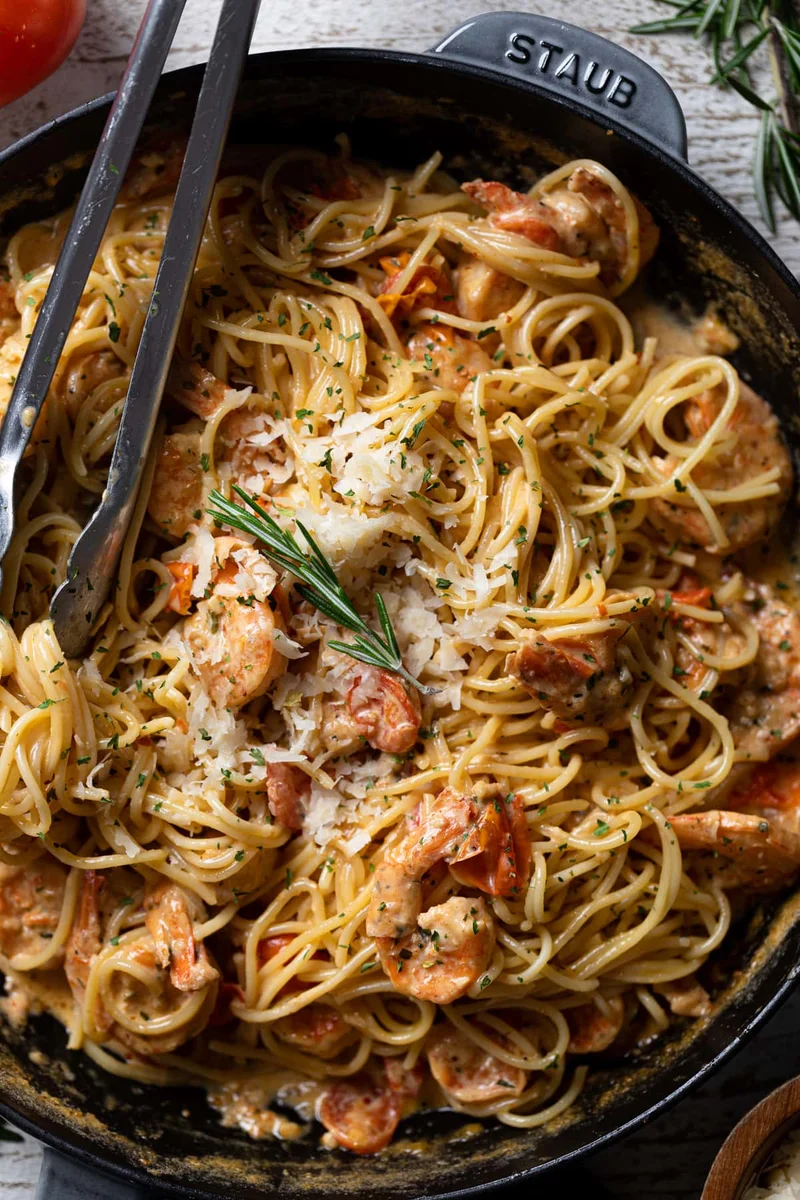
Creamy shrimp scampi pasta combines linguine and seared shrimp with a garlicky cream, Parmesan and lemon sauce, finished with roasted tomatoes. It makes a substantial weeknight meal in about 30 minutes, especially if the tomatoes are ready to use.
Ingredients
- 454 g (16 oz)linguine
- 454 g (1 lb), plus 1 tsp salt and black pepper to seasonwild-caught colossal shrimp, deveined
- 28 g (2 tbsp), plus 14 g (1 tbsp) for cookingunsalted butter
- 1–2 tsp, plus black peppersea salt
- 30 ml (2 tbsp)extra-virgin olive oil
- 4 cloves, mincedgarlic
- 240 ml (1 cup)organic heavy cream
- 60 ml (¼ cup)low-sodium organic chicken stock
- 30 ml (2 tbsp)white cooking wine
- 15 ml (1 tbsp)freshly squeezed lemon juice
- 1 tspCajun seasoning blend
- 1 cupfreshly grated Parmesan cheese
- A pinchred pepper flakes
- 2 cupsherb-roasted tomatoes
Instructions
- 1
Roast tomatoes
Prepare the herb-roasted tomatoes by following the recipe for them.
- 2
Cook linguine
Cook the pasta according to the packet instructions. Linguine usually takes 8–10 minutes; check it after about 7 minutes and cook until al dente, around 7–9 minutes.
- 3
Sauté shrimp
Melt 28 g (2 tbsp) of butter in a large 30 cm (12-inch) frying pan over medium-high heat. Add the shrimp, seasoned with salt and black pepper, and cook for about 3–4 minutes, turning to cook both sides until pink and cooked through. Transfer the shrimp to a plate or bowl.
- 4
Start the sauce
In the same pan, melt the remaining 14 g (1 tbsp) of butter with the olive oil. Add the minced garlic and sauté, stirring frequently, for about 1–2 minutes until fragrant. Stir in the Cajun seasoning and red pepper flakes.
- 5
Finish the sauce
Lower the heat to medium-low and gradually stir in the cream, chicken stock, lemon juice and white wine. Let the sauce bubble for 1–2 minutes, then whisk in the grated Parmesan until melted; cook for about 2–3 minutes, until thickened. Taste and add salt if needed.
- 6
Combine and serve
Drain the cooked pasta and stir it into the sauce until coated. Add the shrimp and roasted tomatoes and toss to coat. Take the pan off the heat and serve immediately, with a side dish if desired.
What is shrimp scampi pasta?
Shrimp scampi is a popular Italian-American preparation of shrimp with garlic, butter and often white wine; serving it with pasta turns it into a filling main course. This version takes a creamy route, adding Parmesan and cream to the garlic-and-wine sauce.
Linguine gives the sauce a broad surface to cling to, while Cajun seasoning, chilli flakes and roasted tomatoes bring extra savoury flavour and colour.
Nutrition and macros by portion
The nutrition label shows one serving as written: 549 calories, 26g protein, 14g carbs, 43g fat.
| Portion | Adjustment | kcal | Protein | Carbs | Fat |
|---|---|---|---|---|---|
| Lighter | Use less cream and butter | 384 kcal | 18g | 10g | 30g |
| This serving | As written | 549 kcal | 26g | 14g | 43g |
| Hungry | Add extra linguine | 824 kcal | 39g | 21g | 65g |
The linguine and tomatoes provide most of the carbohydrates, while butter, olive oil, cream and Parmesan contribute much of the fat. Shrimp and Parmesan provide protein. Pair a serving with a green salad or another vegetable for a fresh, crisp contrast.
Choose the pasta and shrimp
Linguine: Cook it just to al dente, since it will be tossed in the warm sauce afterwards. Save a little pasta water before draining if you would like to loosen the sauce later.
Shrimp: Deveined, large shrimp are easy to cook quickly and remain substantial in the dish. Pat them dry before seasoning if they are wet, so they sear rather than release excess water.
Get the shrimp just right
Hot pan: Melt the butter over medium-high heat before adding the shrimp in a single layer. If the pan is crowded, cook them in batches so they cook evenly.
Doneness: Shrimp are ready when they turn pink and opaque through the centre. Take them out as soon as they are cooked; they will be tossed back into the sauce at the end.
Build a smooth sauce
Garlic: Stir it frequently in the butter and oil for 1–2 minutes, just until fragrant. Browning it can make the sauce taste bitter.
Cream and cheese: Lower the heat before adding the liquids, then let the cream mixture bubble gently. Whisk in the Parmesan until melted and thickened, rather than letting the sauce boil hard.
Keep the pasta coated
Timing: Start cooking the linguine while you prepare the shrimp and sauce, keeping an eye on its texture as it approaches the packet timing. Drain it when it is al dente so it can finish in the sauce.
Texture: Toss the drained pasta thoroughly in the sauce before returning the shrimp and tomatoes. If the sauce seems too thick, stir in a small splash of reserved pasta water.
Serve it while warm
This rich pasta is best served immediately, while the sauce is glossy and the shrimp are tender. A crisp green salad or simply cooked vegetables can make a fresh contrast.
The roasted tomatoes are part of the finish, so have them ready before combining everything. Add them gently when tossing to keep them from breaking up too much.
Recipe notes & tips
- Season the shrimp with the listed teaspoon of salt and black pepper before cooking.
- Have the roasted tomatoes prepared before you start combining the finished dish.
- Stir the garlic frequently so it softens without browning.
- Add the Parmesan over lower heat and whisk until it has melted into the sauce.
- Taste the sauce before adding more salt, as the Parmesan and stock already contribute seasoning.
- Serve as soon as the shrimp and tomatoes have been tossed through the pasta.
Variations
- Use gluten-free pasta: Cook it according to its packet directions and drain it carefully.
- Make it dairy-free: Use suitable dairy-free alternatives for the butter, cream and Parmesan.
- Adjust the heat: Reduce or omit the red pepper flakes for a milder sauce.
- Add fresh herbs: Finish with chopped parsley for a fresh note.
- Swap the pasta: Use another long pasta shape that holds the creamy sauce.
Common mistakes to avoid
- Overcooking the shrimp: Remove them once pink and cooked through, then add them back at the end.
- Crowding the pan: Cook the shrimp in batches if they do not fit in a single layer.
- Browning the garlic: Stir it often and take care to stop when it is fragrant.
- Boiling the cream hard: Keep the sauce at a gentle bubble after lowering the heat.
- Overcooking the linguine: Check it early and drain it when al dente.
- Adding unprepared tomatoes: Roast them ahead of time, as the method refers to a separate tomato recipe.
How to store
Refrigerate leftovers in a sealed container and eat within 2 days. Reheat gently in a pan over low heat, stirring in a splash of stock or water if the sauce has thickened; avoid prolonged heating, which can toughen the shrimp.
Frequently asked questions
Can I use a different pasta shape?
Yes. Use another pasta shape you like, and cook it according to its packet instructions until al dente.
Can I use frozen shrimp?
Yes. Thaw them fully and pat them dry before seasoning and cooking.
How do I know when the shrimp are cooked?
They should be pink and opaque through the centre. Remove them from the pan promptly to help keep them tender.
How can I loosen a thick sauce?
Stir in a small splash of reserved pasta water, stock or water until the sauce reaches your preferred consistency.
Can I make this dairy-free?
The recipe description gives a dairy-free option. Replace the butter, cream and Parmesan with suitable dairy-free alternatives; the result will differ from the original sauce.
Do the tomatoes need to be roasted separately?
Yes. The method directs you to follow a separate herb-roasted tomato recipe, so prepare those before adding them to the pasta.
Cook it from the original
This recipe comes from orchidsandsweettea.com. Their page has the author’s own photos, notes and tips — the best place to cook it from.
Open the recipe on orchidsandsweettea.com