
Easy Salmon Fish Curry
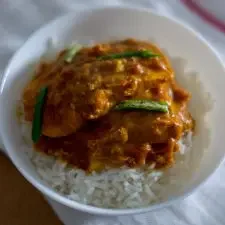
This South Indian-style salmon curry pairs tender fish with a tangy tomato and tamarind sauce, mellowed with coconut milk. It comes together in about 25 minutes and is an easy, flavourful dish to serve with rice.
Ingredients
- 15 ml (1 tablespoon)coconut oil
- 2.5 ml (1/2 teaspoon)mustard seeds
- 5green chillies, sliced
- 1 sprigcurry leaves
- 2.5 cm (1 inch)ginger, finely minced
- 3tomatoes, finely chopped
- 10 ml (2 teaspoons)tamarind paste
- 5 ml (1 teaspoon)red chilli powder
- 5 ml (1 teaspoon)turmeric powder
- 3.75 ml (3/4 teaspoon)salt
- 120 ml (1/2 cup)water
- 120 ml (1/2 cup)canned coconut milk
- 500 gsalmon steaks
Instructions
- 1
Sizzle the aromatics
Heat 15 ml (1 tablespoon) coconut oil in a pan. Once hot, add the mustard seeds, sliced green chillies, curry leaves and finely minced ginger. Sauté for 1 minute.
- 2
Soften the tomatoes
Stir in the chopped tomatoes, 10 ml (2 teaspoons) tamarind paste, red chilli powder, turmeric and salt. Sauté for 5 minutes, until the tomatoes are soft.
- 3
Simmer the salmon
Pour in 120 ml (1/2 cup) water and 120 ml (1/2 cup) canned coconut milk, then add the fish pieces. Cover and simmer over a medium heat for 10 minutes.
- 4
Serve with rice
Serve the fish curry with rice.
What is South Indian salmon curry?
Fish curry is a broad family of dishes across South India, with ingredients and preparations that vary from kitchen to kitchen. This version builds its sauce from tomatoes, tamarind and spices, then softens their sharpness with coconut milk.
Salmon makes a hearty choice for the quick simmer. The short cooking time helps keep the fish tender while the sauce brings together tang, warmth and richness.
Nutrition and macros by portion
The nutrition label shows one serving as written: 460 calories, 34g protein, 11g carbs, 29g fat.
| Portion | Adjustment | kcal | Protein | Carbs | Fat |
|---|---|---|---|---|---|
| Lighter | Use less coconut milk | 322 kcal | 24g | 8g | 20g |
| This serving | As written | 460 kcal | 34g | 11g | 29g |
| Hungry | Serve with extra rice | 690 kcal | 51g | 17g | 44g |
Salmon supplies most of the protein and much of the fat, while coconut oil and coconut milk add further fat. The tomatoes and a rice accompaniment provide most of the carbohydrates; serve with a generous portion of vegetables alongside to round out the plate.
Building the flavour base
Mustard seeds: add them to hot oil with the chillies, curry leaves and ginger so their aromas release before the tomatoes go in. Keep the pan moving if the seeds start popping vigorously.
Tomatoes and tamarind: cook the tomatoes until soft, then let the tamarind and spices mingle with their juices. This gives the curry its savoury, tangy foundation.
Choosing and adding the salmon
Salmon steaks: use pieces of roughly similar thickness so they cook at a similar pace. If your steaks have skin or bones, take care when serving and eating.
Gentle simmer: once the fish is in the liquid, cover the pan and keep the heat at medium. Avoid vigorous boiling, which can break the fish into flakes before it is ready.
How to judge doneness
The recipe gives the salmon 10 minutes covered at a medium heat. Check the thickest piece at the end: it should be opaque and separate into flakes with gentle pressure.
If a piece is still translucent in the centre, simmer briefly longer and check again. The exact time can vary with the thickness of the steaks and how steadily the pan simmers.
Balancing the sauce
Coconut milk rounds out the acidity of the tomatoes and tamarind, while chilli brings heat. The green chillies can vary in strength, so taste the sauce before serving if you prefer a milder curry.
The sauce should coat the fish without becoming overly reduced. Keep the lid on during the stated simmer so the liquid stays in the pan.
What to serve with it
Rice is the suggested accompaniment and catches the tomato-coconut sauce well. Plain steamed rice keeps the focus on the curry's tangy, aromatic flavour.
For a fuller meal, serve with a simple vegetable side. Add it separately rather than changing the curry's ingredients or cooking method.
Recipe notes & tips
- Finely chop the tomatoes so they soften within the five-minute sauté.
- Have the fish pieces ready before adding the water and coconut milk, as the simmering stage is short.
- Use a pan with a lid that fits well to keep the curry from reducing too quickly.
- Add the salmon gently and avoid stirring it vigorously once it starts cooking.
- Taste the sauce before serving and adjust the chilli level next time to suit your preference.
Variations
- Milder curry: use fewer green chillies for less heat.
- More tang: add a little extra tamarind paste to the sauce.
- Different fish: use another firm fish in place of salmon and check it for doneness as it simmers.
- Fresh coconut milk: use fresh coconut milk in place of the canned version.
- More vegetables: serve the curry with a separate vegetable side for extra variety.
Common mistakes to avoid
- Adding fish to a vigorous boil: keep the curry at a gentle simmer to help the salmon stay in pieces.
- Skipping the tomato cook: sauté until the tomatoes are soft so they form a cohesive sauce.
- Overcooking the salmon: check the thickest piece at 10 minutes and continue only if needed.
- Using an uncovered pan: cover it during the simmer to retain the sauce.
- Stirring roughly: move the fish carefully so the steaks do not break apart.
How to store
Refrigerate leftovers in a covered container and eat within 2 days. Reheat gently in a covered pan until hot throughout, adding a splash of water if the sauce has thickened; avoid prolonged heating, which can dry out the salmon.
Frequently asked questions
Can I use salmon fillets instead of steaks?
Yes. Cut the fillets into pieces of similar thickness and add them as directed; thinner pieces may need less time, so check them as they cook.
How can I make the curry less spicy?
Use fewer green chillies. You can also reduce the red chilli powder, though that changes the recipe's seasoning.
Can I make this curry ahead?
The tomato base can be prepared ahead, then gently reheated before adding the salmon. Cook the fish just before serving for the best texture.
How do I know when the salmon is cooked?
At the end of the 10-minute simmer, the thickest piece should be opaque and flake gently. If it is still translucent in the centre, simmer for a little longer.
What should I serve with salmon fish curry?
Serve it with rice, as suggested in the recipe. A simple vegetable side also works well alongside.
Cook it from the original
This recipe comes from kannammacooks.com. Their page has the author’s own photos, notes and tips — the best place to cook it from.
Open the recipe on kannammacooks.com