
Soft One-Hour Dinner Rolls
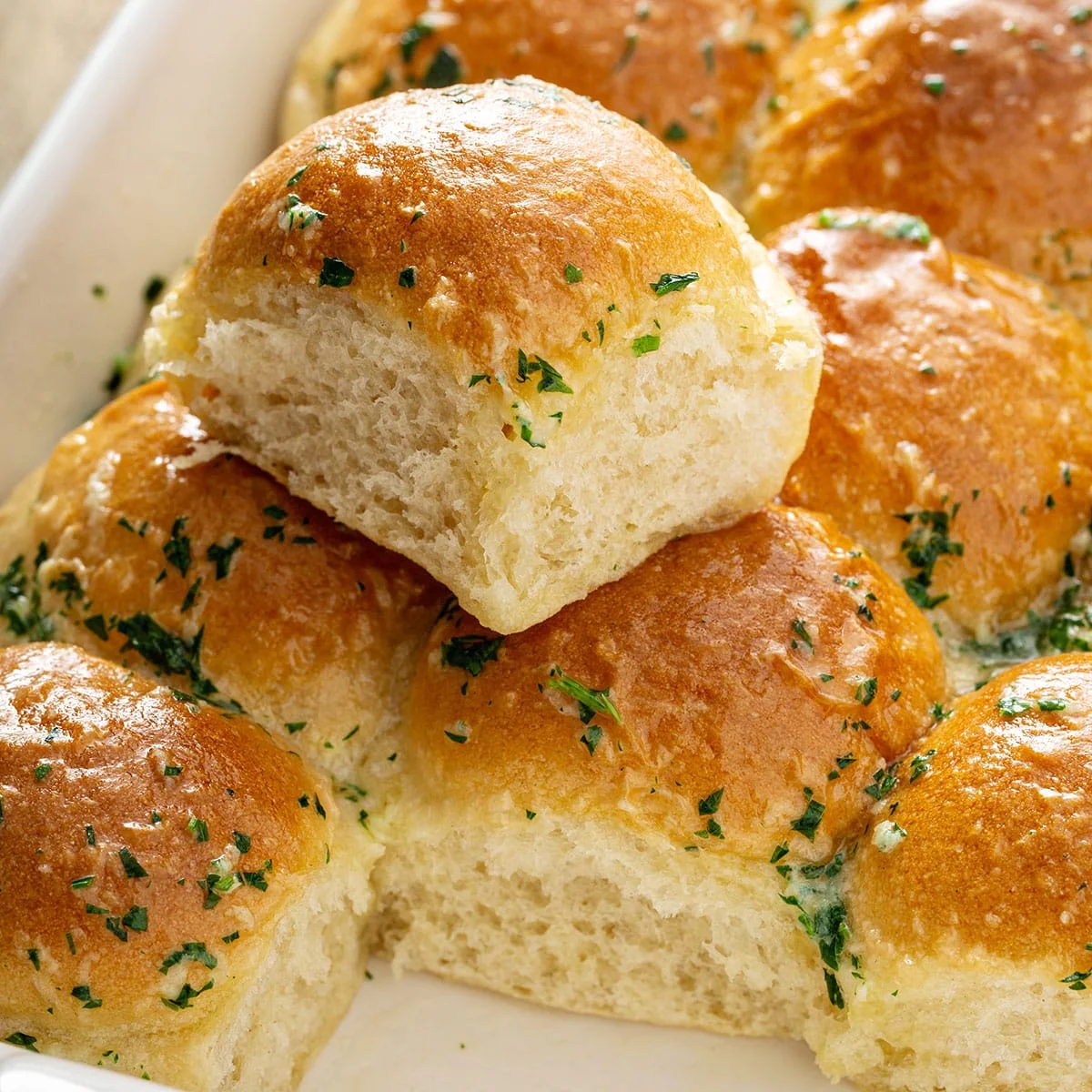
These soft, fluffy American-style dinner rolls are made with a quick rise and baked until lightly golden. They suit a weeknight supper or a holiday table, with optional garlic-herb butter for brushing on top.
Ingredients
- 240 ml (1 cup)water
- 28 g (2 tablespoons)butter, melted
- 120 ml (1/2 cup)milk
- 30 ml (2 tablespoons)honey
- 1 tablespoonactive-dry yeast
- 420–480 g (3 1/2 to 4 cups)all-purpose flour
- 1 teaspoonfine sea salt
- As neededadditional melted butter, for greasing the bowl and brushing the rolls
- 43 g (3 tablespoons)butter
- 1garlic clove, grated
- A pinchsalt
- 1 tablespoonparsley, finely chopped
Instructions
- 1
Warm the liquids
In a small saucepan or microwave-safe bowl or measuring jug, stir together the water, melted butter, milk and honey. Heat until the mixture reaches 43°C (110°F), then stir briefly so the butter melts fully and the honey dissolves. If using a microwave, heat in short bursts, stirring between each one.
- 2
Activate the yeast
Pour the warm liquid into the bowl of a stand mixer fitted with a dough hook. Sprinkle the yeast over it and stir, then leave for 5 minutes until foamy.
- 3
Add dry ingredients
Add 420 g (3 1/2 cups) of the flour and the salt. Mix on low, gradually increasing to medium-low, until combined.
- 4
Knead the dough
If the dough sticks to the sides of the bowl, add just enough of the remaining flour, a tablespoon at a time, to stop it sticking. Mix for about 4–5 minutes, until smooth and elastic; the dough should remain lightly sticky but manageable.
- 5
Give it a rise
Shape the dough into a ball. Lightly grease a bowl with melted butter, put the dough in it and turn it over so its surface is lightly coated. Cover with a damp towel and leave to rise for 15 minutes.
- 6
Heat the oven
Heat the oven to 204°C (400°F). Grease a 23 x 33 cm (9 x 13-inch) baking dish with melted butter or cooking spray and set it aside.
- 7
Shape the rolls
Turn the dough out onto a lightly floured surface, punch it down and shape it into an even rectangle or another shape. Cut it into 15 portions, without needing to make them exact, and roll each portion into a ball. Arrange the balls in the prepared dish, cover and leave in a warm spot for 15–20 minutes.
- 8
Bake the rolls
Bake uncovered for 15 minutes, or until the tops are golden brown and the rolls are cooked through. Take them out of the oven and brush with melted butter or garlic-herb butter. Serve warm.
- 9
Make garlic butter
For the optional garlic-herb butter, combine the butter and garlic in a small saucepan or microwave-safe bowl. Melt over low heat or in short microwave bursts. Once fully melted and fragrant, stir in the pinch of salt and chopped parsley, then brush over the hot rolls before serving.
What are dinner rolls?
Dinner rolls are small, soft bread rolls served alongside a meal, especially in American home cooking. This version uses enriched dough, with milk, butter and honey lending tenderness and a touch of sweetness.
A short first rise and a second rise after shaping help fit the recipe into its one-hour schedule. The optional garlic-herb butter gives the warm rolls a savoury finish.
Nutrition and macros by portion
The nutrition label shows one serving as written: 134 calories, 3g protein, 25g carbs, 2g fat.
| Portion | Adjustment | kcal | Protein | Carbs | Fat |
|---|---|---|---|---|---|
| Lighter | Use less garlic butter | 94 kcal | 2g | 18g | 1g |
| This serving | As written | 134 kcal | 3g | 25g | 2g |
| Hungry | Serve an extra roll | 201 kcal | 5g | 38g | 3g |
The flour and honey provide most of the carbohydrates, while the butter contributes most of the fat; the flour and milk supply some protein. Pair a roll with a source of protein and vegetables to make it part of a more balanced plate.
Getting the yeast going
Warm liquid: Bring the water, milk, butter and honey to 43°C (110°F), then stir so the butter melts and honey dissolves. The temperature matters because very hot liquid can impair the yeast's activity.
Foamy start: Leave the yeast in the warm liquid for 5 minutes. A foamy surface is a useful sign that it has begun activating.
Adding flour gradually
Starting amount: Mix in 420 g (3 1/2 cups) of flour with the salt first. This leaves room to adjust the dough rather than committing to the full amount at once.
Final texture: Add any remaining flour a tablespoon at a time only if the dough is sticking to the bowl. Stop when it is smooth, elastic and lightly sticky; too much flour can make the rolls firm.
Shaping and rising
Even portions: Cut the dough into 15 pieces, then roll each into a ball. They do not have to be perfectly identical, but similar sizes help them bake at a similar rate.
Second rise: Arrange the portions in the greased dish and cover them for 15–20 minutes in a warm spot. They should look slightly puffed before going into the oven.
Checking when they are done
Colour: The tops should be golden after about 15 minutes at 204°C (400°F). If they are still pale, continue baking until the tops are coloured and the rolls are cooked through.
Finish: Brush with melted butter as soon as the rolls come out of the oven. For the optional topping, stir the parsley and salt into the melted garlic butter before brushing.
Serving the rolls
Serve them warm alongside soup, a roast dinner or a holiday meal. Their soft crumb also makes them handy for mopping up gravy or sauce.
If using the garlic-herb butter, brush it on just before serving so its aroma stays fresh. Plain melted butter keeps the flavour simple and suits a wider range of meals.
Recipe notes & tips
- Warm the mixer bowl with hot tap water if you want to help the liquid stay warm after pouring it in.
- Use a thermometer to check that the liquid reaches 43°C (110°F).
- Keep back some of the flour and add it gradually while kneading.
- Cover the dough during both rises so its surface does not dry out.
- Leave a little room between the shaped rolls, as they will expand while rising and baking.
- Brush the rolls while they are hot so the butter coats their tops easily.
Variations
- Garlic-herb topping: Brush the rolls with the optional melted butter, garlic, salt and parsley mixture.
- Plain butter finish: Skip the garlic and parsley and brush the baked rolls with melted butter.
- Seeded tops: Sprinkle seeds over the rolls before baking for a little crunch.
- Herb swap: Use another finely chopped soft herb in place of the parsley in the optional butter.
- Sweet pairing: Serve the rolls with honey or jam instead of the savoury garlic-herb butter.
Common mistakes to avoid
- Liquid too hot: Check the temperature and let it cool to 43°C (110°F) before adding the yeast.
- Too much flour: Add it a tablespoon at a time and stop when the dough is manageable but still lightly sticky.
- Skipping the foam check: Give the yeast the full 5 minutes in the warm liquid before adding the flour.
- Uneven portions: Divide the dough into 15 pieces of similar size so the rolls bake more evenly.
- Under-rising: Let the shaped rolls rest for the full 15–20 minutes in a warm spot until slightly puffed.
- Overbaking: Check around the 15-minute mark and take the rolls out once golden and cooked through.
How to store
Keep cooled rolls in an airtight container at room temperature for up to 2 days. Reheat briefly in a low oven until warm, or microwave a roll for a few seconds; add the garlic-herb butter after reheating if desired.
Frequently asked questions
Can I make the dough without a stand mixer?
Yes. Mix the ingredients in a bowl, then knead by hand until the dough is smooth and elastic, adding the reserved flour gradually as needed.
How can I tell if the yeast is active?
After 5 minutes in the warm liquid, it should look foamy. If it does not, the yeast may not be active enough to raise the dough.
Why is the dough still sticky?
It is meant to be lightly sticky, not dry. Add flour only if it clings to the sides of the bowl, and do so a tablespoon at a time.
Can I skip the garlic-herb butter?
Yes. It is optional; brush the baked rolls with melted butter instead, or serve them plain.
Can I prepare these rolls ahead?
The recipe is designed to be made and baked in one session. For best results, follow the short rises in the method and serve the rolls warm.
What should the rolls look like before baking?
After their 15–20 minute rise, the dough balls should look a little puffed. They will expand further in the oven.
Cook it from the original
This recipe comes from lemonblossoms.com. Their page has the author’s own photos, notes and tips — the best place to cook it from.
Open the recipe on lemonblossoms.com