
Whole Masoor Dal
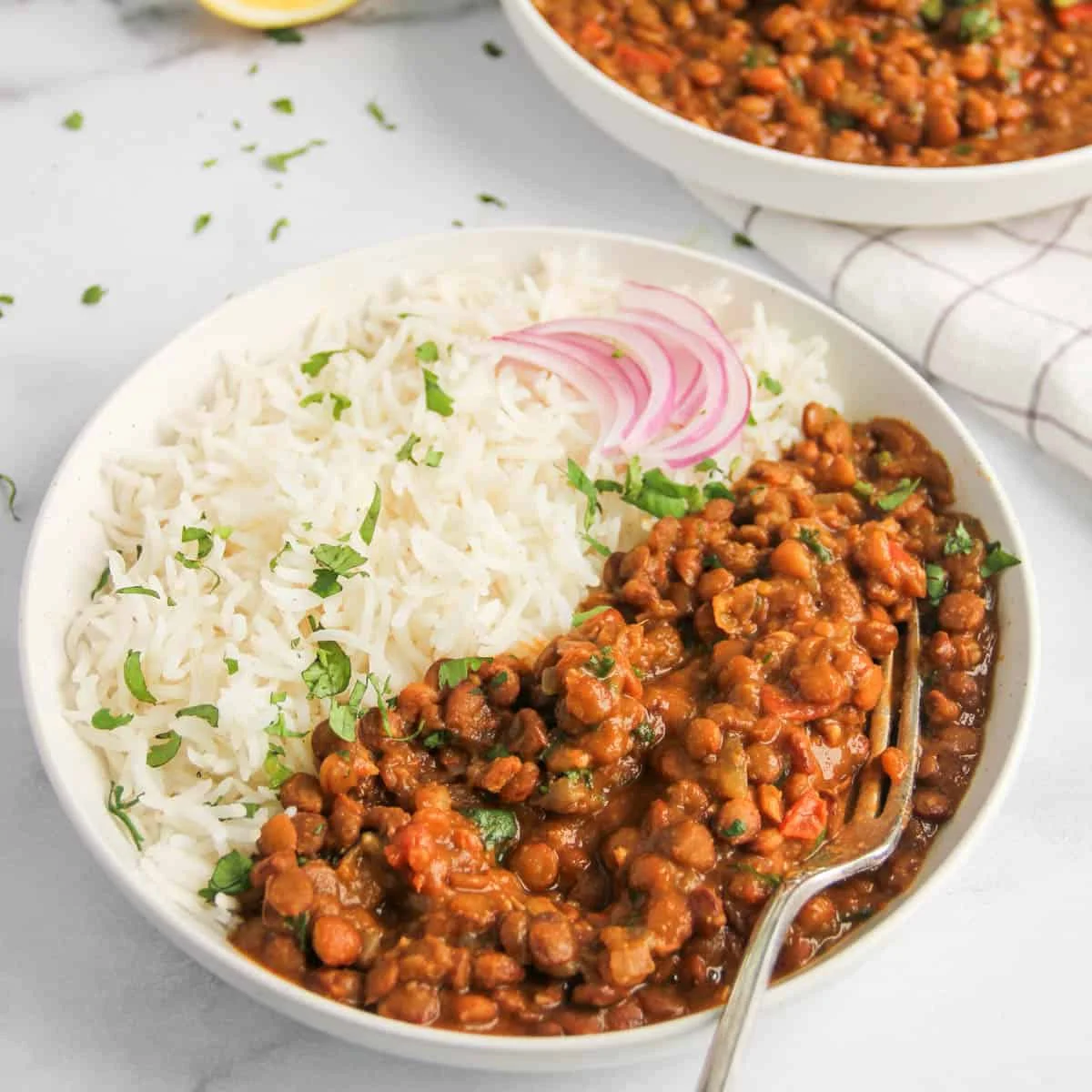
Whole masoor dal is a gently spiced Indian curry made with brown lentils, tomato and aromatics. This Instant Pot version is ready in about 30 minutes and can also be cooked on the hob or in a stovetop pressure cooker.
Ingredients
- 30 ml (2 tablespoons)ghee or neutral oil
- 2.5 ml (1/2 teaspoon)whole cumin seeds
- 1 smallyellow onion, finely diced
- 1plum tomato, finely diced
- 7.5 ml (1 1/2 teaspoons)ginger paste
- 7.5 ml (1 1/2 teaspoons)garlic paste
- 200 g (1 cup)whole masoor dal, rinsed and drained
- 720–960 ml (3–4 cups)water
- 5 ml (1 teaspoon)ground coriander
- 5 ml (1 teaspoon)Kashmiri red chilli powder
- 1.25 ml (1/4 teaspoon)ground turmeric
- 10 ml (2 teaspoons)kosher salt
- 12 g (1 tablespoon)grated jaggery (optional)
- 15 g (1/4 cup)chopped coriander, to garnish
Instructions
- 1
Sizzle the cumin
Set the Instant Pot to sauté and heat the ghee or oil. Add the cumin seeds and cook for about 30 seconds, until they begin to sizzle.
- 2
Soften the aromatics
Add the onion, tomato, ginger and garlic. Sauté for 2–3 minutes, until the tomato starts to soften. Covering the pot with a non-locking lid can speed up this step.
- 3
Add the spices
Add the turmeric, red chilli powder, ground coriander and salt, then mix well.
- 4
Add the lentils
Stir in the masoor dal and 720 ml (3 cups) water.
- 5
Pressure cook
Close the Instant Pot lid and set the pressure release valve to sealing. Pressure cook for 10 minutes, then allow the pressure to release naturally for 10 minutes.
- 6
Adjust the dal
Open the pot and stir in the jaggery. Add water to reach your preferred consistency, keeping in mind that the dal will thicken as it cools. Taste and adjust the salt if needed.
- 7
Bring to a simmer
Use the sauté setting to bring the dal to a gentle boil.
- 8
Garnish and serve
Scatter over the chopped coriander and serve hot with steamed basmati or brown rice. Alternatively, serve with roti or paratha and beet raita.
- 9
Use a stovetop cooker
Follow the steps above, using a stovetop pressure cooker. Cook for 3 whistles over medium heat, then let the pressure release fully before opening the cooker.
- 10
Cook in a pan
Use a heavy-based casserole or Dutch oven and follow steps 1–4. Cover and cook over medium heat for 20–25 minutes, or until the masoor is soft.
- 11
Finish the pan dal
Remove the lid and stir in the jaggery. Add water to reach your preferred consistency and adjust the salt if needed. Cook uncovered over medium heat until the dal comes to a gentle boil, then turn off the heat and garnish with coriander.
What is whole masoor dal?
Dal is a broad name for Indian dishes made with pulses, as well as for the pulses themselves. Whole masoor dal uses brown lentils, which cook into a hearty curry with a soft, satisfying texture.
This version builds flavour with cumin, onion, tomato, ginger, garlic and ground spices. The pressure cooker makes the lentils tender in a relatively short cooking time.
Nutrition and macros by portion
The nutrition label shows one serving as written: 265 calories, 13g protein, 35g carbs, 8g fat.
| Portion | Adjustment | kcal | Protein | Carbs | Fat |
|---|---|---|---|---|---|
| Lighter | Use less ghee | 186 kcal | 9g | 25g | 6g |
| This serving | As written | 265 kcal | 13g | 35g | 8g |
| Hungry | Serve with extra rice | 398 kcal | 20g | 53g | 12g |
The lentils and rice or bread served alongside provide most of the carbohydrates, while the lentils contribute plant protein. Ghee or oil supplies much of the fat. For a more balanced plate, serve a portion with vegetables or beet raita.
Building the flavour base
Cumin seeds: warming them in hot ghee or oil until they sizzle releases their aroma into the cooking fat.
Aromatics: sauté the onion, tomato, ginger and garlic until the tomato begins to soften. This gives the spices a moist base to mix into.
Choosing the lentils and liquid
Whole masoor: rinse and drain the lentils before adding them. Whole brown lentils hold their shape more than split lentils, though they become soft as they cook.
Water: start with 720 ml (3 cups), then add more after pressure cooking if you prefer a looser dal. The lentils will absorb liquid and the curry will thicken further as it cools.
Getting the consistency right
After pressure cooking: stir the dal well and check how thick it is before adding extra water. Add it gradually so you can stop when the texture suits you.
Final simmer: bring the adjusted dal to a gentle boil on sauté mode. This also helps the added water blend into the curry.
Using a stovetop pressure cooker
Cook the dal for 3 whistles over medium heat, following the same preparation steps. Let the pressure release completely before opening the cooker.
The number of whistles is the timing given for this method; use the cooker according to its own instructions and do not force the lid open while it is pressurised.
Making it in a pan
A heavy-based casserole or Dutch oven helps the dal cook steadily on the hob. Keep it covered over medium heat for 20–25 minutes, checking that the lentils have softened.
Once tender, stir in the jaggery, adjust the water and salt, then simmer uncovered until the dal reaches a gentle boil.
Serving ideas
Serve the dal hot with steamed basmati or brown rice for a simple meal. Roti or paratha makes a more substantial accompaniment.
Beet raita is another suggested pairing, bringing a cool contrast alongside the warm, spiced lentils.
Recipe notes & tips
- Rinse and drain the lentils before adding them to the pot.
- Let the cumin seeds sizzle for about 30 seconds before adding the other aromatics.
- Use a non-locking lid to cover the pot while sautéing the tomato mixture, if you want to speed up softening.
- Begin with 720 ml (3 cups) water and add more after cooking to suit your preferred consistency.
- Let the pressure release naturally for the full 10 minutes before opening the Instant Pot.
- Taste the dal after adding the jaggery and adjust the salt if needed.
Variations
- Choose the fat: use neutral oil instead of ghee.
- Use brown rice: serve with steamed brown rice instead of basmati.
- Add sweetness: include the optional grated jaggery for a gently sweet finish.
- Make it on the hob: simmer in a heavy-based casserole or Dutch oven for 20–25 minutes.
- Try another accompaniment: serve with roti or paratha and beet raita.
Common mistakes to avoid
- Opening too soon: let the Instant Pot release pressure naturally for 10 minutes first.
- Adding all the water at once: start with 720 ml and add more after cooking to control the consistency.
- Cooking the spices without mixing: stir them well into the softened onion and tomato mixture.
- Leaving the pan uncovered: keep the casserole covered while the lentils cook so they soften as directed.
- Forcing a pressure cooker lid: wait until pressure has released fully before opening a stovetop cooker.
How to store
Refrigerate leftover dal in a covered container and use within 3 days. Reheat gently in a pan or microwave, adding a little water if it has thickened; stir until piping hot throughout.
Frequently asked questions
Can I make this without an Instant Pot?
Yes. Use a stovetop pressure cooker and cook for 3 whistles over medium heat, allowing the pressure to release fully before opening. You can also cook it in a heavy-based pan for 20–25 minutes, until the lentils are soft.
How much water should I use?
Use 720 ml (3 cups) for pressure cooking, then add more after cooking if you want a thinner dal. The recipe allows 720–960 ml (3–4 cups) in total.
Why did my dal thicken after cooking?
The lentils continue to absorb liquid as the dal cools. Stir in a little water to loosen it before serving.
Can I leave out the jaggery?
Yes. It is listed as optional, so you can omit it and continue with the remaining steps.
What can I serve with whole masoor dal?
Serve it with steamed basmati or brown rice, or with roti or paratha. Beet raita is also suggested as an accompaniment.
Is this recipe vegan?
It is vegan if you use neutral oil instead of ghee. The recipe is described as gluten-free; choose suitable accompaniments if you need to keep the whole meal gluten-free.
Cook it from the original
This recipe comes from ministryofcurry.com. Their page has the author’s own photos, notes and tips — the best place to cook it from.
Open the recipe on ministryofcurry.com