
Mango Salsa Recipe
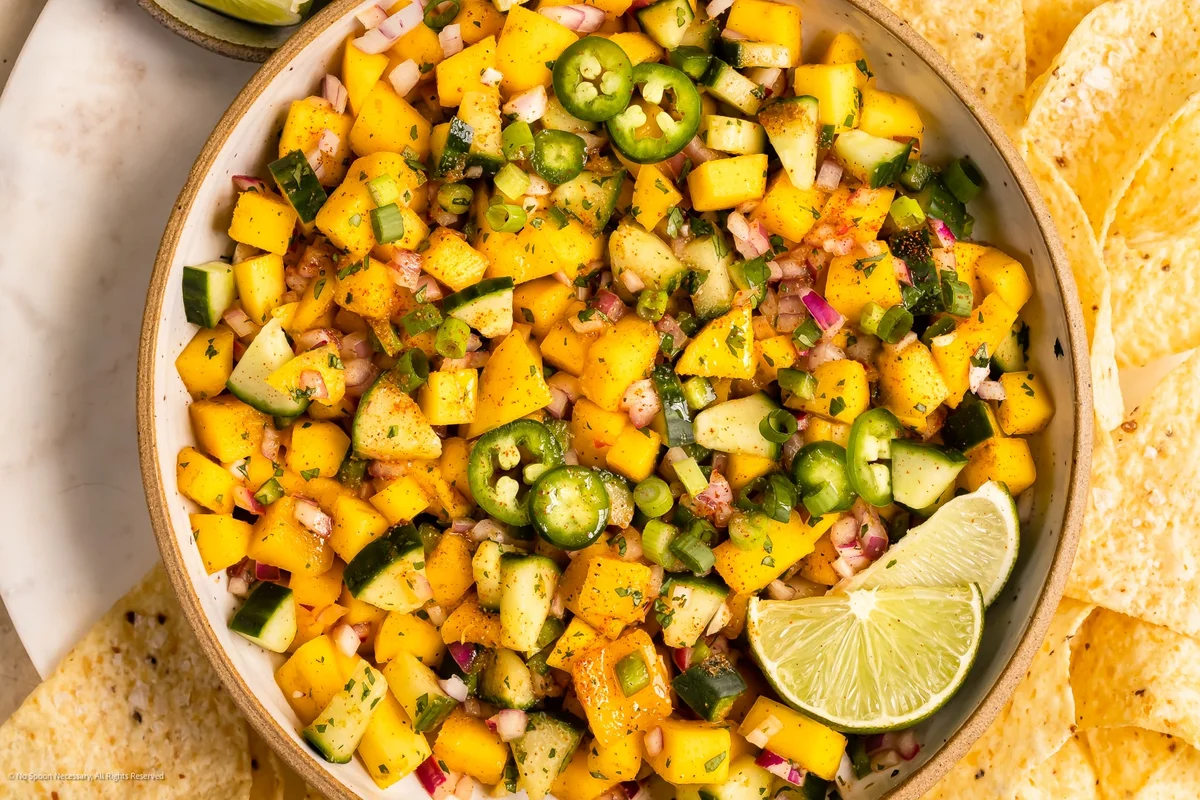
This fresh mango salsa combines sweet fruit, crisp cucumber, chilli and lime for a bright, tangy topping or dip. It takes about 15 minutes to put together and works well with tortilla chips, tacos or grilled fish.
Ingredients
- 2 ripemangos, peeled, stoned and cut into small dice (about 2½ cups)
- ½ smallred onion, finely chopped (about ¾ cup; or use thinly sliced spring onions)
- 1 largejalapeño pepper, trimmed, deseeded and finely chopped (just under ¼ cup)
- ½English cucumber, cut into small dice (about 1 cup)
- 15 g (⅓ cup)coriander leaves, gently packed and chopped
- 1 smalllime, juiced and zested
- 1.25 ml (¼ tsp) eachgarlic powder, ground cumin and smoked paprika
- To tastesea salt and ground black pepper (or kosher salt)
- 15–30 ml (1–2 tbsp), optionalextra-virgin olive oil
Instructions
- 1
Combine the produce
Put the diced mango, red onion, jalapeño, cucumber and chopped coriander in a medium mixing bowl. Stir them together with a large spoon.
- 2
Mix the seasonings
In a small bowl or measuring jug, combine the lime juice and zest with the garlic powder, cumin and smoked paprika. Season with salt and black pepper to taste, and add olive oil if using.
- 3
Dress the salsa
Pour the lime mixture over the fruit and vegetables, then stir gently until combined. Taste and adjust the seasoning to your liking.
- 4
Serve the salsa
Transfer the salsa to a serving bowl. Serve with tortilla chips or spoon it over tacos, burritos, grilled salmon, prawns or other dishes.
What is mango salsa?
Salsa is a broad family of sauces and table condiments, with many fresh versions built around chopped produce, herbs and a sharp dressing. This American-style take pairs ripe mango with cucumber, onion, chilli and lime.
Sweet fruit and fresh, savoury ingredients make it useful both as a dip and as a topping. The cucumber keeps the mixture crisp, while lime and jalapeño balance the mango’s sweetness.
Nutrition and macros by portion
The nutrition label shows one serving as written: 8 calories, 0g protein, 2g carbs, 0g fat.
| Portion | Adjustment | kcal | Protein | Carbs | Fat |
|---|---|---|---|---|---|
| Lighter | Skip the olive oil | 6 kcal | 0g | 1g | 0g |
| This serving | As written | 8 kcal | 0g | 2g | 0g |
| Hungry | Serve with extra chips | 12 kcal | 0g | 3g | 0g |
Mango provides most of the carbohydrate, while the optional olive oil contributes most of the fat; the vegetables and herbs add smaller amounts, and this salsa contains little protein. For a more substantial plate, serve it alongside a protein-rich main and a source of fibre such as beans or wholegrain tortillas.
Choose ripe mangoes
Ripe fruit: Choose mangoes that yield slightly when pressed and smell fragrant near the stem. They should be soft enough to taste sweet but firm enough to hold their shape when diced.
Even pieces: Cut the mango and cucumber into similarly sized small cubes so each spoonful gets a mix of textures. If the mango is very soft, fold it through gently at the end.
Control the chilli
Less heat: Removing the jalapeño’s seeds and pale inner ribs makes the salsa milder. Chop the pepper finely so its flavour is distributed rather than concentrated in a large bite.
More heat: Keep some seeds or add them a little at a time, tasting as you go. Wash your hands after handling chilli and avoid touching your eyes.
Keep the texture fresh
Gentle mixing: Stir with a large spoon, using a light hand to avoid crushing the mango. The finished salsa should look juicy, with distinct pieces rather than a mashed texture.
Crisp cucumber: English cucumber has a tender skin and relatively few seeds, so it can be diced as written. If yours is especially watery, remove the seedy centre before chopping.
Balance the lime dressing
Lime first: Mix the juice and zest with the dried spices before adding them to the produce. This helps distribute the seasoning across the salsa.
Taste at the end: Mango sweetness varies, so check the seasoning after mixing. Add salt, pepper or a little more lime to suit the fruit and your preference.
When to add the oil
Optional richness: The olive oil gives the salsa a fuller mouthfeel, but the mixture is also fresh and lively without it. Start with 15 ml if you want to use some, then add more only if desired.
Serve soon: The salsa is at its crispest freshly made. If preparing it ahead, keep it chilled and stir gently before serving.
What to serve it with
For dipping: Put it out with tortilla chips as a snack or appetiser. A slotted spoon can help if the salsa has released a lot of juice.
As a topping: Spoon it over tacos, burritos, grilled salmon or prawns. It also pairs well with other simply cooked savoury dishes that benefit from a fresh, tangy contrast.
Recipe notes & tips
- Dice the mango and cucumber to a similar size for an even mix in every spoonful.
- Remove the jalapeño seeds and inner ribs for a milder salsa.
- Add the olive oil gradually so you can stop when the texture suits you.
- Taste the finished mixture before serving, as the mango’s sweetness can vary.
- Use a large spoon and fold gently to keep the mango pieces intact.
Variations
- Use spring onions: Swap the red onion for thinly sliced spring onions for a milder onion flavour.
- Adjust the heat: Leave in some jalapeño seeds or add more chopped chilli for a hotter salsa.
- Omit the oil: Leave out the olive oil for a fresher, lighter texture.
- Add more lime: Stir in extra lime juice to make the salsa sharper and more citrusy.
- Serve with prawns: Spoon the salsa over cooked prawns for a fresh topping.
Common mistakes to avoid
- Overripe mango: Very soft fruit can turn mushy; choose mangoes that yield slightly but still hold their shape.
- Large chilli pieces: They can make individual bites unexpectedly hot; chop the jalapeño finely.
- Heavy stirring: Rough mixing breaks down the fruit; fold the ingredients together gently.
- Too much dressing at once: The salsa can become overly wet; add the lime mixture and oil as specified, then check the texture.
- Skipping the final taste: Fruit sweetness and chilli heat vary; taste and adjust the seasoning before serving.
How to store
Store leftovers in an airtight container in the fridge and use within 2 days for the best texture. Stir gently before serving; the mango and cucumber may release some liquid as they stand.
Frequently asked questions
Can I make mango salsa ahead of time?
You can make it a few hours ahead and keep it covered in the fridge. For the crispest texture, prepare it close to serving and stir gently before it goes on the table.
How can I make the salsa less spicy?
Remove the jalapeño’s seeds and inner ribs before chopping, or use less pepper. You can also leave the chilli out.
What can I use instead of red onion?
Use thinly sliced spring onions, as suggested in the ingredient list. They give the salsa a gentler onion flavour.
Do I need to peel the cucumber?
No, the recipe uses English cucumber, which can be diced with its skin on. If the centre is particularly watery, scoop out the seeds first.
Can I leave out the olive oil?
Yes. It is optional and mainly adds a richer mouthfeel; the salsa can be served without it.
What goes well with mango salsa?
Serve it with tortilla chips or use it as a topping for tacos, burritos, grilled salmon or prawns.
Cook it from the original
This recipe comes from nospoonnecessary.com. Their page has the author’s own photos, notes and tips — the best place to cook it from.
Open the recipe on nospoonnecessary.com