
Thai Panang Curry with Chicken
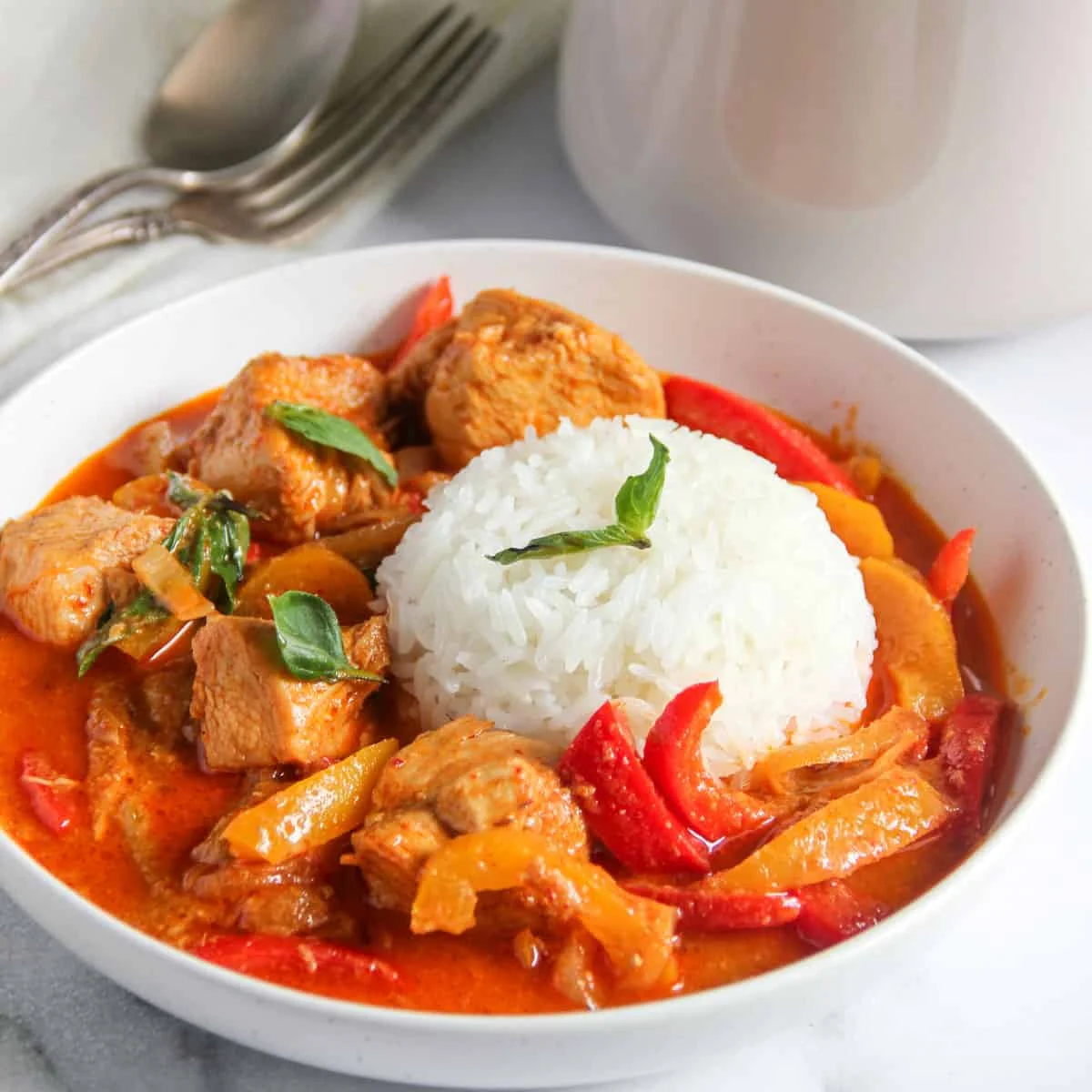
This Thai-inspired Panang curry pairs tender chicken with a creamy coconut sauce, peanut butter and mild, sweet-savoury seasoning. The Instant Pot makes it a practical 30-minute dinner, with a stovetop option if you prefer.
Ingredients
- 15 mloil
- 1 can (113 g)Panang curry paste
- 1 can (425 g), well shakenunsweetened full-fat coconut milk
- 680 gboneless, skinless chicken breast or thighs, cut into 5 cm pieces
- 1½ teaspoons (about 7.5 ml)kosher salt
- 15 mlunsweetened natural creamy peanut butter
- 15 mlfish sauce (optional)
- 15 mllight brown sugar
- 15 mlsoy sauce or tamari
- 10 mllime juice
- 1 mediumyellow onion, thinly sliced
- 1 mediumred pepper, cut into strips about 5 cm long and 6 mm thick
- 1 mediumyellow pepper, cut into strips about 5 cm long and 6 mm thick
- 4kaffir lime leaves (optional)
- ½ cup (about 12 g)Thai basil leaves
Instructions
- 1
Toast the paste
Set the Instant Pot to Sauté and add the oil. Stir in the Panang curry paste and cook for 1 minute, until aromatic.
- 2
Add coconut milk
Mix half of the coconut milk into the paste until smooth and combined, then press Cancel.
- 3
Pressure cook chicken
Add the chicken and salt, and stir to coat. Close the lid, seal the pressure valve and cook at High pressure for 4 minutes. Let the pressure release naturally for 10 minutes, then carefully release any remaining pressure manually.
- 4
Finish the sauce
Remove the lid and stir in the peanut butter, fish sauce if using, brown sugar, soy sauce, lime juice and kaffir lime leaves if using. Add the rest of the coconut milk and mix well.
- 5
Cook the vegetables
Add the onion and peppers. Use Sauté mode for about 5 minutes, until the sauce reaches a gentle boil and the vegetables are crisp-tender.
- 6
Serve with basil
Serve with jasmine rice and garnish with the Thai basil leaves.
- 7
Toast the paste
For the stovetop version, heat the oil in a pan. Add the curry paste and cook for 1 minute, until aromatic.
- 8
Mix in coconut
Stir half of the coconut milk into the paste until smooth and combined.
- 9
Cook the chicken
Add the chicken and salt, and stir to coat. Cover and cook over medium heat for 10–15 minutes.
- 10
Finish and serve
Stir in the peanut butter, fish sauce, brown sugar, soy sauce, lime juice and kaffir lime leaves. Add the onion and peppers and cook over medium heat for 5 minutes, or until the sauce reaches a gentle boil; keep the vegetables crisp-tender. Serve with jasmine rice and Thai basil leaves.
What is Panang curry?
Panang curry is a Thai curry known for a rich, fragrant sauce, often made with coconut milk and a curry paste that includes spices and aromatics. Compared with some other Thai curries, it is commonly associated with a thicker, gentler and slightly sweet profile.
This version uses peanut butter to add creaminess and a nutty note, while the Instant Pot cooks the chicken quickly. Peppers and onion go in near the end so they keep some bite.
Nutrition and macros by portion
The nutrition label shows one serving as written: 517 calories, 41g protein, 15g carbs, 34g fat.
| Portion | Adjustment | kcal | Protein | Carbs | Fat |
|---|---|---|---|---|---|
| Lighter | Use less coconut milk | 362 kcal | 29g | 11g | 24g |
| This serving | As written | 517 kcal | 41g | 15g | 34g |
| Hungry | Add extra jasmine rice | 776 kcal | 62g | 23g | 51g |
The chicken supplies most of the protein, while the coconut milk, oil and peanut butter account for much of the fat. The curry paste, onion, peppers and brown sugar contribute carbohydrates; jasmine rice served alongside adds more. For a balanced plate, serve a moderate scoop of rice with a generous portion of peppers and curry.
Build flavour with the paste
Curry paste: briefly frying it in oil helps release its aroma before the liquids go in. Keep it moving in the pot so it does not catch on the bottom.
Coconut milk: shaking the can before opening helps combine its thicker and thinner parts. Adding it in two portions gives you a smooth base first, then lets you adjust the sauce after the chicken cooks.
The pressure-cooking stage
Chicken pieces: cut them to a similar size so they cook evenly. The recipe calls for 4 minutes at High pressure, followed by a 10-minute natural release; allow for the pot to come up to pressure as well.
Stovetop option: simmer the chicken covered over medium heat for 10–15 minutes. Check that the chicken is cooked through before adding the finishing ingredients.
Keep the vegetables crisp-tender
Onion and peppers: they are added after the chicken cooks and need only about 5 minutes on Sauté. Stop once the sauce is gently boiling and the vegetables have softened slightly but still have some bite.
Basil: add it as a garnish just before serving, rather than cooking it into the sauce, to keep its fresh herbal character.
Balance the sauce
Peanut butter: a small spoonful enriches the coconut sauce and rounds out the curry paste. Stir it in thoroughly to avoid clumps.
Seasoning: fish sauce adds savoury depth, while brown sugar and lime juice balance salty and sweet notes. Taste the finished sauce and adjust only if needed, keeping in mind that curry paste and soy sauce can vary in saltiness.
What to serve with it
Rice: jasmine rice is the suggested accompaniment and soaks up the creamy sauce. Cook it separately while the curry is underway if you want everything ready together.
For a fuller meal, serve the curry with extra vegetables on the side. Keep the additions simple so the aromatic sauce remains the focus.
Recipe notes & tips
- Shake the coconut milk can well before measuring or pouring.
- Cut the chicken into evenly sized pieces for more consistent cooking.
- Keep the curry paste moving while it toasts so it does not scorch.
- Use the natural release for the full 10 minutes before releasing the remaining pressure.
- Add the peppers only at the end to preserve their crisp-tender texture.
- Serve the basil fresh as a garnish rather than simmering it in the curry.
Variations
- Choose thighs: use boneless, skinless chicken thighs for a richer result.
- Skip the fish sauce: leave it out for a version without that ingredient.
- Use tamari: choose tamari in place of soy sauce.
- Adjust the heat: use less curry paste for a milder sauce, bearing in mind that the flavour will also be less concentrated.
- Add more vegetables: increase the peppers or add another quick-cooking vegetable near the end.
Common mistakes to avoid
- Scorching the paste: stir it constantly during its 1-minute toast over Sauté.
- Skipping the natural release: wait the full 10 minutes before manually releasing the remaining pressure.
- Overcooking the peppers: add them after pressure cooking and stop when they are still crisp-tender.
- Adding all the coconut milk at once: reserve half for the finishing stage as directed.
- Cutting chicken unevenly: make the pieces a similar size so they cook at the same rate.
How to store
Cool leftovers promptly and refrigerate in an airtight container for up to 3 days. Reheat gently in a saucepan or microwave until steaming hot, stirring so the sauce warms evenly; add a small splash of water if it has thickened.
Frequently asked questions
Can I make this curry without an Instant Pot?
Yes. Follow the stovetop method: cook the chicken covered over medium heat for 10–15 minutes, then add the sauce ingredients and vegetables and cook for about 5 minutes.
Can I use chicken breast or thighs?
Either boneless, skinless chicken breast or thighs works. Cut the meat into evenly sized pieces as instructed.
Is Panang curry spicy?
Its heat depends on the curry paste you use. The description for this recipe is mild and slightly sweet, but brands can differ.
Can I leave out the fish sauce?
Yes. It is optional in the recipe, so you can omit it.
When should I add the Thai basil?
Use the basil as a garnish when serving, so it stays fresh rather than cooking down in the sauce.
What should I serve with Panang chicken curry?
The recipe suggests jasmine rice, which pairs well with the creamy sauce.
Cook it from the original
This recipe comes from ministryofcurry.com. Their page has the author’s own photos, notes and tips — the best place to cook it from.
Open the recipe on ministryofcurry.com