
Authentic Refried Beans
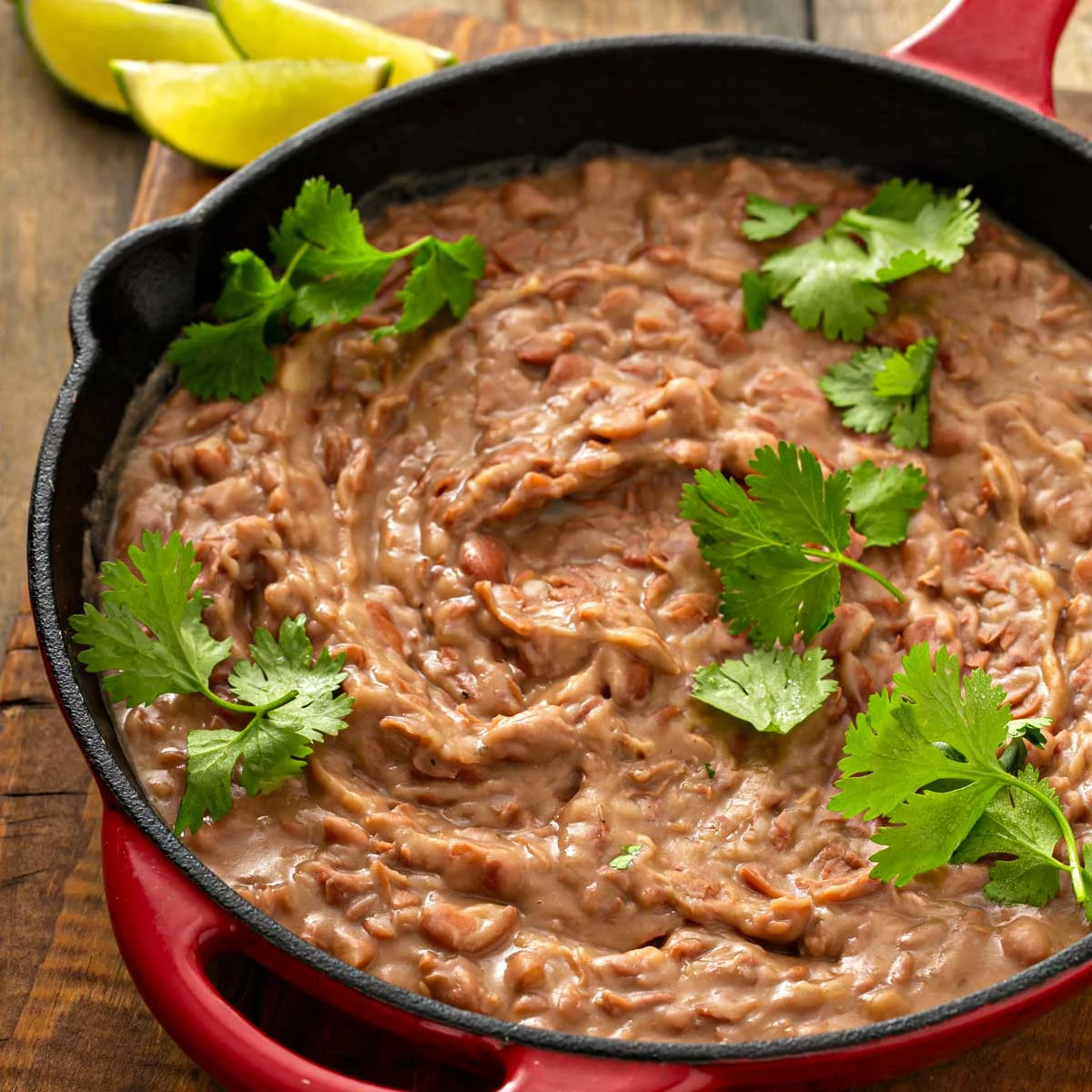
These Mexican-style refried beans start with pinto beans simmered until tender, then get mashed in a pan with softened onion and a little cooking liquid. Choose the stove, slow cooker or pressure cooker method, then serve them with cheese and coriander as a side or filling.
Ingredients
- 227 g (1/2 lb)dried pinto beans
- 1/2 mediumonion, quartered
- 2garlic cloves, peeled and lightly crushed
- 2 sprigs, or 1/2 teaspoon driedfresh epazote, or dried oregano
- 1 smallbay leaf
- As neededwater
- To tastesea salt or kosher salt
- 45 ml (3 tbsp)minced onion
- 60 ml (4 tbsp), or 30 ml (2 tbsp) olive oil, vegetable oil or unsalted butterlard or bacon drippings
- To tasteground black pepper
- To tastecrumbled queso fresco or cotija, or shredded Monterey Jack
- To tastechopped coriander
Instructions
- 1
Choose your method
Follow one of the three bean-cooking methods below: hob, slow cooker or pressure cooker. Each method ends with draining the cooked beans while keeping their cooking liquid; then continue to the pan-frying steps.
- 2
Soak the beans
For the hob method, soak the beans overnight. If you have not soaked them, cover them with boiling water by 5 cm (2 inches) in a heatproof bowl and leave for 45 minutes to 1 hour. Drain before cooking.
- 3
Add hob ingredients
Put the dried beans in a large pot with the quartered onion, garlic, epazote or dried oregano, and bay leaf. Add enough water to cover the beans by at least 5 cm (2 inches).
- 4
Simmer the beans
Bring the pot to the boil over a high heat, then lower the heat to a simmer and cover. Cook for about 1 1/2 to 2 hours, until very tender, then season with salt.
- 5
Drain the beans
Discard the onion, garlic, epazote if used, and bay leaf. Drain the beans, reserving the cooking liquid; you should have about 3 cups of cooked beans.
- 6
Load the slow cooker
Put the dried beans in the slow cooker with the quartered onion, garlic, epazote or dried oregano, and bay leaf. Add enough water to cover the beans by at least 5 cm (2 inches).
- 7
Cook the beans
Cook on low for 6 to 8 hours or on high for 4 hours, until the beans are very tender. Season with salt to taste.
- 8
Drain the beans
Discard the onion, garlic, epazote if used, and bay leaf. Drain the beans, reserving the cooking liquid; you should have about 3 cups of cooked beans.
- 9
Load the cooker
In a 6-quart Instant Pot or larger pressure cooker, add the dried beans, quartered onion, garlic, epazote or dried oregano, and bay leaf. Cover the beans by at least 5 cm (2 inches) of water.
- 10
Pressure cook
Lock the lid and set the valve to sealing. Select manual, high pressure, and cook for 45 minutes. When the cooking time is up, let the pressure release naturally for 25 minutes, then vent any remaining pressure. Open the lid carefully, stir and season with salt to taste.
- 11
Drain the beans
Discard the onion, garlic, epazote if used, and bay leaf. Drain the beans, reserving the cooking liquid; you should have about 3 cups of cooked beans.
- 12
Soften the onion
Heat the lard, bacon drippings or oil in a large frying pan over a medium-high heat; if using butter, heat it until melted. Add the minced onion and cook, stirring now and then, for about 4 to 5 minutes, until soft and translucent.
- 13
Mash the beans
Stir in the cooked beans and fry for about 2 minutes. Add about 60 to 80 ml (1/4 to 1/3 cup) of the reserved cooking liquid and mash with a bean masher, potato masher or the back of a wooden spoon until chunky. For a smoother result, use an immersion blender.
- 14
Adjust the texture
Lower the heat to medium-low and stir until the beans are heated through. Add more cooking liquid if they become too dry; if they are too wet, simmer while stirring until thickened.
- 15
Season and serve
Taste and season with salt and, if you like, ground black pepper. Serve with crumbled queso fresco or cotija, or shredded Monterey Jack, and chopped coriander.
What are refried beans?
Refried beans are a familiar Mexican dish made by cooking beans until tender, then frying and mashing them. Despite the name, the beans are not necessarily fried twice; the Spanish name frijoles refritos refers to beans cooked again in a pan.
This version uses pinto beans, aromatics and a little of their cooking liquid. The choice of hob, slow cooker or pressure cooker makes the first stage flexible, while the final pan-frying brings the beans together into a creamy, spoonable side.
Nutrition and macros by portion
The nutrition label shows one serving as written: 164 calories, 10g protein, 30g carbs, 1g fat.
| Portion | Adjustment | kcal | Protein | Carbs | Fat |
|---|---|---|---|---|---|
| Lighter | Use less pan fat | 115 kcal | 7g | 21g | 1g |
| This serving | As written | 164 kcal | 10g | 30g | 1g |
| Hungry | Serve a larger portion | 246 kcal | 15g | 45g | 2g |
Most of the carbohydrate comes from the pinto beans, which also supply much of the protein. The lard, bacon drippings, oil or butter contribute most of the fat; serve the beans with vegetables and a separate protein source for a more balanced plate.
Why start with dried beans?
Dried pinto beans cook in the seasoned water with onion, garlic, herbs and bay leaf, giving them time to become tender throughout. The recipe gives different cooking routes, so choose one that suits your schedule and equipment.
Keep the bean liquid when draining. Its starch helps bind the mash, and adding it gradually gives you control over the finished consistency.
The aromatics and fat
Epazote lends a distinctive herbal note; dried oregano is the listed alternative if you do not have it. The onion, garlic and bay leaf flavour the cooking water, then are discarded before mashing.
Lard or bacon drippings give the pan-fried beans a savoury richness. Olive oil, vegetable oil or unsalted butter are alternatives; whichever you use, soften the minced onion before adding the beans.
Getting the mash right
Mash the beans after they have spent about 2 minutes in the pan with the softened onion. Add the reserved liquid in the suggested amount first, then use more only if needed.
A masher or wooden spoon leaves some texture, while an immersion blender makes a smoother purée. If the mixture looks loose, simmer it while stirring; if it looks dry, stir in a little more cooking liquid.
How to tell when the beans are ready
For any cooking method, the beans should be very tender before draining. If they still feel firm when pressed or mashed, continue cooking until they soften.
The finished beans should be heated through and thick enough to hold on a spoon. Stir during the final simmer so the bottom does not catch as excess moisture cooks off.
Serving ideas
Finish with crumbled queso fresco or cotija, or shredded Monterey Jack, and chopped coriander. Serve as a side with a main meal, or use the beans as a filling for tacos, burritos or quesadillas.
For a more rounded plate, add vegetables and a source of protein alongside the beans. The cheese topping is optional, so you can add it at the table to suit each serving.
Recipe notes & tips
- Use the hob method only after soaking the beans overnight, or give them the quick soak in boiling water described in the steps.
- Keep the cooking liquid when draining; it is more useful for adjusting the mash than plain water.
- Add the reserved liquid gradually so you can stop when the beans reach your preferred thickness.
- Keep stirring over medium-low heat as the beans finish cooking to prevent them catching on the pan.
- Taste for salt after mashing, since the beans have already been seasoned during cooking.
- Prepare the cheese and coriander while the beans are in their final pan-frying stage.
Variations
- Use dried oregano: Substitute it for the fresh epazote in the bean-cooking stage.
- Choose another fat: Use olive oil, vegetable oil or unsalted butter instead of lard or bacon drippings.
- Make them smooth: Blend the mashed beans with an immersion blender instead of leaving them chunky.
- Change the cheese: Finish with queso fresco, cotija or shredded Monterey Jack.
- Skip the topping: Serve without cheese and coriander, or let everyone add them at the table.
Common mistakes to avoid
- Draining away the cooking liquid: Set it aside before draining so you can loosen the beans as needed.
- Mashing beans that are still firm: Cook them until very tender first, or the finished texture will be uneven.
- Adding too much liquid at once: Start with the specified amount and add more a little at a time.
- Leaving the beans too wet: Simmer while stirring until the excess moisture cooks off.
- Using high heat for the final stage: Reduce to medium-low and stir to help stop the beans catching.
How to store
Cool leftovers and refrigerate them in an airtight container for up to 3 days. Reheat in a pan over a low heat, stirring and adding a splash of water if the beans have thickened.
Frequently asked questions
Do I have to soak the beans?
The recipe calls for an overnight soak for the hob method, with a 45-minute to 1-hour quick soak in boiling water as an alternative. The slow cooker and pressure cooker instructions do not specify soaking.
Can I use canned pinto beans?
The method is written for dried beans and does not give instructions for canned beans. Canned beans would need less cooking, so follow their packet directions and proceed to the pan-frying stage once tender.
How much cooking liquid should I add?
Start with about 60 to 80 ml (1/4 to 1/3 cup) when mashing. Add more gradually if the beans look too dry.
Can I make the beans ahead?
Yes. Cook the beans, drain them while reserving their liquid, and refrigerate them separately in airtight containers. Finish the pan-frying and mashing when you are ready to serve.
How can I make the beans smoother?
Use an immersion blender in place of a bean masher, potato masher or wooden spoon. Add cooking liquid as needed to reach the texture you want.
Which cooking method is quickest?
The pressure cooker method has 45 minutes at high pressure followed by a 25-minute natural release, plus time to build and release pressure. The slow cooker takes 6 to 8 hours on low or 4 hours on high, while the hob method takes about 1 1/2 to 2 hours after soaking.
Cook it from the original
This recipe comes from lemonblossoms.com. Their page has the author’s own photos, notes and tips — the best place to cook it from.
Open the recipe on lemonblossoms.com