
Arepa de huevo
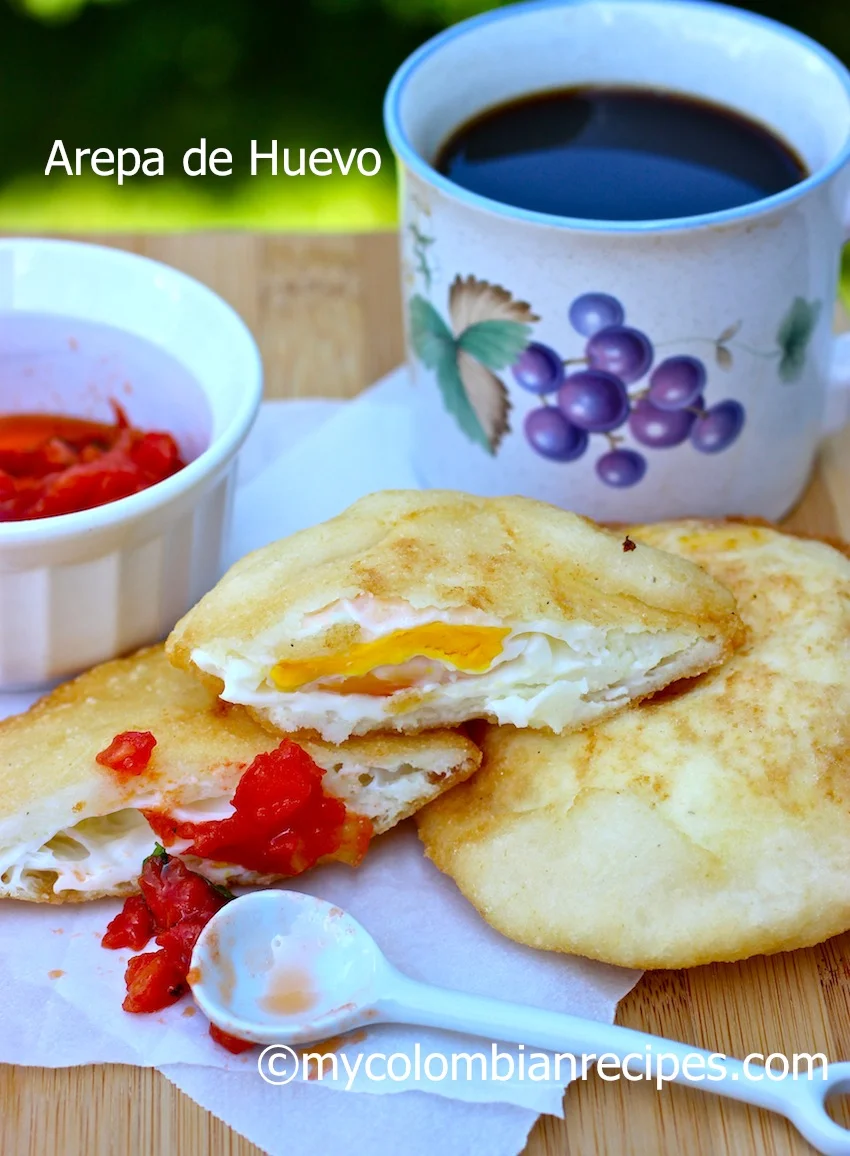
Arepa de huevo is a Colombian Caribbean corn cake, fried until puffed, filled with an egg and fried again. Its crisp shell and soft centre make it a satisfying breakfast or a meal with a simple salad.
Ingredients
- 120 g (1 cup)masarepa (pre-cooked maize flour)
- ½ teaspoonsalt
- ½ teaspoonsugar
- 240 ml (1 cup)warm water
- for fryingvegetable oil
- 4eggs
Instructions
- 1
Mix the dough
In a medium bowl, combine the masarepa, salt and sugar with a fork. Add the warm water and mix with your hands to form a dough. Leave it to rest for 5 minutes.
- 2
Shape the portions
Divide the dough into 4 equal portions. Roll each portion between your palms to make a ball.
- 3
Flatten the arepas
Place a sheet of baking parchment or plastic on a work surface, set a dough ball on it and cover with another sheet. Press it flat with a flat-bottomed pan until it is about 1.3 cm (½ inch) thick.
- 4
Fry the shells
Heat the oil in a large pot to 175°C (350°F). Add the arepas one at a time and fry for 3 minutes, turning once.
- 5
Drain the arepas
Use a slotted spoon to lift the arepas carefully from the oil and drain them on kitchen paper.
- 6
Cut a pocket
Once an arepa is cool enough to handle, use a sharp knife to cut an opening about 3.8 cm (1½ inches) long into one side. Cut halfway into the arepa without slicing all the way through, to make a pocket.
- 7
Fill and seal
Crack 1 egg into a small dish and carefully pour it into the pocket. Take a small piece of the reserved dough and use it to close the opening.
- 8
Fry and serve
Return the filled arepa to the hot oil and fry for about 4 minutes to cook the egg. Lift it out with a slotted spoon, drain on kitchen paper and serve straight away.
What is arepa de huevo?
Arepa de huevo is a Colombian speciality associated with the country’s Caribbean region, where it is sold by street vendors and made at home. It starts with a simple cake of masarepa, a pre-cooked maize flour used for arepas.
This version is fried twice: first to create a shell that can be opened, then again after adding the egg. That gives it a crisp exterior and a warm, savoury filling.
Nutrition and macros by portion
The nutrition label shows one serving as written: 390 calories, 11g protein, 42g carbs, 19g fat.
| Portion | Adjustment | kcal | Protein | Carbs | Fat |
|---|---|---|---|---|---|
| Lighter | Serve with extra salad | 273 kcal | 8g | 29g | 13g |
| This serving | As written | 390 kcal | 11g | 42g | 19g |
| Hungry | Add a second arepa | 585 kcal | 17g | 63g | 29g |
The masarepa provides most of the carbohydrates, while the eggs contribute protein and fat; frying oil adds further fat. Serve one arepa with a fresh salad or vegetables for a more balanced plate.
Choosing the right flour
Masarepa: use pre-cooked maize flour intended for arepas, not ordinary cornmeal or masa harina. The dough needs to hold together well enough to flatten and form a pocket after the first fry.
Water: warm water helps the flour hydrate evenly. Add it as given and mix by hand until the dough comes together.
Shape an even shell
Flattening: pressing each ball between sheets of parchment or plastic helps prevent sticking. Aim for an even thickness of about 1.3 cm so the arepa fries consistently.
Pocket: let the first-fried arepa cool enough to handle, then make a careful cut halfway through. Avoid cutting through the opposite side, or the egg may leak out during the second fry.
Watch the oil and timing
Oil temperature: heat the oil to 175°C before frying the shells. Fry them one at a time for 3 minutes, turning once, as the method directs.
Second fry: once filled and sealed, fry for about 4 minutes to cook the egg. Drain each arepa on kitchen paper before serving.
Check the filling
Egg: pour it carefully into the pocket from a small dish, which makes it easier to guide into the opening. Seal the cut with a small piece of the reserved dough before returning the arepa to the oil.
Doneness: the method gives a 4-minute second fry but does not specify a yolk texture. If you prefer a firmer egg, make sure the arepa is cooked through before serving.
Serve while crisp
Arepas de huevo are best served immediately, while their fried shells are crisp. They can be eaten for breakfast or as a lunch or dinner dish.
A fresh salad or sliced tomato makes a simple accompaniment and adds a cool contrast to the hot, rich arepa.
Recipe notes & tips
- Use masarepa rather than ordinary cornmeal so the dough can hold its shape.
- Rest the dough for the full 5 minutes before dividing it.
- Use parchment or plastic on both sides of the dough when flattening to limit sticking.
- Let the first-fried arepa cool enough to handle before cutting the pocket.
- Crack each egg into a small dish first to make pouring it into the pocket easier.
- Drain the fried arepas on kitchen paper and serve them straight away.
Variations
- Add chopped spring onion: mix a little into the egg for a mild savoury note.
- Add coriander: stir chopped fresh coriander into the egg before filling.
- Serve with avocado: add slices alongside the hot arepa.
- Add a fresh salsa: serve with chopped tomato and onion for a bright accompaniment.
Common mistakes to avoid
- Using the wrong flour: ordinary cornmeal may not form a cohesive dough; choose masarepa.
- Making the shell too thin: it can split when filled; flatten to about 1.3 cm.
- Cutting all the way through: the egg can escape; make a pocket halfway into the arepa.
- Skipping the seal: close the opening with a small piece of reserved dough before frying again.
- Overheating or cooling the oil: keep it at 175°C for the first fry.
- Filling over the pot: pour the egg into the pocket away from the hot oil, then carefully return the arepa.
How to store
These are best eaten straight after frying. If needed, refrigerate leftovers in a covered container and use within 2 days; reheat in an oven until hot throughout, though the shell may lose some crispness.
Frequently asked questions
Can I use cornmeal instead of masarepa?
No. Masarepa is pre-cooked maize flour that forms the dough used for arepas; ordinary cornmeal is not a direct substitute.
Why are the arepas fried twice?
The first fry cooks the shell enough to make a pocket. The second fry cooks the egg inside the filled arepa.
How do I stop the egg leaking out?
Cut only halfway into the arepa and leave the far side intact. After adding the egg, close the opening with a small piece of reserved dough.
How can I tell when the egg is cooked?
The method calls for about 4 minutes in the second fry. For a firmer egg, check that the arepa is cooked through before serving.
Can I prepare the dough ahead?
The recipe only specifies a 5-minute rest. For the best result, shape and fry the arepas after that rest rather than storing the uncooked dough.
What should I serve with arepa de huevo?
Serve it hot with a fresh salad, sliced tomato or avocado. These simple sides complement the crisp, fried shell.
Cook it from the original
This recipe comes from mycolombianrecipes.com. Their page has the author’s own photos, notes and tips — the best place to cook it from.
Open the recipe on mycolombianrecipes.com