
Cinnamon Sugar Toast
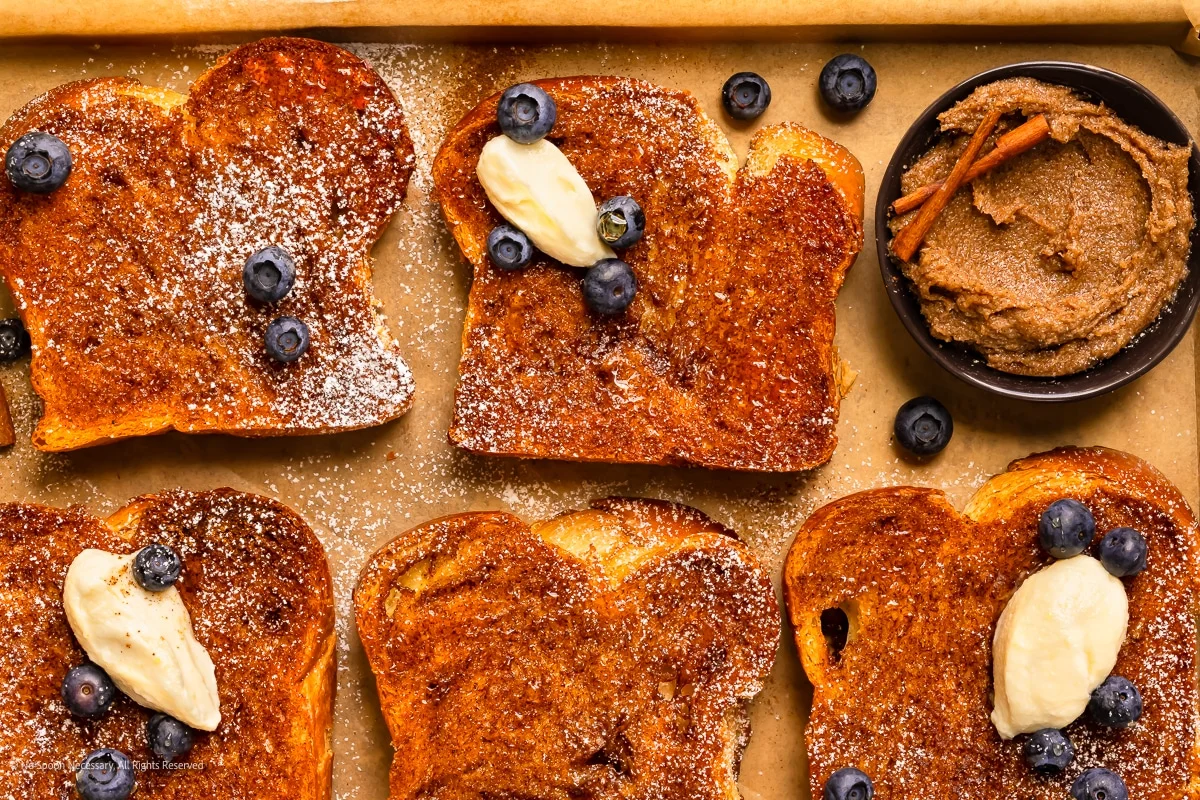
Thick slices of brioche or challah are coated on both sides with buttery cinnamon sugar, then cooked until crisp and caramelised. Choose the oven for an even toast or a skillet for a hands-on stovetop version.
Ingredients
- 28 g (2 tbsp)salted butter, at room temperature
- About 15 ml (1 heaped tbsp), packeddark brown sugar
- 10 ml (2 tsp)granulated sugar
- 2.5 ml (½ tsp)ground cinnamon
- 2 slices, each 2.5 cm (1 inch) thickbrioche or challah bread
- 0.6 ml (⅛ tsp), optionalpure vanilla extract (or maple extract)
- A pinch, optionalground nutmeg
Instructions
- 1
Mix the butter
In a small bowl, mash the softened butter with both sugars and the cinnamon. Mix in the vanilla and nutmeg if using. Divide the cinnamon-sugar butter into four equal portions.
- 2
Butter the bread
Spread one portion of butter evenly from edge to edge on one side of each bread slice. Put the slices buttered-side down in a large non-stick skillet or on a large baking sheet, then spread the remaining butter over the exposed sides.
- 3
Cook the toast
For the oven method, heat the oven to 175°C (350°F). Bake the bread on the middle shelf for 8–10 minutes, until lightly toasted. Without opening the oven door, switch to the grill and grill for 1–3 minutes, until deeply caramelised and the butter is bubbling slightly; watch closely to prevent burning. For the skillet method, cook over medium-low to medium heat for about 3–4 minutes per side, adjusting the heat as needed so the bread browns without burning.
- 4
Cool until crisp
Transfer the toast to a wire rack with a spatula and leave it to cool for 1–5 minutes. A shorter rest gives a lighter crisp; a longer rest makes the exterior crisper while the centre stays fluffy.
- 5
Serve the toast
Put the toast on a plate and slice as desired. Serve with a breakfast topping such as maple syrup, warm vanilla sauce, jam, fruit sauce or icing sugar.
What is cinnamon sugar toast?
Cinnamon sugar toast is a simple American breakfast made by coating bread with butter, sugar and cinnamon, then toasting it until fragrant and crisp. This version uses thick brioche or challah for a soft, fluffy middle beneath its caramelised coating.
The combination is familiar and nostalgic, while spreading the mixture on both sides gives each slice a more even layer of sweet, spiced crunch.
Nutrition and macros by portion
The nutrition label shows one serving as written: 290 calories, 4g protein, 26g carbs, 19g fat.
| Portion | Adjustment | kcal | Protein | Carbs | Fat |
|---|---|---|---|---|---|
| Lighter | Use less cinnamon butter | 203 kcal | 3g | 18g | 13g |
| This serving | As written | 290 kcal | 4g | 26g | 19g |
| Hungry | Add another toast slice | 435 kcal | 6g | 39g | 29g |
The bread supplies most of the carbohydrates, while the butter contributes most of the fat; the small amount of protein comes mainly from the bread. Pair a slice with fruit and yoghurt or eggs for a more balanced breakfast.
The bread and butter matter
Thick slices: Brioche and challah are tender, enriched breads that hold their shape under the butter. Aim for slices about 2.5 cm thick so the outside can brown before the centre dries out.
Soft butter: Room-temperature butter is easier to mash with the sugars and spread right to the edges. If it is too firm, the bread can tear as you spread it.
Build the cinnamon-sugar coating
Two sugars: Dark brown sugar brings a deeper, molasses-like flavour, while granulated sugar helps give the coating a crisp finish. Pack the brown sugar into the spoon so the measured amount is consistent.
Optional flavourings: Vanilla adds a sweet aroma, and a pinch of nutmeg gives the cinnamon a little extra warmth. They are optional, so leave them out if you prefer a simpler flavour.
Choose the cooking method
Oven: Baking first warms and toasts the bread, then a short spell under the grill caramelises the sugary butter. Keep a close eye on it during grilling because the sugar can darken quickly.
Skillet: Cooking on the hob gives you control over each side and makes it easy to check the colour. Medium-low to medium heat gives the bread time to turn golden without scorching the coating.
Look for colour and bubbling
The method gives visual cues rather than relying only on the clock: the oven stage ends when the bread is lightly toasted, and the grill stage when the coating is deeply caramelised and slightly bubbling. In the skillet, look for a golden-brown surface on both sides.
The toast firms as it cools on a wire rack. Leave it for at least a minute before serving, or wait up to five minutes for a more pronounced crisp.
Serve it warm
The toast is sweet and buttery on its own, or you can add a topping such as jam, fruit sauce or a little maple syrup. For a fuller breakfast, pair it with fresh fruit and a source of protein such as yoghurt or eggs.
Recipe notes & tips
- Let the butter soften at room temperature so it spreads without tearing the bread.
- Cover the whole surface of each slice with butter mixture, including the edges, for more even browning.
- Use a wire rack for cooling so steam does not soften the crisp underside.
- Stay beside the oven during grilling; the sugary coating can go from caramelised to burnt quickly.
- Lower the hob heat if the coating darkens before the bread is toasted through.
Variations
- Maple aroma: Use maple extract instead of vanilla, as suggested in the ingredient list.
- Nutmeg warmth: Add the optional pinch of ground nutmeg to the butter mixture.
- Fruit topping: Finish with fruit sauce or sliced fresh fruit for a bright contrast.
- Jam finish: Serve with a spoonful of your favourite jam.
- Vanilla sauce: Add warm vanilla sauce just before serving for a more indulgent topping.
Common mistakes to avoid
- Cold butter: It can drag and tear the bread; soften it until easy to mash and spread.
- Patchy coating: Bare spots will not caramelise evenly; spread the butter mixture edge to edge.
- Grilling unattended: Sugar can burn very fast under the grill; watch continuously and remove the toast once deeply caramelised.
- Skillet too hot: The outside may scorch before the bread is ready; reduce the heat and continue cooking.
- Skipping the rack: A plate can trap steam and soften the underside; cool the slices on a wire rack.
How to store
This toast is best eaten freshly made, while the coating is crisp. If needed, refrigerate leftovers in an airtight container for up to 2 days, then reheat in a skillet or oven until warmed and crisp; avoid the microwave, which softens the toast.
Frequently asked questions
Can I make this without an oven?
Yes. Cook the buttered slices in a large non-stick skillet over medium-low to medium heat for about 3–4 minutes per side, adjusting the heat to prevent burning.
Can I use ordinary sliced bread?
Yes, though the texture will be different from thick brioche or challah. Keep an eye on thinner slices, as they may toast more quickly.
How do I know when the oven version is ready?
After the initial bake, the bread should be lightly toasted. The short grill stage is done when the coating is deeply caramelised and slightly bubbling.
Why should the toast cool on a wire rack?
Air can circulate beneath the toast as it cools, helping the coating crisp rather than becoming soft from trapped steam.
Can I leave out the vanilla and nutmeg?
Yes. Both are optional; the butter, sugars and cinnamon are the main flavouring.
Cook it from the original
This recipe comes from nospoonnecessary.com. Their page has the author’s own photos, notes and tips — the best place to cook it from.
Open the recipe on nospoonnecessary.com