
Traditional Greek Salad
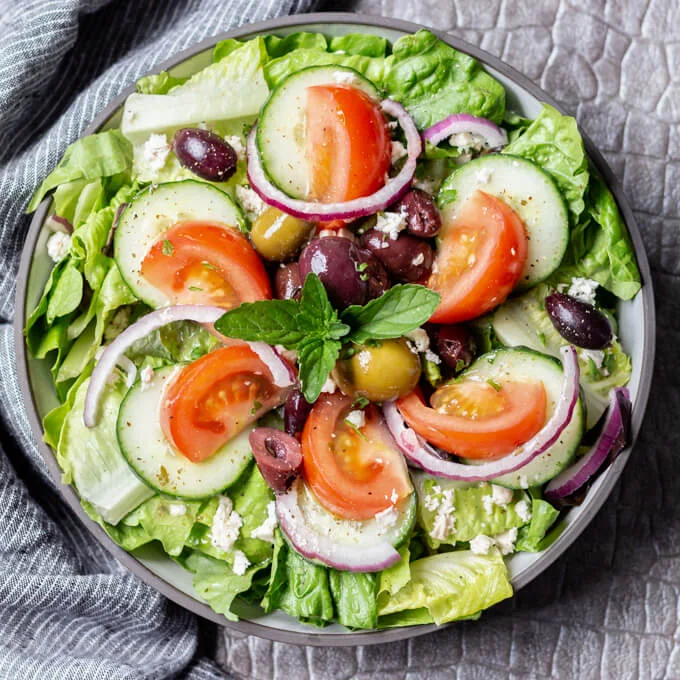
This Greek-inspired salad combines crisp lettuce, tomato and cucumber with Kalamata olives, feta and a sharp lemon-herb vinaigrette. It comes together quickly and makes a fresh, colourful side or light meal.
Ingredients
- 360 g (12 oz)Romaine lettuce, chopped or torn
- 1 medium (about 28 g per serving)tomato, cut into wedges
- 57 g (2 oz)cucumber, sliced
- 57 g (2 oz)feta cheese, crumbled
- 20Kalamata olives
- 28 g (1 oz)red onion, thinly sliced
- 120 ml (½ cup)olive oil
- 60 ml (¼ cup)lemon juice
- 30 ml (2 tbsp)water
- 15 ml (1 tbsp)shallot, minced
- 2.5 ml (½ tsp)garlic, grated
- 2.5 ml (½ tsp)dried oregano, rubbed
- 1.25 ml (¼ tsp)dried marjoram, rubbed
- 1.25 ml (¼ tsp)salt
- 0.6 ml (⅛ tsp)pepper
- 10 ml (2 tsp)low-carb sugar, granulated sweetener, sugar or honey
Instructions
- 1
Mix the dressing
Put all the dressing ingredients in a medium-sized jar with a lid. Shake for 1–2 minutes to combine, or use an immersion blender to emulsify the vinaigrette. For the best flavour, let it rest in the fridge overnight if you have time.
- 2
Prepare the lettuce
Wash the lettuce, then chop or tear it. Put it in a large bowl or divide it between four individual serving bowls.
- 3
Arrange the vegetables
Slice the cucumber, tomato and onion, then distribute them over the lettuce.
- 4
Finish and serve
Add the remaining salad ingredients. Spoon over the dressing, or toss the salad with it, and serve. The recipe serves four.
What is Greek salad?
Greek salad is associated with Greek cooking and pairs fresh vegetables with briny olives, feta and a simple dressing. This version includes romaine lettuce, making it a crisp, generous bowl rather than the lettuce-free village-style salad often called horiatiki.
The combination works because the lemon and herbs brighten the rich olive oil, while feta and olives bring salty, savoury notes.
Nutrition and macros by portion
The nutrition label shows one serving as written: 353 calories, 5g protein, 9g carbs, 35g fat.
| Portion | Adjustment | kcal | Protein | Carbs | Fat |
|---|---|---|---|---|---|
| Lighter | Use less vinaigrette | 247 kcal | 3g | 6g | 25g |
| This serving | As written | 353 kcal | 5g | 9g | 35g |
| Hungry | Add a protein side | 530 kcal | 7g | 13g | 53g |
The olive oil supplies most of the fat, while the vegetables and lemon juice contribute most of the carbohydrates. Feta provides some protein, but the salad is not especially protein-rich; serve it with grilled chicken, fish or beans to make the plate more filling.
The vinaigrette
Shake the dressing in a lidded jar until the oil and lemon juice are well mixed, or use an immersion blender for a more emulsified result. The shallot, garlic, oregano and marjoram give it a savoury, herbal edge.
Resting it overnight lets the flavours mingle, but the salad can be dressed as soon as the vinaigrette is mixed.
Keep the vegetables crisp
Dry lettuce: after washing, remove excess water so the dressing clings instead of becoming diluted.
Cut just before serving: freshly sliced cucumber and tomato keep their texture best, especially once they meet the dressing.
Balance the salty and sharp flavours
Feta and Kalamata olives both bring saltiness, while lemon juice provides acidity. Taste the dressing before adding extra salt, as the toppings already season the salad.
The small amount of sweetener softens the lemon's tang. Adjust it only after tasting the dressing, keeping in mind that sugar, honey and granulated sweeteners differ in sweetness.
Assemble at the last minute
Layer the sliced vegetables over the lettuce, then finish with the feta and olives. Dress the salad just before serving so the leaves remain crisp.
For a shared bowl, toss gently to avoid crushing the tomato or breaking up the feta too much.
What to serve with it
Serve this salad alongside grilled chicken, fish or warm bread for a more substantial meal. It also works as a fresh side with roasted vegetables or other Mediterranean-style dishes.
For a simple lunch, divide it into four bowls and add a protein of your choice.
Recipe notes & tips
- Shake the vinaigrette again just before pouring, as the oil and lemon juice can separate.
- Dry the lettuce thoroughly after washing to keep the dressing from turning watery.
- Slice the red onion thinly so it is easy to eat alongside the lettuce.
- Taste the dressing before adding extra salt because feta and olives are already salty.
- Dress only the amount of salad you plan to serve straight away.
Variations
- Add grilled chicken: serve slices on top for a more substantial meal.
- Use fresh herbs: add chopped parsley for a fresh herbal note.
- Include green pepper: slice it thinly for extra crunch.
- Swap the lettuce: use a smaller quantity of crisp leaves if you prefer a less leafy salad.
- Make it sweeter: use honey in place of the listed sweetener.
Common mistakes to avoid
- Wet lettuce: dry the leaves well so excess water does not dilute the vinaigrette.
- Over-salting: taste the dressing first, since the feta and olives add salt.
- Dressing too early: toss just before serving to keep the lettuce crisp.
- Uneven dressing: shake the jar again before pouring to recombine the ingredients.
- Rough tossing: fold the salad gently to keep the tomato and feta intact.
How to store
Store undressed salad and vinaigrette separately in covered containers in the fridge, and use the salad within 1–2 days for the best texture. The vinaigrette can be refrigerated for several days; shake it well before using. Once dressed, the salad is best eaten straight away.
Frequently asked questions
Can I make the vinaigrette ahead?
Yes. The recipe suggests letting it sit in the fridge overnight for the flavours to develop. Shake it again before dressing the salad.
Can I prepare the salad in advance?
You can wash and prepare the ingredients ahead, but keep them covered and chilled, with the dressing separate. Combine them just before serving to preserve the crunch.
Should I toss the salad or serve the dressing on the side?
Either works: spoon the dressing over the salad or toss everything gently. If serving later, keep the dressing on the side.
Can I use a different lettuce?
Yes. Another crisp lettuce can stand in for romaine, though the texture may differ slightly.
Why does this salad include lettuce?
This recipe uses romaine as its crisp base. Some Greek village-style salads are made without lettuce, but this version is designed as a leafy salad.
Cook it from the original
This recipe comes from lowcarbmaven.com. Their page has the author’s own photos, notes and tips — the best place to cook it from.
Open the recipe on lowcarbmaven.com