
Lighter Orange Chicken
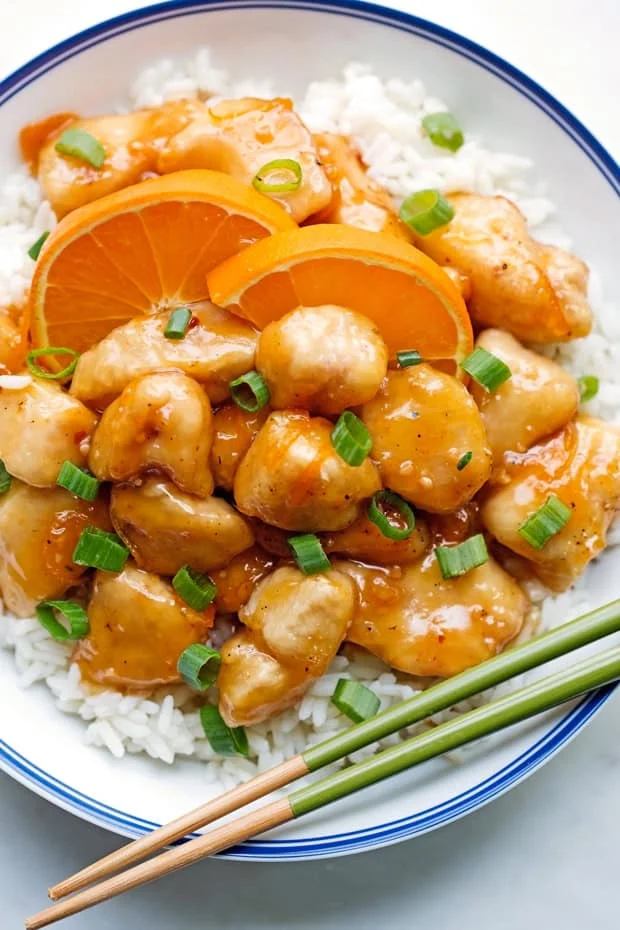
This lighter orange chicken coats sautéed chicken in a sweet, tangy orange sauce instead of deep-frying it. Make it for a take-away-inspired dinner that comes together in a skillet and pairs easily with rice.
Ingredients
- 680 g (1½ lb)boneless, skinless chicken, cut into 2.5 cm (1-inch) cubes
- 64 g (½ cup)cornstarch
- ¾ teaspoonsalt
- 45 ml (3 tablespoons)oil
- 180 ml (¾ cup)low-sodium chicken broth
- 120 ml (½ cup)orange juice
- 1 tablespoonorange zest
- 15 ml (1 tablespoon)low-sodium soy sauce
- 60 ml (¼ cup)white vinegar
- 105 g (⅓ cup)sweet orange marmalade
- 67 g (⅓ cup)granulated sugar
- 2 teaspoonsminced garlic
- ½ teaspoonground ginger
- ½ teaspoonred pepper flakes
- 8 g (1 tablespoon)cornstarch
Instructions
- 1
Cook the sauce
In a medium saucepan over medium-high heat, combine the chicken broth, orange juice, orange zest, soy sauce, vinegar, marmalade, sugar, garlic, ginger and red pepper flakes. Bring to a boil, then reduce the heat to medium and simmer for 7 minutes. Stir the 1 tablespoon of cornstarch together with 1 tablespoon of water in a small bowl, then add it to the pan and stir until thickened. Turn the heat to low and cook for 4–5 minutes more. Take the pan off the heat and leave the sauce to cool.
- 2
Coat the chicken
Put the ½ cup of cornstarch and the salt in a sealable bag and shake to combine. Add the chicken, seal the bag and shake until the pieces are coated.
- 3
Sauté the chicken
Heat the oil in a large skillet over medium-high heat. Add the coated chicken with tongs, discarding any leftover cornstarch. Sauté over medium heat for 7–8 minutes, until the coating is browned and the chicken is cooked through.
- 4
Add the sauce
Pour the sauce into the skillet and stir to coat the chicken. If using vegetables, add them now and heat through. Serve warm with cooked white or brown rice.
What is orange chicken?
Orange chicken is a Chinese-American take-away favourite, typically made with chicken and a sweet, tangy orange sauce. This version keeps the familiar citrus-and-sugar flavour but sautés the coated chicken rather than deep-frying it.
Marmalade gives the sauce concentrated orange flavour and sweetness, while vinegar and soy sauce add contrast. The cornstarch thickener helps it cling to the chicken.
Nutrition and macros by portion
The nutrition label shows one serving as written: 256 calories, 19g protein, 53g carbs, 8g fat.
| Portion | Adjustment | kcal | Protein | Carbs | Fat |
|---|---|---|---|---|---|
| Lighter | Less sugar and oil | 179 kcal | 13g | 37g | 6g |
| This serving | As written | 256 kcal | 19g | 53g | 8g |
| Hungry | Serve with extra rice | 384 kcal | 29g | 80g | 12g |
Chicken supplies most of the protein, while the cornstarch, sugar, marmalade and orange juice contribute most of the carbohydrates. The oil provides most of the fat, with a smaller amount from the chicken. Serve with a generous portion of vegetables alongside rice to make a more balanced plate.
Why the sauce works
Citrus: Orange juice and zest bring fresh, aromatic flavour, while marmalade adds a deeper orange note and helps round out the sauce.
Balance: Vinegar cuts through the sweetness, and soy sauce adds savoury depth. Red pepper flakes bring a little heat without taking over.
Get an even coating
Chicken pieces: Cut the chicken into evenly sized cubes so they cook at a similar rate. Shaking them with the cornstarch and salt in a sealed bag coats them without needing a separate bowl.
Before cooking: Use tongs to transfer the chicken to the skillet and leave excess cornstarch behind. Too much loose coating can collect in the pan instead of browning on the chicken.
Thicken the sauce smoothly
Cornstarch slurry: Stir the final tablespoon of cornstarch with water before adding it to the saucepan. This helps it mix into the hot sauce without clumping.
Texture cue: Stir until the sauce thickens, then keep it over low heat for the specified 4–5 minutes. It should be able to coat the chicken when stirred through the skillet.
Brown the chicken
Give the pieces room in the skillet so they can brown rather than steam. If the pan is crowded, cook the chicken in batches, keeping the stated cooking time as a guide for each batch.
Turn or stir the pieces as they cook, and check that the coating is browned and the chicken is cooked through before adding the sauce.
Serve with rice
Rice: White or brown rice makes a simple base for the orange sauce. Spoon the chicken and sauce over it just before serving.
Vegetables: The method also allows vegetables to be stirred into the skillet with the sauce and heated through. Keep any additions bite-sized so they warm quickly.
Recipe notes & tips
- Cut the chicken into evenly sized cubes for more consistent cooking.
- Shake the chicken in the bag just before cooking so the coating is distributed evenly.
- Use tongs to add the chicken and leave any loose cornstarch in the bag.
- Stir the cornstarch slurry again just before pouring it into the sauce.
- Have the rice ready before adding the sauce to the chicken, so the dish can be served warm.
Variations
- Add vegetables: Stir bite-sized vegetables into the pan with the sauce and heat them through.
- Adjust the heat: Use fewer red pepper flakes for a milder sauce.
- Use brown rice: Serve the chicken over cooked brown rice instead of white.
- Boost the citrus: Add a little extra orange zest for a more pronounced orange aroma.
- Make it less sweet: Reduce the sugar, knowing the sauce will taste less like the original sweet-style version.
Common mistakes to avoid
- Crowded skillet: The chicken may steam rather than brown; cook it in batches if needed.
- Uneven pieces: Different-sized cubes cook at different speeds; cut them to a similar size.
- Loose cornstarch: Excess coating can turn pasty in the pan; shake off the extra before cooking.
- Dry slurry: Adding cornstarch straight to the sauce can create lumps; mix it with water first.
- Sauce added too soon: Wait until the chicken is browned and cooked through before coating it.
How to store
Refrigerate leftovers in a covered container for up to 3–4 days. Reheat gently in a pan or microwave until hot throughout; the sauce may thicken in storage, so stir well as it warms.
Frequently asked questions
Can I make the sauce ahead?
Yes. Prepare it through the thickening step, let it cool and refrigerate it in a covered container. Warm it gently before adding it to the cooked chicken.
How can I tell when the chicken is cooked?
The recipe gives 7–8 minutes as a guide; check that the coating has browned and the chicken is cooked through before adding the sauce.
Can I use chicken thighs?
Boneless, skinless thighs can be cut into cubes and used in place of the chicken specified. Check that the pieces are cooked through, as timing can vary with their size.
Can I add vegetables?
Yes. Add bite-sized vegetables to the skillet after pouring in the sauce, then cook until they are heated through.
What should I serve with orange chicken?
Serve it warm with cooked white or brown rice, as suggested in the method. Vegetables make a useful accompaniment or can be heated through in the sauce.
Cook it from the original
This recipe comes from littlespicejar.com. Their page has the author’s own photos, notes and tips — the best place to cook it from.
Open the recipe on littlespicejar.com