
Salmon Sushi Bowl
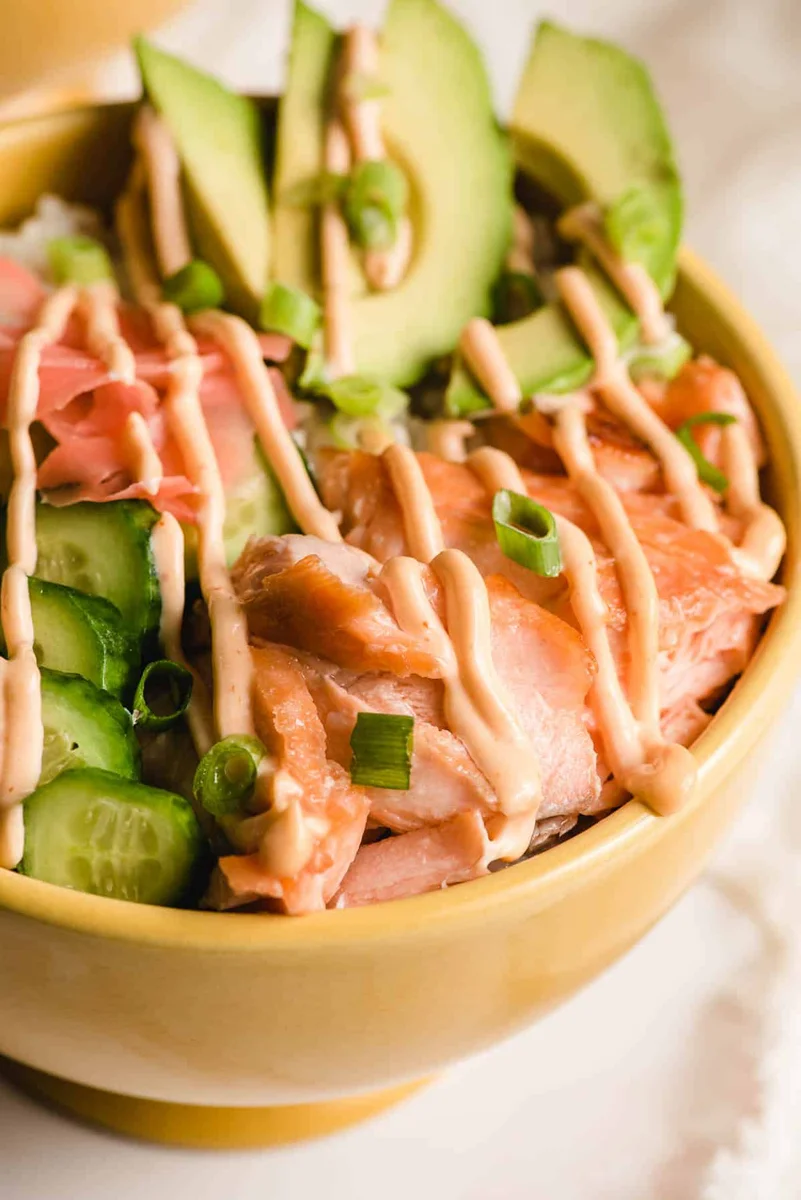
This salmon sushi bowl layers seasoned short-grain rice with broiled salmon, crisp vegetables, spicy mayonnaise and a sweet soy-mirin sauce. It makes a colourful dinner and can be assembled ahead for lunch.
Ingredients
- 370 g (2 cups)short-grain sushi rice
- 530 ml (2¼ cups)water
- 60 ml (¼ cup)seasoned rice vinegar
- 4 fillets, 115–140 g (4–5 oz) eachboneless salmon
- al gustoolive oil
- al gustokosher salt
- 120 ml (½ cup)soy sauce or tamari
- 120 ml (½ cup)mirin
- 100 g (½ cup)granulated sugar
- 60 g (¼ cup)mayonnaise
- 15–30 ml (1–2 tablespoons), to tastesriracha
- 2 mini cucumbers or 1 largecucumbers, sliced
- 2radishes, very thinly sliced
- 2avocados, sliced
- al gustospring onions, sliced
Instructions
- 1
Rinse the rice
Put the rice in a fine-mesh sieve and rinse under cold water for about 1 minute, until the water runs clear. Shake off excess water and transfer the rice to a lidded saucepan.
- 2
Cook the rice
Add the water and stir. Cover and bring to a gentle boil over medium-high heat, then immediately turn the heat to low and simmer for 16 minutes.
- 3
Check and steam
At 16 minutes, remove the lid and taste a few grains for tenderness. Once tender, cover again, take the pan off the heat and leave the rice to steam for another 10 minutes.
- 4
Season the rice
Uncover the pan and gently stir in the vinegar until it has been absorbed.
- 5
Heat the broiler
Preheat the broiler. Line a sheet pan with foil and coat it with cooking spray.
- 6
Make the eel sauce
Combine the soy sauce, mirin and sugar in a saucepan and bring to a boil. Lower the heat to a gentle simmer and cook for 5–7 minutes, until the sauce is as thick as thin maple syrup. Set aside a few tablespoons to glaze the salmon.
- 7
Broil the salmon
Put the salmon on the prepared pan, brush with olive oil and season generously with salt. Broil on the middle rack for 6 minutes, then remove the pan and brush the salmon with the reserved sauce. Return it to the oven for another 2–4 minutes, until it flakes easily and the thickest part reaches 57°C (135°F). The recipe advises not cooking it beyond 60°C (140°F).
- 8
Mix spicy mayo
Stir the mayonnaise with 15 ml (1 tablespoon) of sriracha. Add more sriracha to taste if desired.
- 9
Build the bowls
Divide the cooked rice between bowls and top with flaked salmon, sliced vegetables, pickled ginger and spring onions. Serve with the remaining eel sauce and spicy mayonnaise.
What is a salmon sushi bowl?
A sushi bowl takes the familiar components of sushi—seasoned rice, fish and fresh toppings—and serves them together without rolling. Sushi has its roots in Japanese rice-and-fish traditions; this version brings in a sweet soy-and-mirin sauce and sriracha mayonnaise for a punchier bowl.
The combination works because the warm, tangy rice balances rich salmon and avocado, while cucumber and radish add crunch. The sauces let each person adjust the sweet and spicy flavours at the table.
Nutrition and macros by portion
The nutrition label shows one serving as written: 929 calories, 34g protein, 125g carbs, 33g fat.
| Portion | Adjustment | kcal | Protein | Carbs | Fat |
|---|---|---|---|---|---|
| Lighter | More vegetables, less rice | 650 kcal | 24g | 88g | 23g |
| This serving | As written | 929 kcal | 34g | 125g | 33g |
| Hungry | Add extra rice | 1394 kcal | 51g | 188g | 50g |
Most of the carbohydrates come from the sushi rice and sugar in the eel sauce; the salmon contributes much of the protein, while the salmon, avocado and mayonnaise supply much of the fat. Balance the bowl with extra cucumber or other vegetables, and serve the sauce on the side to control how much goes on each portion.
Get the rice right
Rinsing: Wash the rice until the water is no longer cloudy to remove excess surface starch. Drain it well before adding the measured water.
Steaming: Keep the lid on while the rice simmers, then let it rest off the heat for 10 minutes. This helps the grains finish cooking evenly before you fold in the vinegar.
Reduce the sauce gently
Sauce base: Soy sauce or tamari, mirin and sugar form the sweet-savoury glaze. Keep the pan at a gentle simmer after it boils so the liquid reduces without scorching.
Consistency: Stop when the sauce coats a spoon like thin maple syrup; it will thicken further as it cools. Reserve a few tablespoons before using any of it to glaze the salmon.
Watch the salmon closely
Broiling: The salmon cooks quickly under direct heat, so begin checking it after the stated 6 minutes and glaze it before returning it to the oven. Fillet thickness and broiler strength affect the final few minutes.
Doneness: Look for flesh that flakes easily and check the thickest part with a thermometer. The method specifies 57°C (135°F) and advises against cooking beyond 60°C (140°F).
Balance the toppings
Fresh vegetables: Slice the cucumber and radishes thinly so they are easy to eat with the rice. Add the avocado near serving time to keep its cut surface looking fresh.
Finishing touches: Spring onions, pickled ginger, spicy mayonnaise and eel sauce add freshness, acidity, heat and sweetness. Use the sauces to taste rather than pouring them all over at once.
Plan the timing
The rice needs 16 minutes of simmering plus 10 minutes of steaming, while the sauce can reduce during that resting time. Prepare the vegetables and mayonnaise as the rice cooks, then broil the salmon just before assembling.
For a make-ahead lunch, keep the components separate until serving. This preserves the vegetables' crunch and makes it easier to reheat the rice and salmon without warming the sauces or avocado.
What to serve alongside
The bowl is substantial on its own, but a light miso soup or a simple side of steamed greens complements its rich fish and rice. Keep extra sauce on the side so the bowl does not become overly sweet or salty.
Recipe notes & tips
- Use a saucepan with a tight-fitting lid so steam stays in while the rice cooks.
- Measure the sauce ingredients before heating, as the mixture reduces quickly once simmering.
- Reserve the salmon glaze before brushing any sauce onto the fish.
- Slice the vegetables while the rice steams to make assembly quicker.
- Add the avocado and sauces just before serving for the best texture.
Variations
- Use tamari: Choose tamari in place of soy sauce for the sauce base.
- Adjust the heat: Start with 15 ml (1 tablespoon) of sriracha and add more to taste.
- Add sesame: Sprinkle sesame seeds over the assembled bowls for extra texture.
- Swap the fish: Use another boneless fish fillet, adjusting the broiling time to its thickness.
- Make it vegetarian: Replace the salmon with baked tofu and retain the rice and vegetable toppings.
Common mistakes to avoid
- Lifting the lid too often: Steam escapes and interrupts the rice cooking; keep the pan covered until the 16-minute check.
- Skipping the rice rinse: Excess surface starch can make the grains gummy; rinse until the water runs clear.
- Boiling the sauce hard: It can reduce too quickly or scorch; lower the heat once it reaches a boil.
- Overcooking the salmon: Thin fillets can dry out fast under a broiler; check them at the stated times and use a thermometer.
- Adding all the sauce at once: The bowl can become too sweet or salty; serve extra sauce separately.
How to store
Refrigerate the components promptly in separate airtight containers and use the cooked rice within 1 day. Reheat the rice and salmon until steaming hot, and add the fresh vegetables, avocado and sauces after reheating.
Frequently asked questions
Can I make the rice ahead?
Yes. Cool it promptly, refrigerate it in a covered container and use it within 1 day. Reheat until steaming hot before serving.
Can I make the eel sauce in advance?
Yes. Make it ahead and refrigerate it in a covered container. It will thicken as it cools; warm it gently if you would like it looser for serving.
How do I know when the salmon is done?
It should flake easily, and the thickest part should reach 57°C (135°F) according to the method. The recipe advises not cooking it beyond 60°C (140°F).
Can I use tamari instead of soy sauce?
Yes. The recipe lists soy sauce or tamari as alternatives in the eel sauce.
How spicy is the mayonnaise?
It depends on how much sriracha you use. Begin with 15 ml (1 tablespoon), taste, and add more if you want a stronger heat.
Cook it from the original
This recipe comes from neighborfoodblog.com. Their page has the author’s own photos, notes and tips — the best place to cook it from.
Open the recipe on neighborfoodblog.com