
Chocolate Birthday Cake
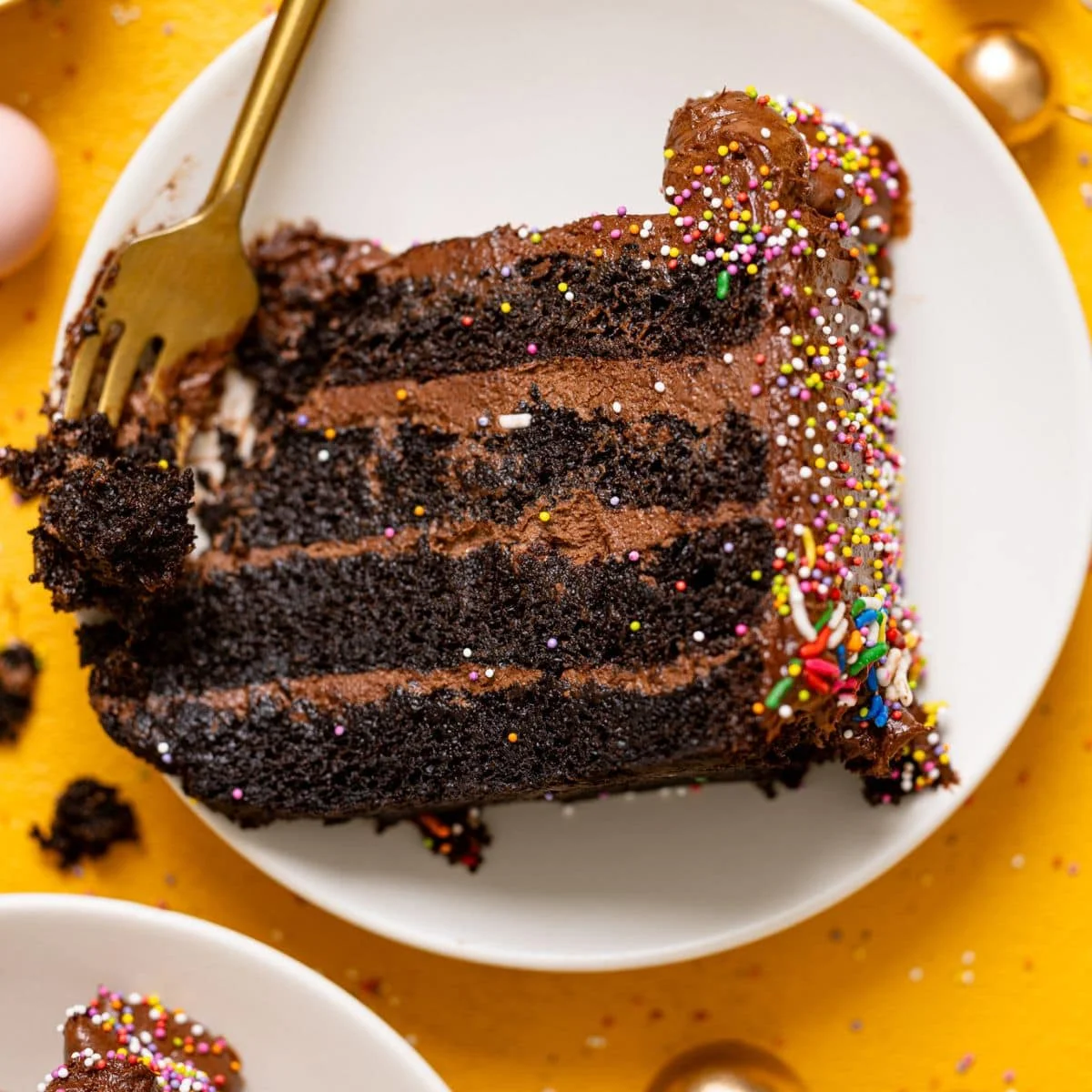
This rich chocolate layer cake pairs cocoa, espresso and a soft, moist crumb with whipped chocolate buttercream and colourful sprinkles. It makes a celebratory centrepiece for birthdays and other special occasions.
Ingredients
- 500 g (4 cups)organic plain flour
- 85 g (1 cup)organic cocoa powder
- 2 tspbaking powder
- ½ tspsea salt
- ¼ tspground cinnamon
- 300 g (1½ cups)organic cane sugar
- 4 largeeggs, at room temperature
- 115 g (½ cup)unsalted butter, softened at room temperature
- 1 tspvanilla extract
- 240 ml (1 cup)organic vegetable oil
- 240 ml hot water (1 cup) + 1 tspespresso powder
- 300 ml (1¼ cups)dairy-free buttermilk
- 960–1,200 ml (4–5 cups)whipped chocolate buttercream frosting
- As desiredrainbow sprinkles
Instructions
- 1
Prepare the pans
Heat the oven to 175°C (350°F). Lightly grease the bases of either three 20 cm (8-inch) pans, three 15 cm (6-inch) pans or two 23 cm (9-inch) pans with butter, then line them with baking parchment.
- 2
Make the buttermilk
Whisk together the milk and apple cider vinegar, or lemon juice, in a bowl or measuring jug. Leave it for 5–10 minutes. Note that the ingredient list specifies dairy-free buttermilk but does not list the milk or acid used in this method.
- 3
Dissolve the espresso
Stir the espresso powder into the hot water in a separate jug until it has completely dissolved.
- 4
Mix the dry ingredients
Whisk the flour, cocoa powder, baking powder, cinnamon and salt together in a large bowl.
- 5
Cream butter and sugar
Beat the softened butter and sugar with a hand mixer on high speed for about 2–3 minutes, until pale and fluffy.
- 6
Finish the batter
Mix in the eggs one at a time, then add the vanilla, oil and espresso mixture. On low speed, mix in the dry ingredients followed by the buttermilk, until smooth, about 3–4 minutes. The batter should not be overly thick and should run slowly off a lifted whisk.
- 7
Bake the layers
Divide the batter evenly between the prepared pans. Bake for 30–35 minutes, until a toothpick or butter knife inserted into the centre comes out clean.
- 8
Cool the cakes
Leave the cakes in their pans for about 10 minutes, then turn them out onto a wire rack. Let them cool completely in a cool place for at least 1–2 hours.
- 9
Prepare the frosting
For the best result, use the publisher's whipped chocolate buttercream frosting recipe.
- 10
Layer the cake
Put the first cake layer on a cake stand and spread buttercream evenly over its top. Add the second layer and more buttercream. For a three-layer cake, repeat the layering before adding the final layer.
- 11
Frost and decorate
Spread a thin, even layer of buttercream over the top and sides. If desired, pipe small decorations around the cake, add rainbow sprinkles, or top with chopped chocolate or cacao nibs. Chill for 5 minutes to help the buttercream set.
- 12
Serve the cake
When ready to serve, take the cake out of the refrigerator, slice it and enjoy.
What is chocolate birthday cake?
Chocolate birthday cake is a celebratory layer cake, often finished with frosting and colourful decorations. This version builds its chocolate flavour with cocoa and espresso, then pairs the tender cake with whipped chocolate buttercream.
The recipe does not specify a particular regional origin; it draws on the familiar tradition of a frosted cake for birthdays and special gatherings. The choice of several pan sizes lets you make either more layers or broader ones.
Nutrition and macros by portion
The nutrition label shows one serving as written: 1012 calories, 15g protein, 178g carbs, 69g fat.
| Portion | Adjustment | kcal | Protein | Carbs | Fat |
|---|---|---|---|---|---|
| Lighter | Use less buttercream | 708 kcal | 11g | 125g | 48g |
| This serving | As written | 1012 kcal | 15g | 178g | 69g |
| Hungry | Serve a larger slice | 1518 kcal | 23g | 267g | 104g |
The flour and sugar supply much of the carbohydrate, while the butter, oil and buttercream contribute most of the fat. Eggs and the dairy-free buttermilk provide some protein. Pair a slice with berries or serve a smaller slice after a meal to balance the plate.
The ingredients that shape the crumb
Flour and cocoa: whisking them with the baking powder, salt and cinnamon distributes the dry ingredients before they meet the wet mixture. Cocoa supplies the main chocolate flavour, while a small amount of cinnamon adds warmth.
Butter and oil: creaming butter with sugar helps build an aerated base, and the oil contributes to the cake's moist texture. Bring the butter to room temperature so it can beat smoothly with the sugar.
Eggs and buttermilk: room-temperature eggs are easier to mix into the batter evenly. The listed dairy-free buttermilk adds moisture; check the recipe's ingredient discrepancy before starting, as its method describes making buttermilk from milk and vinegar or lemon juice.
Why add espresso?
Espresso powder dissolved in hot water is mixed into the batter rather than served as a separate coffee element. It complements the cocoa and adds depth to the cake's chocolate flavour.
Stir until no powder remains before adding the mixture to the wet ingredients. This helps it disperse throughout the batter.
Mixing the batter
Creaming: beat the butter and sugar until pale and fluffy, as directed, for about 2–3 minutes. Add the eggs individually so each can be incorporated before the next goes in.
Combining: add the dry ingredients and buttermilk on low speed, mixing for about 3–4 minutes until smooth. Stop when the batter runs slowly from the whisk; the recipe describes it as neither too thick nor very loose.
How to check the cakes
Timing: bake the layers at 175°C (350°F) for 30–35 minutes. The listed time is a guide, so check the centres with a toothpick or butter knife as the cakes approach the end of the baking window.
Cooling: let the cakes stand in their pans for about 10 minutes before moving them to a wire rack. They need to cool completely for at least 1–2 hours before frosting, or the buttercream may soften against warm cake.
Choosing the cake pans
Three 20 cm pans: use these for three layers with a more modest height. Divide the batter evenly so the layers bake at a similar rate.
Three 15 cm pans: the recipe notes that these make thicker slices. Two 23 cm pans give you a two-layer cake instead, so the final shape and number of slices will differ.
Frosting and serving
Buttercream: the recipe calls for 4–5 cups of whipped chocolate buttercream and recommends using its separate frosting recipe. Spread frosting between the layers and apply a thin, even coating over the top and sides.
Finish: pipe small designs or scatter rainbow sprinkles over the cake, then chill it for 5 minutes to set the buttercream. Serve the slices on their own or with fresh berries to add a bright contrast.
Recipe notes & tips
- Bring the eggs and butter to room temperature before mixing.
- Measure the batter evenly into the pans so the layers bake consistently.
- Use the centre-of-cake test rather than relying on the clock alone.
- Cool the cake layers fully before assembling them.
- Chill the frosted cake for 5 minutes before serving to help the buttercream set.
Variations
- Gluten-free option: use a suitable gluten-free flour blend as indicated by the publisher's notes.
- Cacao powder: substitute cacao powder for cocoa powder, as the recipe description suggests.
- Citrus buttermilk: use lemon juice in place of apple cider vinegar when making the buttermilk described in the method.
- Extra crunch: scatter chopped chocolate or cacao nibs over the finished cake.
- Simple finish: skip piped decorations and use rainbow sprinkles over the top instead.
Common mistakes to avoid
- Frosting warm layers: the buttercream can soften; wait until the cakes are fully cool.
- Uneven layers: they may finish baking at different times; divide the batter evenly between the pans.
- Overmixing at high speed: the recipe calls for low speed when adding the dry ingredients and buttermilk; follow that instruction.
- Skipping the espresso dissolve: undissolved powder can remain in the batter; stir it into the hot water until fully dissolved.
- Guessing doneness by time alone: check the centre with a toothpick or butter knife after 30 minutes.
How to store
Keep the frosted cake covered in the refrigerator. Bring it out before serving, as the recipe directs; the source does not specify a storage duration or reheating method.
Frequently asked questions
What pan sizes can I use?
The recipe gives three options: three 20 cm (8-inch) pans, three 15 cm (6-inch) pans or two 23 cm (9-inch) pans. The smaller pans make thicker layers, according to the source.
How do I know when the cake is baked?
Bake for 30–35 minutes at 175°C (350°F), then test the centre with a toothpick or butter knife. It should come out clean.
Can I use cacao powder instead of cocoa powder?
Yes. The recipe notes that cacao powder can be used in place of cocoa powder.
Can I make the cake gluten-free?
The recipe description mentions a gluten-free option, but the supplied ingredients do not give a specific flour substitution. Follow the publisher's notes for the intended gluten-free flour choice.
Why does the method mention milk and vinegar?
The method describes combining milk with apple cider vinegar or lemon juice to make dairy-free buttermilk, but the ingredient list already lists 300 ml dairy-free buttermilk and does not list milk or acid. Check the publisher's notes or frosting-and-cake instructions before baking to clarify which approach to use.
How long should the cake cool before frosting?
Leave the cakes in their pans for about 10 minutes, then cool them on a wire rack for at least 1–2 hours, until completely cool.
Cook it from the original
This recipe comes from orchidsandsweettea.com. Their page has the author’s own photos, notes and tips — the best place to cook it from.
Open the recipe on orchidsandsweettea.com