
Sponge Cake
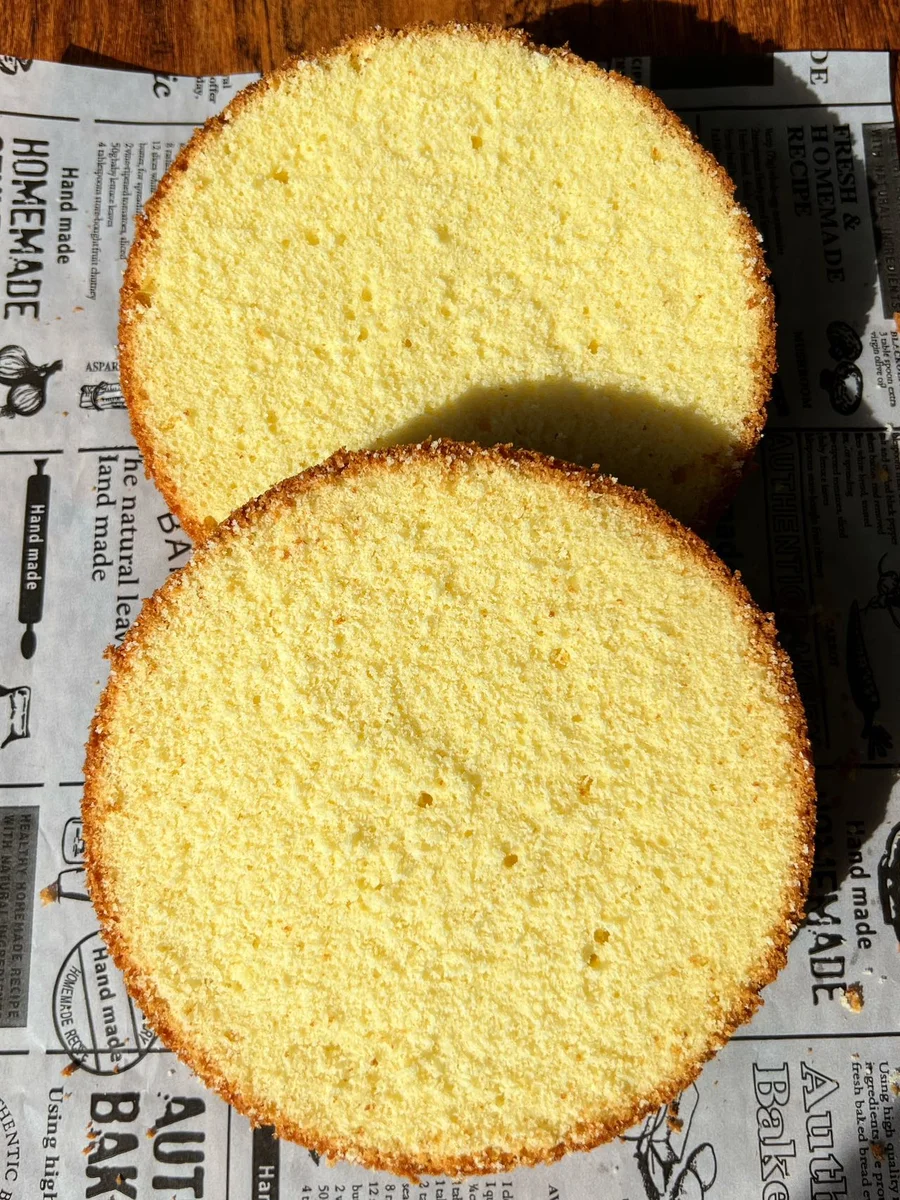
This sponge cake gets its lift from air beaten into the eggs rather than a chemical raising agent. Its sturdy, relatively close crumb makes it useful as a base for fondant or a more elaborate celebration cake.
Ingredients
- 3large eggs
- 90 ggranulated sugar
- 90 gcake flour
- 30 gunsalted butter
- 30 gmilk, or soya, coconut, oat or almond milk
- 4 gvanilla extract (optional)
Instructions
- 1
Prepare the tin
Cut a 15 cm circle of baking parchment and place it in a 15 cm aluminium cake tin. Do not grease the tin. Measure the 90 g cake flour and 90 g granulated sugar into separate bowls.
- 2
Preheat the oven
Heat the oven to 160°C (320°F).
- 3
Heat the water
Bring a pan of water to the boil, then take it off the heat and set it aside.
- 4
Warm the eggs
Crack the 3 eggs into a clean, dry mixing bowl and beat them until combined. Attach a sugar thermometer to the bowl and set it over the hot water, whisking gently so the eggs warm evenly. When they reach 40°C (104°F), remove the bowl from the water. Without a thermometer, check with a finger: the eggs are ready when they feel warm.
- 5
Melt the butter
Put the butter, milk and vanilla extract in a bowl. Set it over the hot water until the butter melts.
- 6
Start beating
Beat the egg mixture with a hand mixer on high speed until it has plenty of large bubbles. Add all the granulated sugar.
- 7
Beat to ribbon stage
Turn the mixer to medium and continue beating. When the mixture is beige and trails are visible as the beaters move, lift the mixer to check it. If the drips disappear quickly, keep beating. It is ready when the mixture falls in a smooth ribbon, leaves folds on the surface and those folds slowly blend back in. This takes about 15 minutes.
- 8
Fold in flour
Sift the cake flour into the egg mixture in 3 batches. After each addition, gently fold from the bottom upwards with a spatula until incorporated, taking care not to knock out the air.
- 9
Mix a small portion
Take the bowl of melted butter and milk off the hot water. Put one-quarter of the egg batter into it and gently mix with a spatula.
- 10
Combine the batters
Pour the butter-and-milk mixture into the remaining three-quarters of the batter and fold gently until combined.
- 11
Bake the cake
Pour the batter into the prepared tin and promptly put it on the lower oven rack. Bake at 160°C (320°F) for 40–50 minutes, until golden and a skewer inserted in the centre comes out clean. Ovens can differ, so judge by the cake as well as the time. If the top colours before the centre is cooked, cover it loosely with foil.
- 12
Cool upside down
When baked, promptly invert the tin onto a cooling rack and leave the cake until it reaches room temperature. Remove it from the tin, then decorate or serve as you like.
What is sponge cake?
Sponge cake is a light cake whose rise comes primarily from air incorporated into beaten eggs. This style is a practical choice when you want a cake with enough structure to support decoration.
This version warms the eggs before beating, then folds in flour and a small butter-and-milk mixture. Careful handling helps retain the air that gives the cake its lift.
Nutrition and macros by portion
The nutrition label shows one serving as written: 1173 calories, 0g protein, 0g carbs, 0g fat.
| Portion | Adjustment | kcal | Protein | Carbs | Fat |
|---|---|---|---|---|---|
| Lighter | Use a smaller slice | 821 kcal | 0g | 0g | 0g |
| This serving | As written | 1173 kcal | 0g | 0g | 0g |
| Hungry | Serve a larger slice | 1760 kcal | 0g | 0g | 0g |
The flour and sugar provide most of the cake’s carbohydrates, while the butter supplies much of its fat. Eggs contribute protein, though the supplied nutrition figures list protein as zero. To balance a slice, serve it with fruit and yoghurt rather than adding a rich filling.
The role of each ingredient
Eggs: These provide the structure and the air that raises the cake, so use a bowl free of grease and water.
Cake flour: Its fine texture suits a delicate crumb. Sifting it in batches makes it easier to fold through without leaving lumps.
Butter and milk: This small amount brings richness and moisture. Mixing some batter into it first helps it combine more gently with the rest.
Getting the eggs right
Warm eggs: Bringing them to 40°C over hot water gives them a head start before whipping. Stir gently while warming so the temperature is even.
Ribbon stage: The mixture should fall from the beaters in a continuous ribbon and leave folds that take a little time to disappear. If the trails vanish straight away, continue beating.
Fold without losing the air
Flour: Add it in three sifted batches, folding from the bottom of the bowl up through the mixture. Stop once it is incorporated rather than stirring vigorously.
Butter mixture: First blend one-quarter of the egg batter into the melted butter and milk, then fold that mixture into the remaining batter. This helps the heavier liquid mixture combine without abruptly deflating the foam.
Check for doneness
The cake should be golden, and a skewer inserted into the centre should come out clean. Begin checking as it approaches the lower end of the 40–50 minute baking time.
If the top is already coloured but the centre is not done, lay foil loosely over the cake to limit further browning while it finishes baking.
Cool and serve
Invert the tin onto a cooling rack as soon as the cake is baked, as directed in the method, and leave it until it reaches room temperature before removing it.
Serve it plain, or use it as a base for a decorated cake. A modest filling or fresh fruit can complement the sponge without obscuring its texture.
Recipe notes & tips
- Make sure the mixing bowl and beaters are completely clean and dry before whipping the eggs.
- Use gentle, steady whisking while warming the eggs so they heat evenly.
- Sift the flour in three batches and fold each one in before adding the next.
- Melt the butter mixture over the hot water rather than directly over a flame.
- Keep an eye on the cake towards the end of baking, since oven temperatures can vary.
- Let the cake cool to room temperature before removing it from the tin.
Variations
- Dairy-free milk: Use one of the listed plant milks in place of dairy milk.
- Skip the vanilla: Leave it out for a simpler flavour.
- Fruit topping: Serve slices with fresh fruit for a bright contrast.
- Layered cake: Once completely cool, split the cake and add a filling of your choice.
- Celebration finish: Decorate the cooled cake with fondant or other cake decorations.
Common mistakes to avoid
- Greasing the tin: The method calls for an ungreased tin, so line only its base with parchment.
- Underbeating the eggs: If the mixture falls in drips that disappear quickly, keep beating until it reaches ribbon stage.
- Adding flour all at once: Sift it in three batches and fold gently to avoid lumps and preserve air.
- Stirring vigorously: Use a spatula and fold from the bottom upwards to limit deflation.
- Pouring in the butter mixture directly: First combine it with one-quarter of the batter, then fold it into the rest.
- Taking the cake out too soon: Check the centre with a skewer and allow more baking time if it does not come out clean.
How to store
Once completely cool, store the cake in an airtight container at room temperature and eat within 2 days for the best texture. If it has been filled or decorated with perishable ingredients, refrigerate it and follow the storage guidance for those ingredients.
Frequently asked questions
Can I make this without a thermometer?
Yes. The method suggests checking the eggs with a finger; remove the bowl from the hot water when the mixture feels warm.
How do I know when the eggs are beaten enough?
Lift the mixer and watch the batter fall. It should form a smooth ribbon and folds that remain briefly before blending back in.
Why does the flour need to be sifted in batches?
Sifting in three additions helps distribute the flour through the airy batter. Fold gently after each addition to help preserve its volume.
What can I use instead of milk?
The recipe lists soya, coconut, oat or almond milk as alternatives.
What should I do if the top browns before the cake is baked through?
Cover it loosely with foil and continue baking until a skewer inserted into the centre comes out clean.
Can I decorate the cake while it is warm?
Wait until it has cooled to room temperature before removing it from the tin and decorating or serving.
Cook it from the original
This recipe comes from msshiandmrhe.com. Their page has the author’s own photos, notes and tips — the best place to cook it from.
Open the recipe on msshiandmrhe.com