
Basque Cheesecake
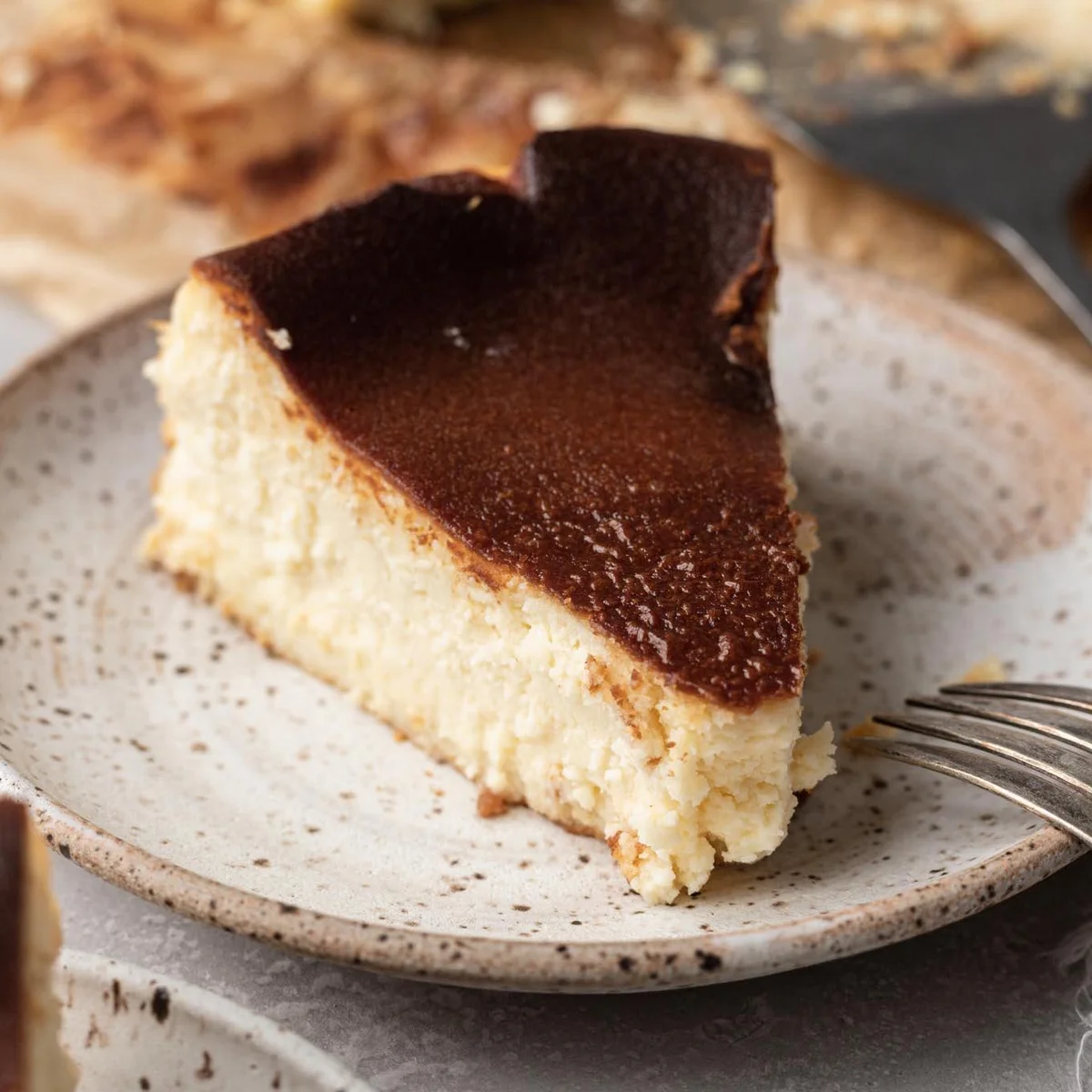
Basque cheesecake is a crustless Spanish cheesecake with a deeply browned top and a soft, creamy centre. This version uses a simple cream-cheese batter and a hot oven to create its signature contrast without the fuss of a crust.
Ingredients
- 907 g (2 pounds; 32 ounces, or 4 blocks)brick-style cream cheese, softened to room temperature
- 350 g (1 3/4 cups)granulated sugar
- 32 g (1/4 cup)plain flour, spooned and levelled
- 2 teaspoonspure vanilla extract
- 1/4 teaspoonsalt
- 420 ml (1 3/4 cups)double cream, at room temperature
- 5 largeeggs, at room temperature
- 2egg yolks, at room temperature
Instructions
- 1
Heat the oven
Preheat the oven to 204°C (400°F).
- 2
Line the tin
Line a 23 cm (9-inch) springform tin with two large, overlapping sheets of baking parchment. Cover the base and sides, leaving some parchment standing above the rim, then set the tin aside.
- 3
Beat cheese and sugar
Using a stand mixer with a paddle attachment or a hand mixer in a large bowl, beat the cream cheese and sugar for 3 to 4 minutes until smooth and creamy. Stop to scrape down the bowl 2 to 3 times if needed.
- 4
Add dry ingredients
Add the flour, vanilla extract and salt, then mix on medium speed until combined.
- 5
Pour in the cream
Scrape down the bowl, set the mixer to low and slowly pour in the double cream. Mix until combined, scraping the bowl as needed.
- 6
Mix in the eggs
On low speed, add the eggs one at a time, then mix in the yolks. Scrape down the bowl and beat for a few more seconds until everything is evenly mixed.
- 7
Fill the tin
Pour the batter into the lined tin. Tap it gently on the work surface to bring any large air bubbles to the surface.
- 8
Bake the cheesecake
Bake for 60 to 70 minutes, until the top is deeply golden brown and the centre still wobbles slightly.
- 9
Cool in the tin
Take the cheesecake out of the oven and leave it to cool in the tin at room temperature for 2 to 3 hours.
- 10
Remove the parchment
Once completely cool, release the cheesecake from the springform tin and transfer it to a serving plate. Gently peel the parchment away from the sides.
- 11
Serve the cheesecake
Serve at room temperature, or chill in the refrigerator for several hours and serve cold.
What is Basque cheesecake?
Basque cheesecake comes from the Basque Country in northern Spain. Unlike many cheesecakes, it has no biscuit base and is baked until its top is very dark while the centre remains creamy.
This version relies on a rich batter of cream cheese, cream and eggs. Baking it in parchment-lined tin lets the cake rise and colour without needing a neat, smooth finish.
Nutrition and macros by portion
The nutrition label shows one serving as written: 854 calories, 19g protein, 54g carbs, 65g fat.
| Portion | Adjustment | kcal | Protein | Carbs | Fat |
|---|---|---|---|---|---|
| Lighter | Serve a smaller slice | 598 kcal | 13g | 38g | 46g |
| This serving | As written | 854 kcal | 19g | 54g | 65g |
| Hungry | Cut larger slices | 1281 kcal | 29g | 81g | 98g |
Most of the carbohydrates come from the sugar, while the cream cheese and double cream contribute most of the fat; eggs and cream cheese provide much of the protein. Since this is a rich dessert, serve a modest slice after a meal with fruit or berries alongside.
Why the ingredients matter
Cream cheese: Brick-style cream cheese gives the batter its structure and tang. Let it soften to room temperature so it beats smoothly with the sugar.
Cream and eggs: Double cream adds richness, while whole eggs and extra yolks help the centre set while staying soft. Room-temperature ingredients are easier to combine into a uniform batter.
Mix the batter gently
Smooth base: Beat the cream cheese and sugar until creamy before adding the remaining ingredients. Scraping down the bowl helps prevent lumps of cheese from being left behind.
Low speed: Add the cream gradually and mix in the eggs on low. This keeps the batter together without whipping in more air than necessary.
The parchment-lined tin
Overlapping sheets: Arrange two sheets of parchment so the tin is fully covered, including the sides. The paper should rise above the rim because the cheesecake expands as it bakes.
Loose folds: Crumpled or folded parchment may look rustic against the cake, but that is expected. Press it into the tin enough to support the batter without worrying about perfectly smooth edges.
Read the colour and wobble
Dark top: The cheesecake should be deeply golden brown after baking at 204°C. The top can look almost burnt; that colour is part of the style.
Soft centre: A slight wobble in the middle is the cue to take it out. It will continue to settle as it cools, so baking until completely firm can leave it less creamy.
Cooling and serving
Room-temperature cooling: Leave the cheesecake in its tin for 2 to 3 hours before removing it. This gives the soft centre time to settle and makes it easier to handle.
Serving temperature: At room temperature, the texture is especially soft and creamy; chilling makes it firmer. Serve it plain, or alongside fresh berries or a small spoonful of fruit compote.
Recipe notes & tips
- Bring the cream cheese, cream and eggs to room temperature before mixing.
- Scrape down the bowl regularly so the batter stays even and lump-free.
- Use two overlapping sheets of parchment and leave them extending above the tin.
- Tap the filled tin gently to release any large air bubbles.
- Take the cheesecake out while the centre still has a slight wobble.
- Allow the full cooling time before releasing the springform tin.
Variations
- Citrus zest: Add finely grated lemon or orange zest to the batter for a bright aroma.
- Coffee: Dissolve a little instant coffee in the cream for a subtle roasted note.
- Chocolate: Fold chopped dark chocolate into the finished batter for pockets of chocolate.
- Fruit topping: Serve slices with fresh berries or a spoonful of fruit compote.
- Vanilla bean: Replace the extract with seeds scraped from a vanilla pod for visible flecks.
Common mistakes to avoid
- Cold cream cheese: It can leave lumps in the batter; soften it to room temperature first.
- Overmixing the eggs: This can incorporate excess air; mix them in one at a time on low speed.
- Unlined tin: Batter can leak or stick; cover the base and sides with overlapping parchment.
- Baking until firm: The centre can lose its creamy texture; remove the cake when it still wobbles slightly.
- Removing it too soon: A warm cheesecake may be fragile; cool it in the tin for 2 to 3 hours.
- Expecting a pale top: The dark surface is characteristic; bake until deeply golden brown.
How to store
Cover and refrigerate leftovers for up to 4 days. Serve chilled, or let a slice stand at room temperature before eating; reheating is not necessary.
Frequently asked questions
Why is the top so dark?
The cheesecake is baked at a high temperature so its top becomes deeply browned while the centre stays creamy. A very dark surface is expected for this style.
How do I know when it is done?
Look for a deeply golden-brown top and a centre that still wobbles slightly when the tin is moved. It will continue to settle as it cools.
Can I make it ahead?
Yes. Bake and cool it, then cover and refrigerate it. Serve chilled or let it come towards room temperature before serving.
Can I use a different tin size?
The baking time is for a 23 cm springform tin. A different size will change the cake's depth, so check the colour and centre wobble rather than relying only on the stated time.
Why did my cheesecake crack?
Cracks can appear as the cake cools and settles, and they are not unusual in this rustic style. The parchment and dark top make a perfectly smooth finish unnecessary.
Cook it from the original
This recipe comes from livewellbakeoften.com. Their page has the author’s own photos, notes and tips — the best place to cook it from.
Open the recipe on livewellbakeoften.com