
Chicken Rendang(Rendang Ayam)
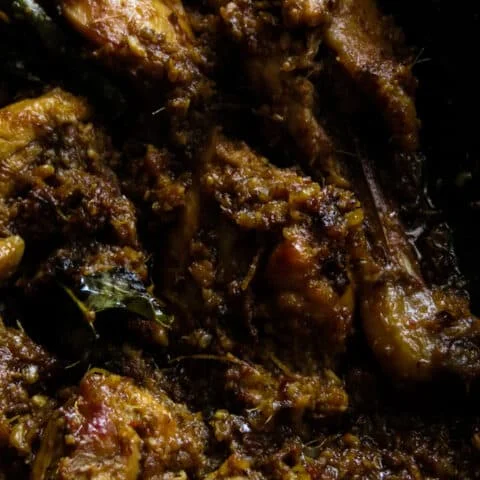
Chicken rendang is a Malaysian curry slowly cooked with a fragrant spice paste, coconut milk and toasted coconut. The long simmer reduces the sauce until it clings to the chicken, making this a warming dish for a shared meal.
Ingredients
- 15small red shallots, peeled
- 1 piece, 5 cmgalangal
- 1–2 stalkslemongrass
- 1 piece, 2.5 cmfresh ginger
- 5–7dried chillies, or 2½ tablespoons chilli flakes
- 5 clovesgarlic
- To taste (start with 1 teaspoon)salt
- ½ teaspoonground turmeric
- 4 tablespoonsoil
- 2–3star anise
- 4–5cardamom pods
- 20 g (¼ cup)freshly grated coconut
- 1 piece, 5–7.5 cm (2–3 inches)cinnamon
- 700 gbone-in chicken pieces, such as thighs, legs or breast
- 360 ml (1½ cups)thick coconut milk, not cream of coconut
- 4–5kaffir lime leaves
- 60 ml (¼ cup), plus a few tablespoons as neededwater
- 240 ml (1 cup)water
- 1 tablespoon, or 2 tablespoons tamarindsalt or tamarind, for rubbing on the chicken
Instructions
- 1
Prepare chicken
Trim excess fat from the chicken, rinse it and pat it dry. Make two or three deep cuts in each piece.
- 2
Season chicken
Rub the chicken with 1 tablespoon of salt or 2 tablespoons of tamarind, then set it aside to marinate.
- 3
Make the paste
Prepare the spice paste separately from the remaining curry ingredients. Slice the galangal and ginger into smaller pieces.
- 4
Blend spices
Blend the shallots, galangal, ginger, dried chillies, lightly bruised lemongrass, garlic and turmeric. Add about 60 ml (¼ cup) water to help the ingredients blend.
- 5
Scrape and reserve
If pieces get stuck while blending, switch off the blender and bring them towards the blades with a small spoon before blending again. Scrape the paste into a bowl; loosen any paste left in the blender with a few tablespoons of water and add it to the bowl.
- 6
Toast coconut
Toast the grated coconut in a medium frying pan over low-medium heat, moving it constantly until brown. Keep the heat low so it does not burn.
- 7
Start the curry
Heat the oil in a large, wide pan or wok. Add the cardamom, star anise, cinnamon and spice paste.
- 8
Cook the paste
Cook over very low heat for 1–3 minutes, until the spices release their aroma.
- 9
Add the chicken
Add the chicken and stir it into the spice mixture. Cook for 3–5 minutes.
- 10
Simmer gently
Pour in the coconut milk and 240 ml (1 cup) water. Taste and season with salt, then simmer over low-medium heat for 40 minutes to 1 hour.
- 11
Add coconut
As the sauce thickens, add the toasted coconut and kaffir lime leaves, stirring briefly.
- 12
Reduce the sauce
Continue slow-cooking until the sauce recedes and coats the chicken. Stir occasionally so the spices do not stick to the bottom, and check the seasoning, adding salt if needed.
- 13
Finish and serve
When the curry is thick and small dots of oil appear, lower the heat as much as possible and gently mix so the spices coat the chicken. Take the pan off the heat and serve warm.
What is chicken rendang?
Rendang is a richly spiced dish associated with Indonesia and Malaysia, where slow cooking turns a coconut-based sauce into a concentrated coating. Chicken rendang, or rendang ayam, brings that method to chicken pieces.
This version combines a freshly blended paste with whole spices and toasted coconut. Its slow simmer lets the sauce reduce while the chicken takes on the fragrance of the aromatics.
Nutrition and macros by portion
The nutrition label shows one serving as written: 1006 calories, 68g protein, 59g carbs, 59g fat.
| Portion | Adjustment | kcal | Protein | Carbs | Fat |
|---|---|---|---|---|---|
| Lighter | Use less oil | 704 kcal | 48g | 41g | 41g |
| This serving | As written | 1006 kcal | 68g | 59g | 59g |
| Hungry | Serve with extra rice | 1509 kcal | 102g | 89g | 89g |
The chicken provides most of the protein, while coconut milk and oil contribute much of the fat. Shallots, coconut and the rice typically served alongside bring carbohydrates; a side of vegetables can round out the plate.
Build the spice paste
Aromatics: Shallots, galangal, ginger, lemongrass and garlic form the base of the paste. Cut the firmer pieces small enough to blend evenly.
Chillies: Dried chillies give the paste its heat; chilli flakes are offered as a substitute. Adjust the amount to suit the chillies you have and your preferred level of spice.
Toast the coconut carefully
Low heat: Move the grated coconut around constantly as it colours. It can go from toasted to burnt quickly, so take it off the heat once it is brown.
Why it matters: The toasted coconut joins the curry as the sauce thickens, adding a nutty note and helping make the final coating distinctive.
Give the sauce time
Steady simmer: Keep the curry at a gentle low-medium simmer for 40 minutes to 1 hour. A calmer heat gives the chicken time to cook as the coconut sauce reduces.
Occasional stirring: The heavier paste can settle on the pan base. Stir now and then, especially as the sauce thickens, to keep it from catching.
Know when it is ready
Sauce: Expect the gravy to recede and cling to the chicken rather than remain thin and soupy. Small dots of oil appearing in the thick curry are part of the method’s finishing cue.
Chicken: Check that the pieces are cooked through before serving. Bone-in pieces can vary in size, so use the doneness of the largest piece as your guide.
Serve it with
Rice: Plain steamed rice is a simple partner for the concentrated sauce. Spoon the curry over the rice so it catches the spice paste and coconut.
Fresh sides: A crisp cucumber salad or lightly dressed vegetables can add contrast to the rich, slow-cooked curry.
Recipe notes & tips
- Pat the chicken dry before seasoning so excess water does not dilute the spice paste.
- Use a wide pan to give the curry room to simmer and reduce.
- Blend the paste in short bursts and scrape down stuck pieces only after switching off the blender.
- Keep the coconut moving in the pan to prevent it from scorching.
- Stir more often as the sauce thickens, when the paste is more likely to stick.
- Taste for salt near the end as the sauce reduces and its flavours become more concentrated.
Variations
- Use chilli flakes: Replace the dried chillies with 2½ tablespoons of chilli flakes as suggested.
- Choose different chicken pieces: Combine thighs, legs and breast pieces, keeping in mind that their sizes may differ.
- Use dried lime leaves: Add dried kaffir lime leaves if fresh ones are unavailable.
- Adjust the heat: Use fewer dried chillies for a milder curry or more for extra heat.
- Serve with vegetables: Add a fresh cucumber salad or lightly dressed vegetables alongside the curry.
Common mistakes to avoid
- Burning the coconut: Toast it over low-medium heat and keep it moving until brown.
- Blending a stuck paste: Stop the blender before nudging ingredients back towards the blades.
- Cooking over high heat: Keep the paste and curry at low to low-medium heat so they cook gently.
- Leaving the curry unstirred: Stir occasionally, particularly as the sauce reduces, to prevent the spices catching.
- Stopping while the sauce is thin: Continue simmering until it recedes and coats the chicken.
How to store
Cool leftovers promptly and refrigerate in a covered container for up to 3 days. Reheat gently in a covered pan until piping hot throughout, adding a small splash of water if the sauce has become very thick.
Frequently asked questions
Can I use boneless chicken?
The recipe calls for bone-in pieces, but boneless pieces can be used. They may cook more quickly, so check them during the simmer rather than relying only on the full cooking time.
Can I use chilli flakes instead of dried chillies?
Yes. The recipe suggests 2½ tablespoons of ground red chilli flakes as a substitute for 5–7 dried chillies.
What can I use instead of fresh kaffir lime leaves?
Dried kaffir lime leaves can be used if fresh ones are hard to find. Add them with the toasted coconut as directed.
How do I know when the rendang is ready?
The sauce should have reduced and cling to the chicken, with small dots of oil appearing. Also check that the largest chicken piece is cooked through.
Can I make the spice paste ahead?
Yes. Blend the paste ahead and keep it covered in the fridge until you are ready to cook. Stir it well before adding it to the pan.
What should I serve with chicken rendang?
Steamed rice is a straightforward choice for the thick sauce. Fresh cucumber or lightly dressed vegetables provide a crisp contrast.
Cook it from the original
This recipe comes from islandsmile.org. Their page has the author’s own photos, notes and tips — the best place to cook it from.
Open the recipe on islandsmile.org