
Baked Patacones o Tostones Recipe
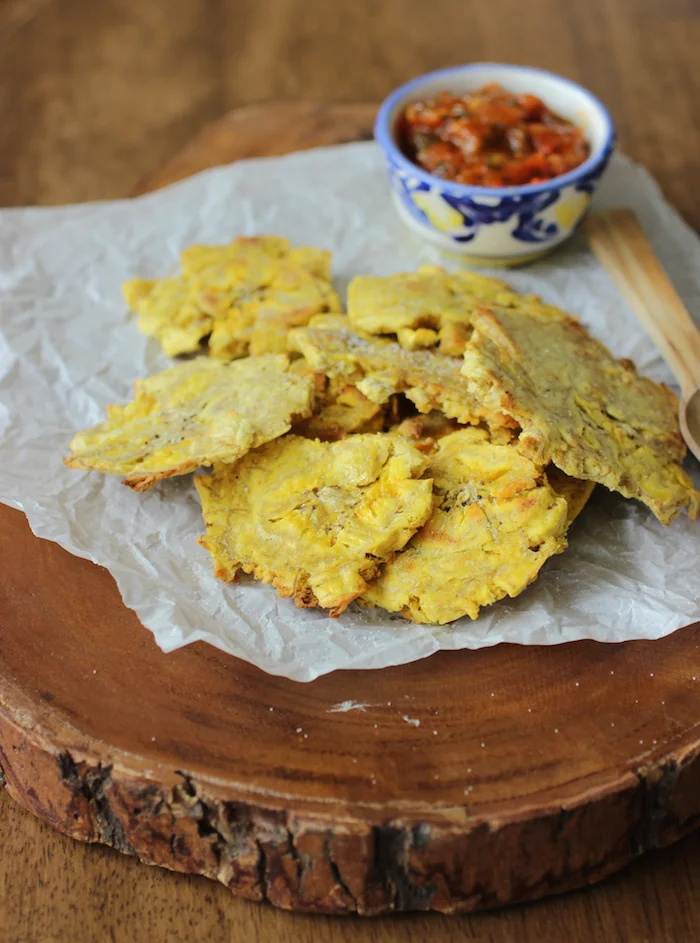
These Colombian-style patacones, also called tostones, are made from green plantains that are boiled, flattened and baked until golden and crisp. Baking gives you the familiar savoury side or appetiser without the traditional second frying.
Ingredients
- 4green plantains with skin
- as neededcooking spray
- to tastesalt
Instructions
- 1
Heat the oven
Preheat the oven to 200°C (400°F).
- 2
Prepare the tray
Coat a baking sheet with cooking spray and set it aside.
- 3
Cut the plantains
Trim the ends of each plantain. Make a lengthwise cut through the skin on one side, taking care not to cut into the plantain itself.
- 4
Boil until soft
Put the plantains in a pot and add enough water to cover them. Cook for about 30 minutes, or until soft.
- 5
Peel and slice
Take the pot off the heat. Remove one plantain at a time from the hot water, as they are easier to flatten while warm. Peel each one, then cut it into 4 thick slices while still hot.
- 6
Flatten and bake
Flatten each slice as much as you can without breaking it, using a tostonera or the bottom of a glass. Arrange the pieces on the prepared baking sheet, spray their tops with cooking spray and sprinkle with salt. Bake for about 7–9 minutes, or until golden and crisp. Turn the patacones and bake for about 7 minutes on the other side. Add more salt if desired and serve with your favourite topping.
What are patacones?
Patacones, known as tostones in some parts of Latin America, are twice-cooked pieces of green plantain served as a side or appetiser. They are popular in Colombia and across the region, often paired with toppings or dipping sauces.
The traditional method fries the plantains, flattens them and fries them again. This version boils them first and finishes them in the oven, where flattening creates more surface area to brown.
Nutrition and macros by portion
The nutrition label shows one serving as written: 220 calories, 2g protein, 57g carbs, 1g fat.
| Portion | Adjustment | kcal | Protein | Carbs | Fat |
|---|---|---|---|---|---|
| Lighter | Use less cooking spray | 154 kcal | 1g | 40g | 1g |
| This serving | As written | 220 kcal | 2g | 57g | 1g |
| Hungry | Add another plantain | 330 kcal | 3g | 86g | 2g |
Most of the carbohydrates and fibre come from the plantains; the cooking spray contributes a small, variable amount of fat, while the plantains provide only a little protein. For a more balanced plate, serve a portion with a protein-rich main and vegetables.
Choosing and preparing plantains
Green plantains: Choose firm fruit with green skin, rather than ripe plantains, which are sweeter and softer. The savoury flavour and starchy texture are what make them suitable for patacones.
Slitting the skin: The lengthwise cut is made through the peel, not deep into the flesh. It helps you remove the skin after boiling.
Boiling for easy flattening
Water level: Keep the plantains covered as they cook so they soften evenly. The recipe gives about 30 minutes as a guide; check that they are soft before taking them out.
Work while warm: Remove and prepare one plantain at a time. Warm slices are more pliable and less likely to crack as you flatten them.
Getting the shape right
Even slices: Cut each peeled plantain into 4 thick pieces so they are substantial enough to flatten without falling apart. Try to keep the slices similar in thickness for more even baking.
Gentle pressure: Use a tostonera or the bottom of a glass and press each piece as flat as it will go without breaking. Flattening increases the area that can turn golden in the oven.
Browning and crispness
First side: Bake at 200°C (400°F) for about 7–9 minutes, watching for a golden colour and crisp edges. The recipe’s visual cue matters alongside the timing.
Second side: Turn the pieces and bake for about 7 minutes more. If they need more colour, check them closely rather than leaving them unattended.
Serving ideas
As a side: Serve patacones alongside a Colombian-inspired meal, or offer them as a savoury appetiser. They are also a handy base for toppings.
For dipping: Pair them with a sauce of your choice and serve soon after baking, while their edges are at their crispest. Add any extra salt just before serving.
Recipe notes & tips
- Use firm, green plantains for a savoury flavour and sturdy slices.
- Keep the plantains covered with water while they boil.
- Flatten the slices while they are still warm.
- Press firmly but stop before the pieces crack or break.
- Spray the tops evenly so they brown in the oven.
- Serve soon after baking for the best crispness.
Variations
- Garlic dip: Serve the patacones with a garlicky dipping sauce.
- Fresh topping: Add chopped tomato and herbs just before serving.
- Cheese finish: Scatter a little grated cheese over the hot patacones.
- Spiced salt: Mix a pinch of ground spice into the salt before seasoning.
- Avocado topping: Add sliced or mashed avocado when serving.
Common mistakes to avoid
- Using ripe plantains: Choose firm green ones so the slices hold together when flattened.
- Cutting into the flesh: Slit only the skin to make peeling easier without cutting the plantain.
- Flattening when cold: Work while the slices are warm, when they are more pliable.
- Pressing too hard: Stop when the slice is flat enough but still intact.
- Skipping the turn: Turn the pieces so the second side also gets time in the oven.
- Leaving them too long: Check for golden colour and crisp edges rather than relying only on the clock.
How to store
Store cooled patacones in an airtight container in the fridge for up to 3 days. Reheat in an oven or air fryer until hot and crisp; they may soften during storage.
Frequently asked questions
Can I use ripe plantains?
Green plantains are best for this recipe because they are firm and savoury. Ripe ones are sweeter and softer, so they may not flatten or bake the same way.
Do I have to boil the plantains first?
Yes, this method boils them before flattening. That softens the plantain and makes it easier to shape.
How do I know when the plantains are soft enough?
After about 30 minutes, check that they have softened before removing them from the water. The recipe does not specify a particular utensil test.
What can I use instead of a tostonera?
Use the bottom of a glass to flatten each warm slice, as described in the method.
Why are my patacones breaking?
They may be too cool or you may be pressing too firmly. Flatten them while warm and stop before the pieces crack.
Can I make them ahead?
They are best served just after baking, when crisp. You can refrigerate leftovers and reheat them in the oven or air fryer.
Cook it from the original
This recipe comes from mycolombianrecipes.com. Their page has the author’s own photos, notes and tips — the best place to cook it from.
Open the recipe on mycolombianrecipes.com