
Korean Fried Chicken
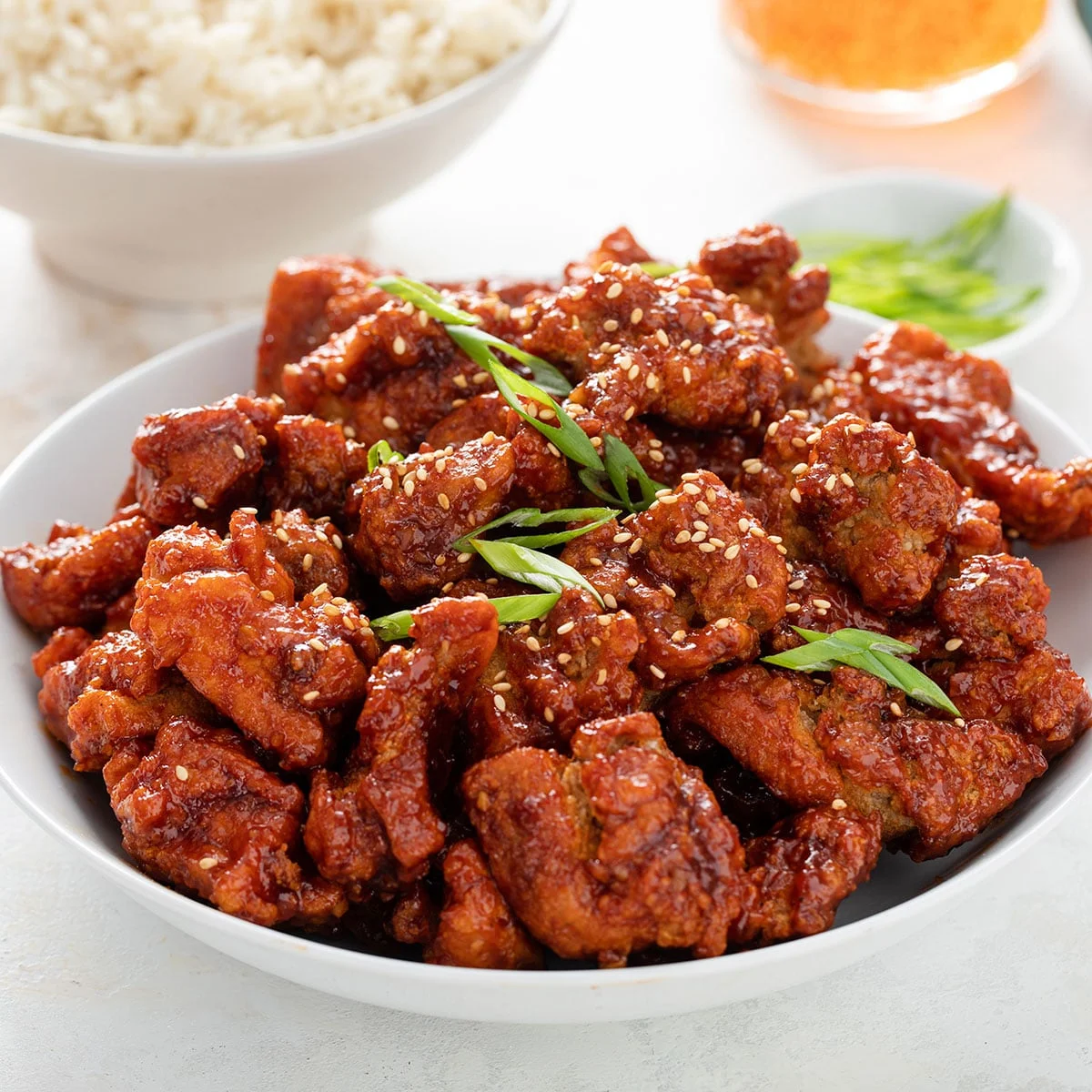
Korean fried chicken is coated in a crisp, twice-fried crust and tossed in a sticky, sweet-hot gochujang sauce. The double fry gives the chicken its crunch, while the sauce brings chilli, honey, garlic and ginger together.
Ingredients
- 907 gboneless chicken breast or thighs, cut into 5 cm pieces, or chicken wing flats and drumettes
- 1 teaspoonsalt
- ⅛ teaspoonground black pepper
- 1 teaspoononion powder
- 1 teaspoonbaking powder
- 1 teaspoon freshly grated or ½ teaspoon driedginger
- 1 teaspoonmild oil, such as vegetable, sesame or rapeseed oil
- 2 cloves, mincedgarlic
- 1 teaspoon, gratedginger
- 4 tablespoonsgochujang (Korean red chilli paste)
- 1 tablespoon, or more to tastebrown sugar
- 2 tablespoonshoney
- 1 tablespoonsoy sauce
- Juice of ½ lemon or 2 teaspoonslemon juice or rice wine
- 1 teaspoonsesame oil
- 60 g (½ cup)plain flour
- 80 g (⅔ cup)cornflour
- To tastesalt and ground black pepper
- About 1.4 litres (1½ quarts or 6 cups)oil for deep-frying
- 1 teaspoon, optionalsesame seeds, to garnish
Instructions
- 1
Dry the chicken
Pat the chicken dry with paper towels.
- 2
Mix seasoning
In a small bowl, whisk together the salt, pepper, onion powder and baking powder; set aside.
- 3
Marinate chicken
Put the chicken and grated fresh ginger in a large bowl or resealable bag. Add the baking powder mixture and toss to coat. Cover and refrigerate for 1 hour or overnight.
- 4
Prepare trays
While the chicken marinates, line one rimmed baking tray with baking parchment and another with paper towels. Set a wire rack over the paper-towel-lined tray.
- 5
Cook the sauce
Heat the oil in a small saucepan over medium heat. Add the garlic and ginger and sauté for about 30 seconds to 1 minute, until aromatic. Add the remaining sauce ingredients and cook over low heat until bubbly. Remove from the heat and keep warm.
- 6
Mix the coating
Combine the flour and cornflour in a shallow bowl, seasoning with salt and pepper to taste.
- 7
Coat the chicken
Dredge the chicken in the flour mixture, then arrange it on the parchment-lined baking tray.
- 8
Heat the oil
Heat the deep-frying oil. Fry in batches so the pan is not overcrowded, and try to keep the oil between 163 and 177°C (325–350°F) after adding the chicken.
- 9
Fry the chicken
Gently lower each batch into the hot oil. For boneless chicken breast, fry for about 4–5 minutes, turning occasionally with a metal spider or kitchen tongs, until lightly golden. Lift the chicken out and drain it on the wire rack.
- 10
Fry it again
Bring the oil to 191°C (375°F). Carefully return all the chicken pieces to the oil and cook, stirring as they fry, for about 2–4 minutes for boneless chicken breast, or until deep golden and very crisp. Timing varies with the chicken's size and thickness. Remove the chicken and leave it on the rack to drain.
- 11
Toss and serve
Transfer the chicken to the reserved sauce and toss until evenly coated. Serve garnished with sesame seeds.
What is Korean fried chicken?
Korean fried chicken is known for its crisp coating and often gets a second fry before being dressed in sauce. This version pairs that crunchy finish with a gochujang glaze that balances chilli heat with honey and brown sugar.
The recipe allows for boneless breast, thighs or wings. Whichever cut you choose, fry in batches and coat the chicken just before serving to keep the crust crisp.
Nutrition and macros by portion
The nutrition label shows one serving as written: 324 calories, 34g protein, 33g carbs, 6g fat.
| Portion | Adjustment | kcal | Protein | Carbs | Fat |
|---|---|---|---|---|---|
| Lighter | Use less sauce | 227 kcal | 24g | 23g | 4g |
| This serving | As written | 324 kcal | 34g | 33g | 6g |
| Hungry | Serve with rice | 486 kcal | 51g | 50g | 9g |
The chicken provides most of the protein, while the flour and cornflour contribute much of the carbohydrate. The frying oil and sesame oil supply fat, with honey and brown sugar adding sweetness to the sauce. Balance a serving with vegetables or a simple salad alongside.
Why marinate with baking powder?
Dry chicken: Patting the pieces dry helps the seasoning and coating cling rather than slide off.
Seasoning: Ginger, onion powder, salt, pepper and baking powder flavour the chicken before it is coated. The recipe gives the chicken at least an hour in the fridge, or an overnight rest.
Getting the coating right
Flour and cornflour: Their mixture forms a light coating around each piece. Dredge the chicken thoroughly, then place it on the lined tray while you get ready to fry.
Batch size: Leave space around the chicken in the fryer. Adding too much at once can make it harder to maintain the oil temperature.
The double-fry method
First fry: Keep the oil between 163 and 177°C (325–350°F) and cook boneless chicken breast for about 4–5 minutes, turning occasionally, until lightly golden.
Second fry: Raise the oil to 191°C (375°F) and fry for another 2–4 minutes for breast pieces, until deep golden and very crisp. The recipe notes that timing varies with the cut's size and thickness.
Making the sticky sauce
A short sauté: Cook the garlic and ginger in oil for 30 seconds to 1 minute, just until aromatic.
Gentle heat: Add the other sauce ingredients and simmer over low heat until bubbly. Keep the sauce warm while frying, then toss the chicken in it at the end so the coating is evenly covered.
Choosing chicken and checking doneness
Boneless pieces: Cut breast or thigh into roughly 5 cm pieces, as specified in the ingredient list. The recipe gives a frying time for breast, but cooking time can vary with the size and thickness of each piece.
Wings: Flats and drumettes are also an option, though the method does not give a separate timing for them. Use the recipe's visual cues of deep golden colour and a very crisp coating.
What to serve alongside
Serve the chicken as soon as it is tossed in the sauce, with sesame seeds scattered over the top. Plain rice or a simple vegetable side can make it a more substantial plate without competing with the sweet-spicy glaze.
Recipe notes & tips
- Pat the chicken dry before seasoning so the coating has a better chance to adhere.
- Marinate for at least 1 hour, or leave the covered chicken in the fridge overnight.
- Keep the batches small so the oil temperature does not drop as sharply.
- Use a wire rack over a paper-towel-lined tray to drain the fried chicken.
- Keep the sauce warm, but toss the chicken in it only after the second fry.
- Use a thermometer to help manage the oil temperatures for both frying stages.
Variations
- Choose thighs: Use boneless thighs instead of breast for a different chicken cut.
- Use wings: Fry flats and drumettes in place of boneless pieces.
- Adjust the sweetness: Add more brown sugar to taste, as the recipe suggests.
- Change the citrus: Use 2 teaspoons of rice wine instead of the juice of half a lemon.
- Skip the garnish: Leave out the optional sesame seeds when serving.
Common mistakes to avoid
- Skipping the drying: Pat the chicken with paper towels before seasoning and coating.
- Crowding the fryer: Fry in batches so the oil temperature is easier to maintain.
- Oil too cool: Bring the oil back to the stated temperature before the second fry.
- Cooking by time alone: Check for deep golden colour and a very crisp coating, since timing varies with piece size and thickness.
- Saucing too early: Toss the chicken in the warm sauce after the second fry so it does not sit coated while waiting.
How to store
Refrigerate leftovers in a covered container and eat within 3 days. Reheat in an oven until hot and crisp; the coating will soften after being stored, especially once sauced.
Frequently asked questions
Can I use chicken thighs instead of breast?
Yes. The recipe allows boneless thighs cut into roughly 5 cm pieces, as well as breast. Frying time can vary with the cut and piece size.
Can I make this with chicken wings?
Yes, use wing flats and drumettes. The recipe does not specify a separate frying time for wings, so use the colour and crispness cues and account for their size.
Can I marinate the chicken overnight?
Yes. Cover the chicken and leave it in the refrigerator for 1 hour or overnight.
Why fry the chicken twice?
The first fry cooks the coating to a light golden colour; the hotter second fry takes it to deep golden and very crisp. Toss it in the sauce after that second fry.
What if I do not have a kitchen thermometer?
A thermometer is useful for maintaining the specified oil temperatures of 163–177°C for the first fry and 191°C for the second. Without one, it is harder to judge the oil accurately, so take care not to overheat it.
Can I make the sauce less sweet?
The recipe allows you to adjust the brown sugar to taste. Start with the stated tablespoon, then add more only if you want a sweeter sauce.
Cook it from the original
This recipe comes from lemonblossoms.com. Their page has the author’s own photos, notes and tips — the best place to cook it from.
Open the recipe on lemonblossoms.com