
Chile Rayado Salsa Recipe
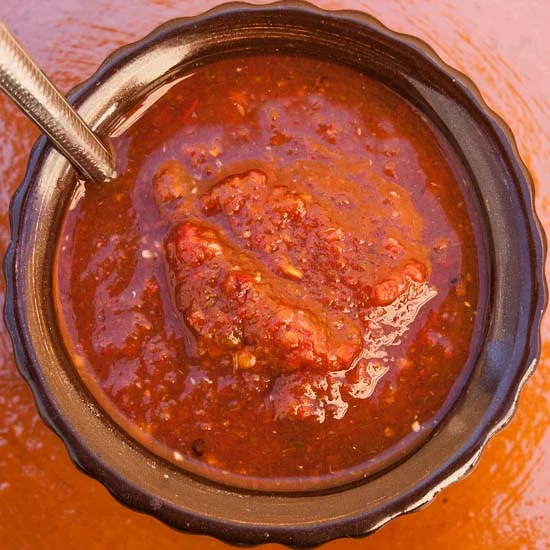
This Mexican salsa blends toasted rayado chiles with tomatoes, onion, garlic and cilantro, then simmers until the flavours come together. Make it when you want a smooth, gently smoky salsa for serving alongside a meal.
Ingredients
- 4Roma tomatoes, quartered (plum tomatoes)
- 2rayado chiles
- 1/4small white onion
- 2 clovesgarlic
- 4 sprigscilantro
- 60 ml (1/4 cup)water
- to tastesalt
Instructions
- 1
Toast the chiles
Heat a pan and toast the chiles for 10 seconds on each side.
- 2
Remove seeds
Take the stems and seeds off the toasted chiles.
- 3
Load the blender
Put all the ingredients in the blender jar.
- 4
Add the water
Pour in 60 ml (1/4 cup) of water.
- 5
Blend briefly
Blend until just smooth, taking care not to over-blend.
- 6
Transfer to pan
Pour the mixture into a saucepan.
- 7
Simmer the salsa
Bring it to the boil, then lower the heat and simmer for 20 minutes.
- 8
Season with salt
Add salt to taste.
What is chile rayado salsa?
Salsa is a broad family of Mexican sauces, made in many styles with fresh, cooked or toasted ingredients. This version combines tomatoes with rayado chiles and simmers the blended mixture for a cooked, cohesive finish.
Toasting the chiles briefly brings out their aroma, while the tomatoes give the salsa its body. The recipe keeps the ingredient list simple, so the chile remains central.
Nutrition and macros by portion
The nutrition label shows one serving as written: 56 calories, 2g protein, 12g carbs, 1g fat.
| Portion | Adjustment | kcal | Protein | Carbs | Fat |
|---|---|---|---|---|---|
| Lighter | Use less salsa | 39 kcal | 1g | 8g | 1g |
| This serving | As written | 56 kcal | 2g | 12g | 1g |
| Hungry | Serve a larger portion | 84 kcal | 3g | 18g | 2g |
The tomatoes provide most of the carbohydrates, while the chiles and other vegetables contribute smaller amounts. There is no added oil; the listed protein and fat are modest, so pair a serving with a protein-rich main and a filling side such as beans or rice.
Choosing and preparing the ingredients
Tomatoes: Roma tomatoes, also called plum tomatoes, are the specified choice here. Quarter them before blending so they fit readily into the blender jar.
Rayado chiles: Use the two chiles called for, and remove their stems and seeds after toasting. Chiles can vary in heat, so taste the finished salsa before serving if you are unsure.
Aromatics: White onion, garlic and cilantro add savoury and herbal notes. Keep the amounts as listed for the intended balance.
Toast the chiles briefly
A hot pan and a short toast of 10 seconds per side are all this method calls for. Keep the chiles moving or watch them closely so they toast rather than scorch.
Let the toasted chiles cool enough to handle before removing the stems and seeds. This step prepares them for blending and helps keep the process manageable.
Blend to the right texture
Add the ingredients and water to the blender, then blend only until the mixture is just smooth. Stopping promptly helps avoid turning it into a thinner, more uniform purée than intended.
If the blender needs help moving the ingredients, pause and use its usual safe method for redistributing the mixture rather than running it for longer than necessary.
Simmer and season
Bring the blended salsa to the boil in a saucepan, then reduce the heat and simmer for 20 minutes. Keep it at a gentle simmer rather than a vigorous boil.
Salt: The recipe leaves the amount to taste. Stir it in at the end, taste, and adjust as needed.
Serving ideas
Serve the salsa as a table sauce or alongside a meal where a tomato-and-chile accompaniment fits. It can also be spooned over tacos or used with other savoury dishes.
For a more filling plate, pair it with a source of protein and a starchy side. Taste the salsa first so you can judge how much heat to add to each serving.
Recipe notes & tips
- Have the blender and saucepan ready before you start toasting the chiles.
- Toast the chiles for 10 seconds per side as directed, and keep a close eye on them.
- Remove the chile stems and seeds before adding them to the blender.
- Blend only until just smooth rather than continuing until the salsa is completely uniform.
- Lower the heat after the salsa comes to the boil and keep it at a gentle simmer.
- Taste before serving and adjust the salt to your preference.
Variations
- Keep it chunkier: Blend in short bursts and stop before the mixture is fully smooth.
- Adjust the heat: Use fewer seeds when preparing the chiles for a milder result.
- Add more cilantro: Blend in an extra sprig for a more pronounced herbal note.
- Serve it fresh: Set aside some chopped cilantro to scatter over the salsa at serving time.
- Make it thicker: Use a little less water, while keeping in mind that the recipe specifies 60 ml.
Common mistakes to avoid
- Scorching the chiles: Keep the toast brief at 10 seconds per side and watch them closely.
- Leaving stems in: Remove the stems before blending for a more pleasant texture.
- Over-blending: Stop as soon as the mixture is just smooth, as the method directs.
- Boiling vigorously: Reduce the heat once the salsa boils so it simmers for 20 minutes.
- Adding salt too early: Season to taste at the end, as specified.
How to store
Refrigerate leftover salsa in a covered container and use within 3–4 days. Reheat gently in a saucepan until hot, or serve chilled if preferred.
Frequently asked questions
How hot is rayado chile salsa?
The heat depends on the chiles, which can vary. Removing the seeds as directed may reduce some of the heat, but taste the finished salsa to judge it.
Can I blend the salsa completely smooth?
The method says to blend until just smooth and not over-blend. Stop as soon as it reaches that texture.
Why does the recipe simmer the salsa after blending?
The method cooks the blended ingredients together for 20 minutes after bringing them to the boil. Keep the heat low enough for a gentle simmer.
Can I use plum tomatoes instead of Roma tomatoes?
Yes. Roma tomatoes are also known as plum tomatoes, as noted in the ingredient list.
When should I add the salt?
Add it to taste at the end of cooking, following the recipe's final step.
Cook it from the original
This recipe comes from mexicanfoodjournal.com. Their page has the author’s own photos, notes and tips — the best place to cook it from.
Open the recipe on mexicanfoodjournal.com